The debris calendar: what fills gutters on Hendersonville lots, and when
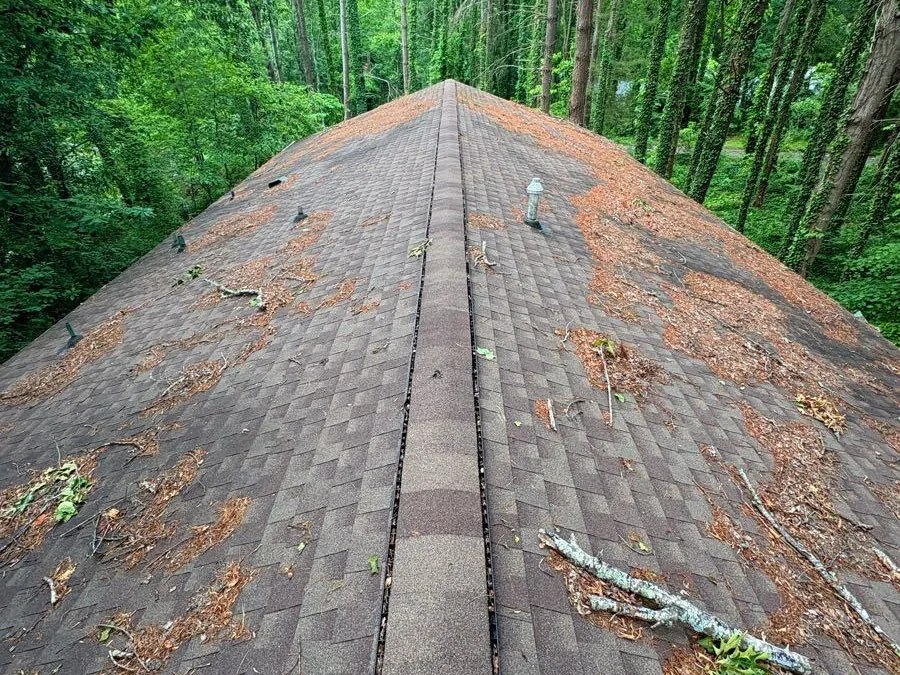
Hendersonville sits on a plateau below the Blue Ridge escarpment, and the tree mix follows the terrain: white pines on the ridges and north slopes, oaks and hickories on drier ground, tulip poplar and sweetgum in the coves and along the creeks. That mix produces two distinct debris seasons, not one. From late February into April, pines and the late-dropping oaks shed a fine, needle-and-catkin sludge that mats down in the trough and holds water against the roof edge. Then October through December brings the heavy broadleaf drop, plus sweetgum balls that roll into valleys and downspout elbows like gravel. A house on a wooded north slope can go from clear to overflowing in a single spring storm.
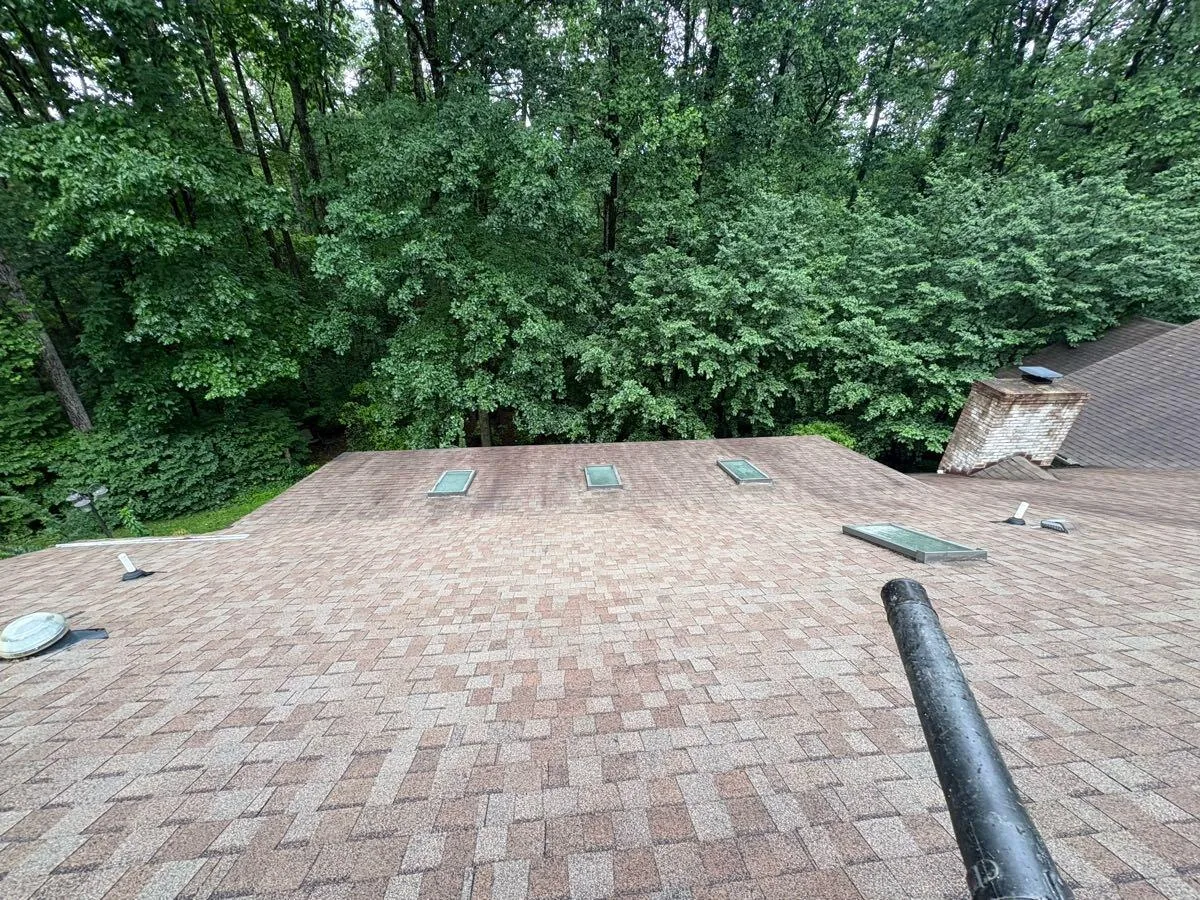
So the answer to "how often should I clean my gutters" here is genuinely lot-specific. A ridge-top house above the orchard country near Flat Rock, with open sky and one oak at the corner, might be fine once a year. A house tucked under pines off Kanuga or up toward Jump Off Rock may need three visits — early spring after the pine drop, midsummer if the roof is shaded, and late fall after the leaves. That calendar, not a generic frequency, is what a real quote should reflect. If you want the roof surface itself handled at the same time, that's a separate scope — see roof cleaning.
Why steep lots here change the job, not just the price
Much of Henderson County's housing sits on grades that a ladder simply cannot address safely: walk-out basements, driveways cut into slopes, second stories that are actually third stories on the downhill face. That terrain is why this trade has real safety rules rather than folklore. Ladder setup, fall protection and roof-access practice fall under occupational safety standards, and any crew working at height should be able to tell you how they handle a slope before they climb it. National Weather Service outlooks matter here too — a wet, leaf-slick roof on a 30-degree slope is a different risk than the same roof dry, and the smart operators reschedule rather than rush.
Height and access also drive the cost band. Two-story pricing isn't a penalty, it's time: more ladder moves, more careful bagging, more downspout work. Long gutter runs on a rambling ranch, or steep pitches over a walk-out lower level, push a job toward the top of the range because the labor is genuinely doubled. Terrain is also why Hendersonville gutters clog and overflow at the downhill end first — water accelerates, sediment settles, and the lowest downspout is usually the one that fails first in a downpour.
What a clean actually includes, and what it costs
Scope is the difference between two bids that look identical on the phone. A real gutter clean means the trough is emptied, the downspouts are flushed and verified to flow, and the debris is hauled away — not blown into the shrubs. Below is the honest local picture, kept inside the site-wide band:
| Scope | Typical range |
|---|---|
| Single-story, standard run, light debris | $150–$200 |
| Single-story, long run or heavy pine/sweetgum debris | $200–$250 |
| Two-story, standard access | $225–$300 |
| Two-story, steep roof or walk-out lower level | $300–$400 |
| Downspout flush-out and debris haul-away | Included in a proper clean; chargeable separately by some crews |
Two cautions. First, a bid that doesn't name the downspouts is a bid for half a job — a clear trough feeding a clogged downspout still floods your foundation. Second, be wary of any quote that seems to price per foot without asking about the trees. A full cost breakdown by scope and season lives on the gutter cleaning cost page. If the debris is already backing water under the shingles or staining the fascia, you may be looking at repair rather than maintenance, and that's a different conversation with a licensed contractor — North Carolina's licensing thresholds for that kind of structural and waterproofing work are set by the state, and the NC Department of Insurance maintains the code resources that govern it.
When gutters are really a drainage story
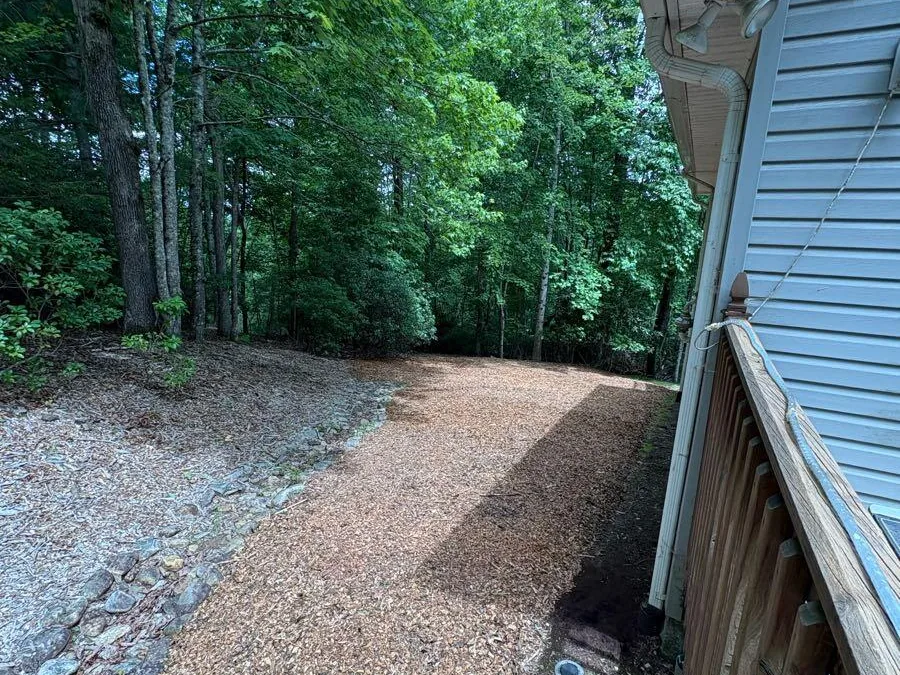
This county has a serious storm and flood history — 16 federally declared disaster events stretching across 1978-2026 — and in that record, water that can't leave a property is the recurring theme. Gutters are the first link in that chain. When they overflow, the water lands at the foundation, saturates the soil, and finds the crawl space or the basement wall. Cleaning the gutter is the cheap end of that problem; grading, extensions and french drains are the expensive end. Getting the water away from the house is the whole point, and that's why downspout extensions and splash management belong in the same conversation as the clean itself.
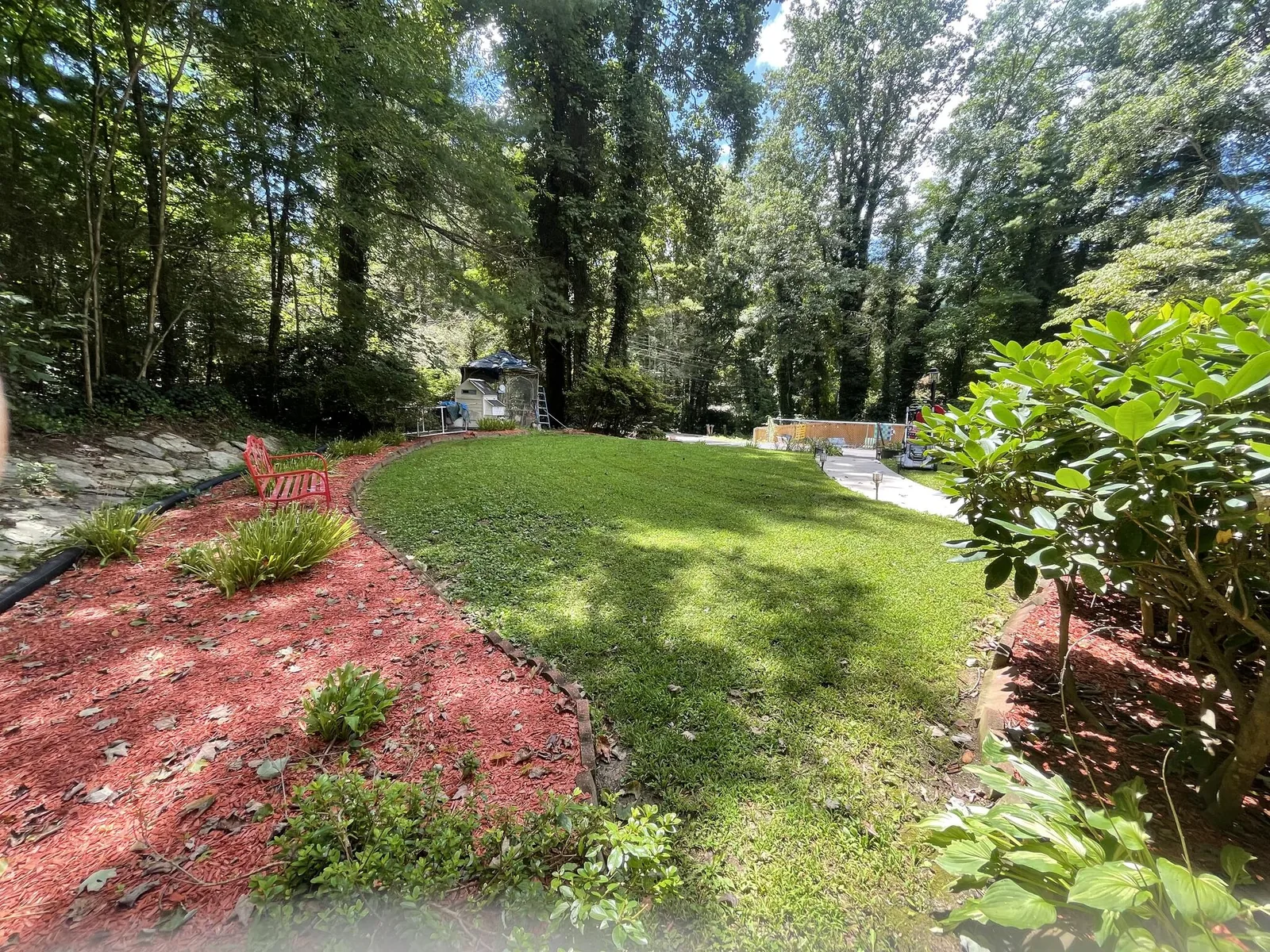
If you also fight water in the lawn — the low corner that stays spongy for days, the mulch bed that erodes every storm — that's a landscape drainage issue rather than a gutter one, and the lawn care side of our work handles it. For environmental context on stormwater and runoff in North Carolina, the NC Department of Environmental Quality publishes guidance worth knowing if your property drains toward a creek or a storm system. One clean gutter does not fix a wet yard, but a chronically overflowing one usually makes it worse.
Scheduling around Hendersonville's actual weather
The practical calendar here: book the post-pine clean in late spring, once the catkins and needles are down and the last late oak has finished; book the heavy leaf clean after Thanksgiving, when the poplars and oaks are bare. Houses under white pines may need a midsummer check, because pine needles slide off the roof and pack the trough all season, not just in spring. And because saturated-soil storms are exactly when marginal drainage shows itself, the weeks after a big rain event are the worst time to discover your downspouts are blocked. Treat the clean as preventive maintenance, not emergency response — it's cheaper, faster and safer that way.