Follow the water before you order a single yard
Stand at the end of a downspout on almost any street in Hendersonville and you can read the whole story of a failing bed. Water leaves the roof, hits the splash block, and either sheets harmlessly across the lawn or dives straight into the mulch ring around a Japanese maple, where it sits against the trunk until the bark gives up. On the older in-town lots near downtown, where houses sit close and gutters dump within a few feet of the foundation, that path is short and steep. On the sloping lots out toward the county's mountain edges, the problem flips: water crosses the bed fast enough to strip mulch into the street, and the plants on the high side dry out while the low side drowns. Mulch installation in Hendersonville is really water-path work that happens to end with wood chips on top, and any bed that gets dressed without someone walking the gutter-to-grade route first is a bed you'll redo.
Henderson County's clay-heavy soils and its storm record make this more than a cosmetic concern. This county carries 16 federal disaster declarations across 1978-2026 of record, and the pattern in those events is rarely wind alone — it's saturated ground and water arriving where the grade said it wouldn't. Mulch is a 2-to-3-inch tool for slowing that water and protecting soil structure. It is not a fix for a downspout that discharges uphill.
Depth, edge, and the two mistakes that cost the most
The first mistake is depth. Bags and bulk loads both tempt people toward four or five inches because it looks finished and lasts longer between refreshes. Past three inches, mulch stops being a soil cover and becomes a barrier: rain can't reach the root zone, and the layer underneath sours. The second mistake is piling mulch against trunks and siding. Volcanos around tree bases hold moisture on bark that evolved to stay dry, and mulch fanned up over brick veneer or wood siding gives termites and rot an easy on-ramp. The NC Department of Insurance and the state building code both treat exterior grade and siding clearance as real requirements for a reason, and landscaping is usually what violates them.
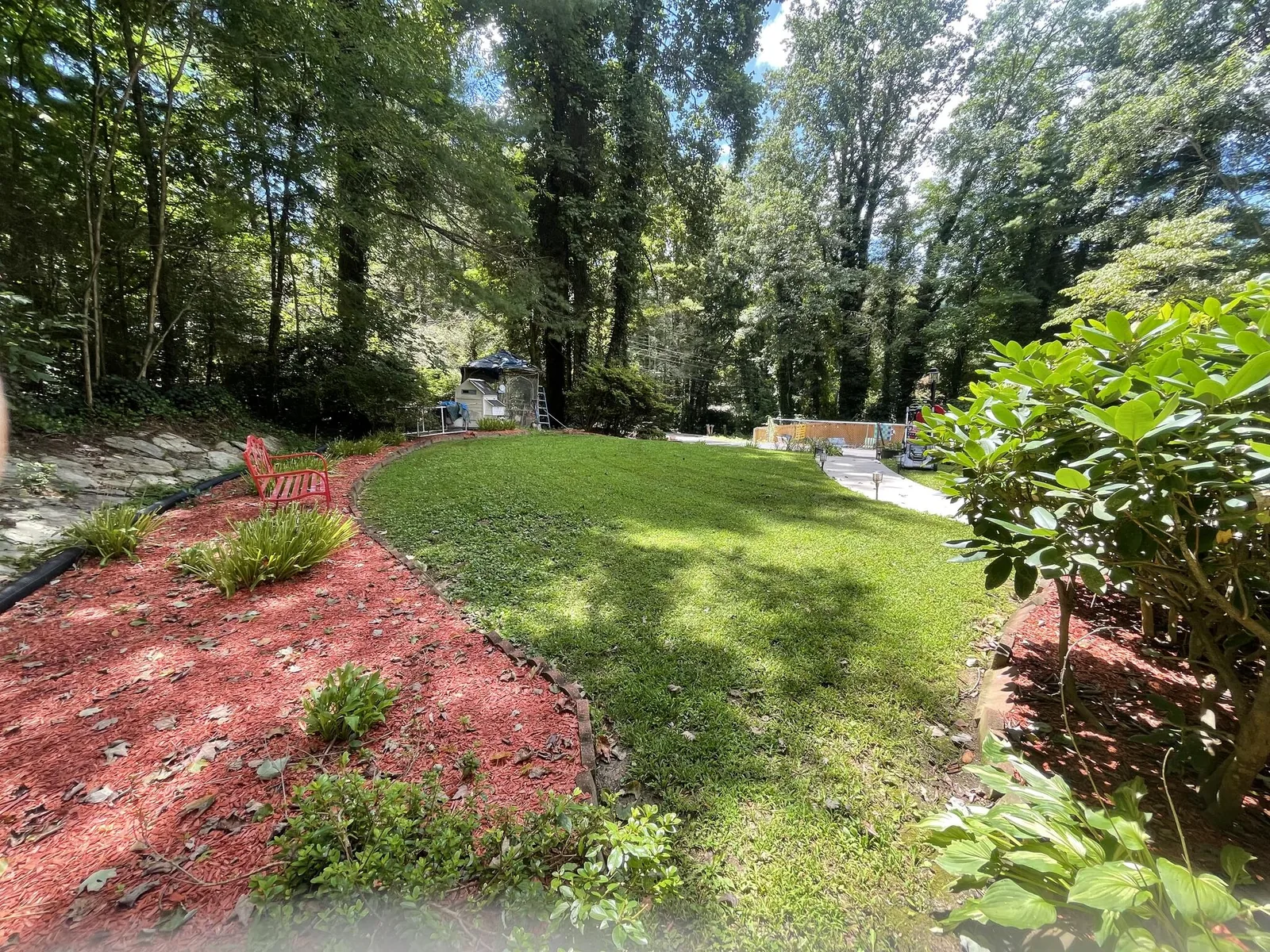
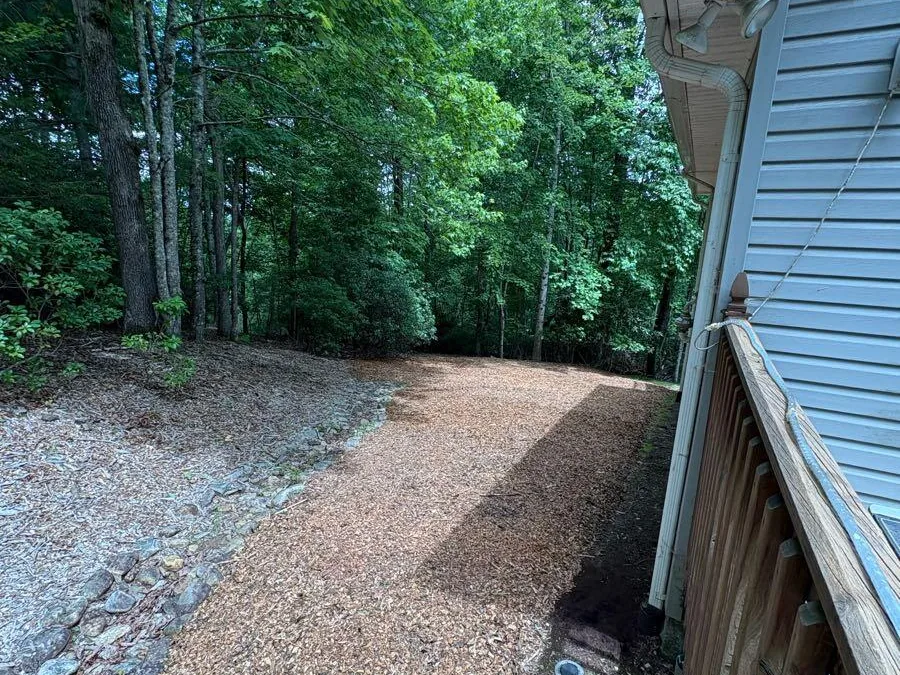
A proper install has a rhythm to it. Old mulch gets broken up or removed where it's matted, not just buried. Beds get re-cut with a spade so there's a clean edge and a small trench to catch clippings and runoff. Soil gets probed for compaction, because mulch over hardpan just hides the problem. Then the material goes down at an even 2–3 inches, pulled back a clear hand's width from every trunk, stem, and wall. On the steeper yards around Hendersonville, a light organic edge or a shallow berm along the downhill side keeps the next hard rain from relocating your investment to the culvert.
What a bed refresh actually costs here
Pricing is driven by volume and access, not by the type of chip. Bulk delivery beats bags on any bed larger than about 100 square feet, and the labor line is mostly about how far a wheelbarrow has to travel and whether the terrain allows one. Steep Henderson County lots with long carries price at the top of the band because the crew moves everything by hand. The mulch installation cost page breaks this down further by bed size and material.
| Scope | Typical range |
|---|---|
| Small bed refresh (2–3 cu yd, easy access) | $450–$650 |
| Standard foundation and island beds (4–6 cu yd) | $650–$950 |
| Full-property refresh with edging and cleanup (7–9 cu yd) | $950–$1,200 |
| Per cubic yard, installed | $85–$130 |
| Steep or long-carry surcharge | pushes job toward top of band |
Wood chips from a local arborist crew sometimes come free or cheap if you can take a whole load, but they arrive green, coarse, and unpredictable in volume. For foundation beds and anything visible from the street, screened hardwood or a hardwood-bark blend holds color and stays in place better through Hendersonville's summer downpours.
Mulch is one layer of a bed that actually works
Fresh chips on a bed with dead shrubs and leggy foundation plantings looks tidy for one season and then looks neglected again. The order that holds up is pruning first, mulch last. Shrub trimming opens up the bed, lets you see the soil line, and removes the low branches that mulch would otherwise bury. If you're redoing the whole yard, lawn care and bed work should be scheduled together so the clean edge between turf and mulch gets cut once and stays clean.
Water management rounds it out. Where a downspout empties within a few feet of a bed, extending it to daylight or into a grade-level splash that sheds away from the house is often a 30-minute fix that saves a plant and a foundation. Hendersonsville's National Weather Service outlooks are a decent planning tool for this — if the season ahead is wet, fix the discharge before spending money on chips that will float. The NC Department of Environmental Quality also has guidance on yard-waste and stormwater handling that matters if you're on a slope draining toward a creek or storm inlet. And if your property work ever touches irrigation lines or exterior plumbing, note that NC licensing rules for that trade run through the State Board of Examiners of Plumbing, Heating & Fire Sprinkler Contractors; mulch work itself does not require a license, but the buried lines in a bed sometimes do.
Timing it around Hendersonville's seasons
Late spring and early fall are the honest windows. Fall installs get the mulch settled before winter, hold soil temperature, and cut down on the freeze-thaw heave that pushes plants out of clay ground. Spring installs catch the beds right as growth starts, but you're mulching over soil that's already saturated from winter rain, which is exactly when depth mistakes show up fastest. Summer installs aren't wrong, they're just thirsty — new mulch on dry ground wicks moisture from the top inch of soil, so a deep soak before spreading matters more than any product choice. Whatever the season, the ground under the chips should be damp, not soaked and not bone dry, because that's the condition mulch is designed to preserve.