Where the water actually ends up
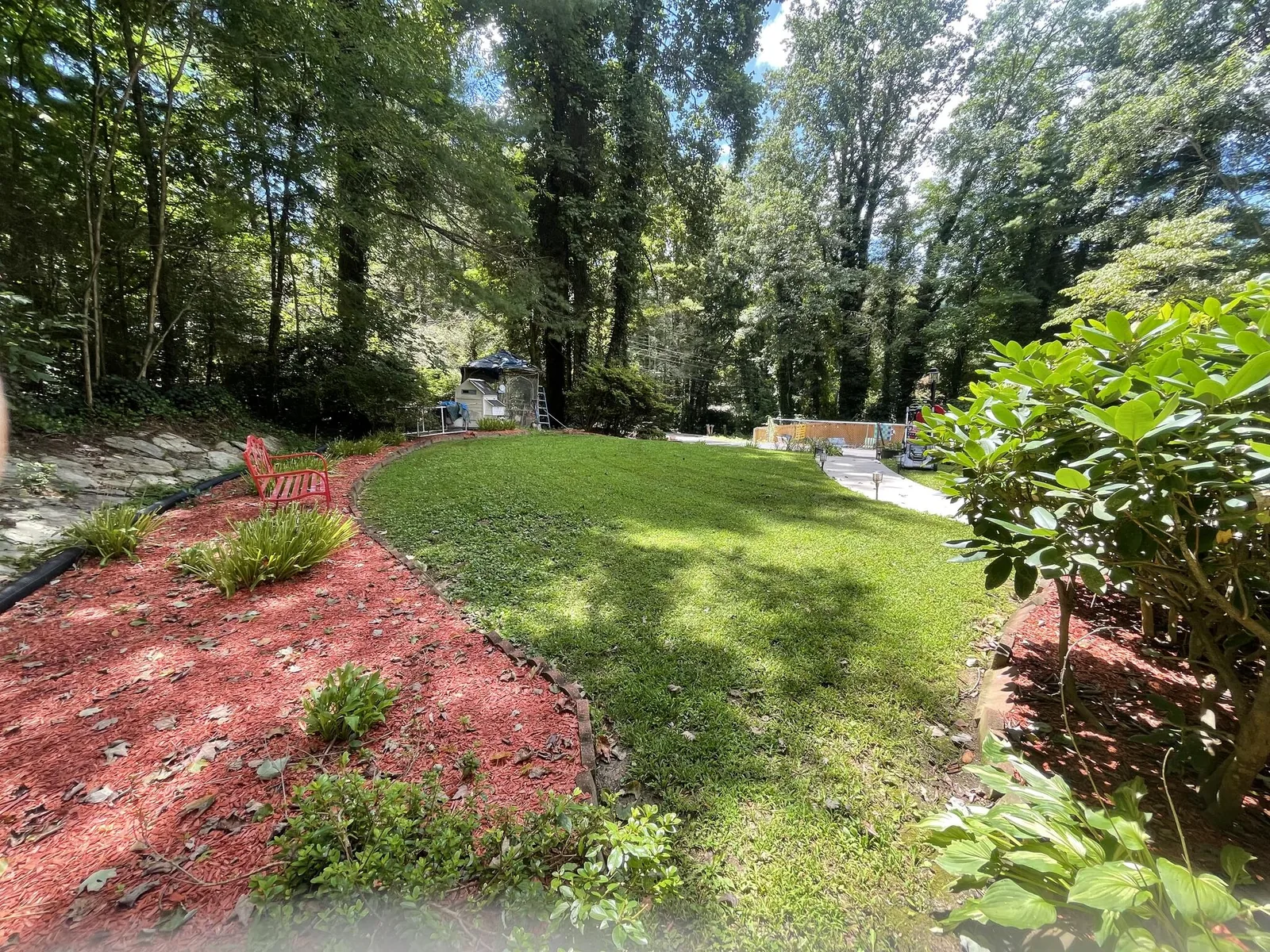
Watch a house on a slope outside Hendersonville during a hard summer storm. Water sheets off the roof, drops through a clogged gutter, overflows the fascia, and lands exactly where the original builder put the flower bed — against the foundation wall. On flat lots that is a nuisance. On the grades common across Polk County, it is a slow-motion problem that shows up as a wet crawl space, a washed-out planting bed, and eventually a crack in the block.
Polk County's terrain is not uniform. The county seat of Columbus sits in the lower, gentler valley floor near the Green River, where lots flatten out and water tends to pond rather than run. Drive north toward Tryon, Saluda, or the horse-country ridges off Highway 176 and the grade changes fast: driveways pitch toward the garage, retaining walls hold back the uphill side, and downspouts often stop six inches above dirt because there is nowhere else to terminate. A single cleaning visit has to account for both worlds, because a clogged gutter on a flat lot and a clogged gutter on a 15 percent slope fail in entirely different ways.
The whole point of gutter cleaning, in other words, is not a tidy roofline. It is keeping the water path intact: roof to gutter to downspout to a grade that carries it away from the house. When people search for gutter cleaning, most are actually trying to solve a drainage symptom they have not named yet — a stain on the crawl space wall, mulch floating into the yard, or a gutter that drips straight down the siding in a rainstorm.
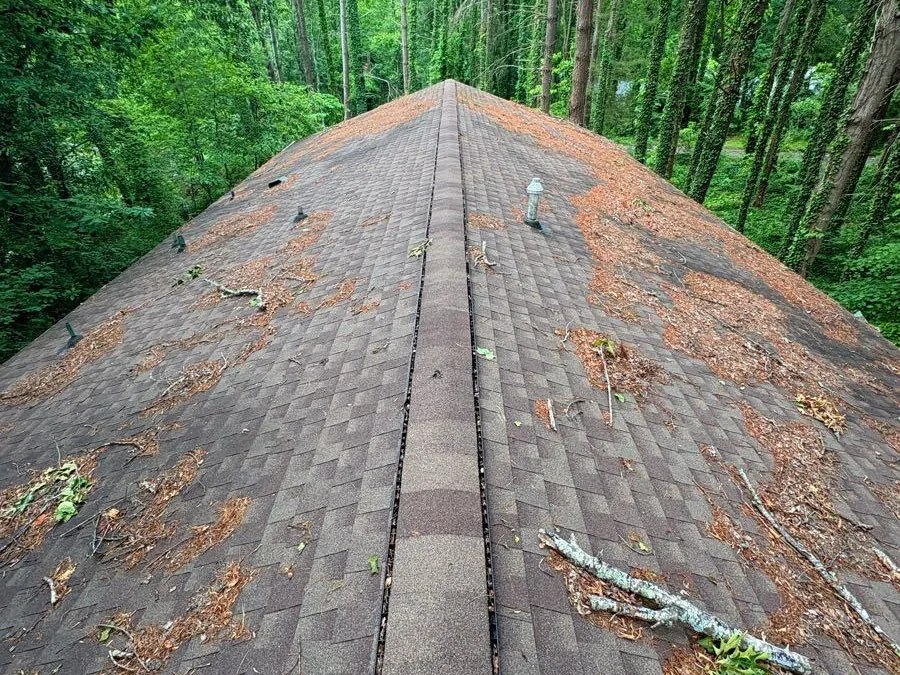
The classic failure sequence in this county starts with pine straw. Loblolly and shortleaf pines are everywhere on the ridges, and their needles mat into a dense, felt-like layer that holds water like a sponge. That mat adds weight, sags the gutter hanger, and slows flow until the trough backs up. The overflow then hits the fascia board, rots the soffit, and runs down behind the siding — a repair that costs several times what the cleaning would have. Recognizing that sequence is the difference between a $200 visit and a $2,000 carpentry bill.
What Polk County homeowners pay
Pricing here tracks roof geometry more than square footage. A wide one-story ranch near Tryon with two long runs and pine over the back corner costs more to clean than a compact two-story in Hendersonville with four short runs. The table below reflects the working range for this county; the middle of the band covers most homes.
| Scope of work | Typical Polk range | What drives it |
|---|---|---|
| Single-story, standard runs | $150 – $200 | linear footage, gutter height, debris type |
| Single-story, long or steep runs | $200 – $250 | roof pitch, ladder setup, pine load |
| Two-story, standard | $225 – $300 | access, safety setup, number of downspouts |
| Two-story, steep or heavy pine | $300 – $400 | pitch, debris volume, downspout flushing |
Those are honest working ranges, not quotes. Any number given over the phone before a look at the roof is a guess. A house with a walk-out basement on a Saluda hillside, for example, may read as "single-story" from the driveway but present as two stories on the downhill side — and that changes the ladder setup and the price. The full regional picture sits in our gutter cleaning cost guide.
Homeowners in the county often underestimate how much linear footage they have. A modest ranch with a wrap-around porch can carry 180 to 220 feet of gutter, and every foot collects debris. When you ask for a quote, measure the roofline or ask the crew to walk it — a per-foot estimate that assumes a standard 120-foot run will come in low and then surprise you at the invoice.
Why the pitch of the land raises the stakes
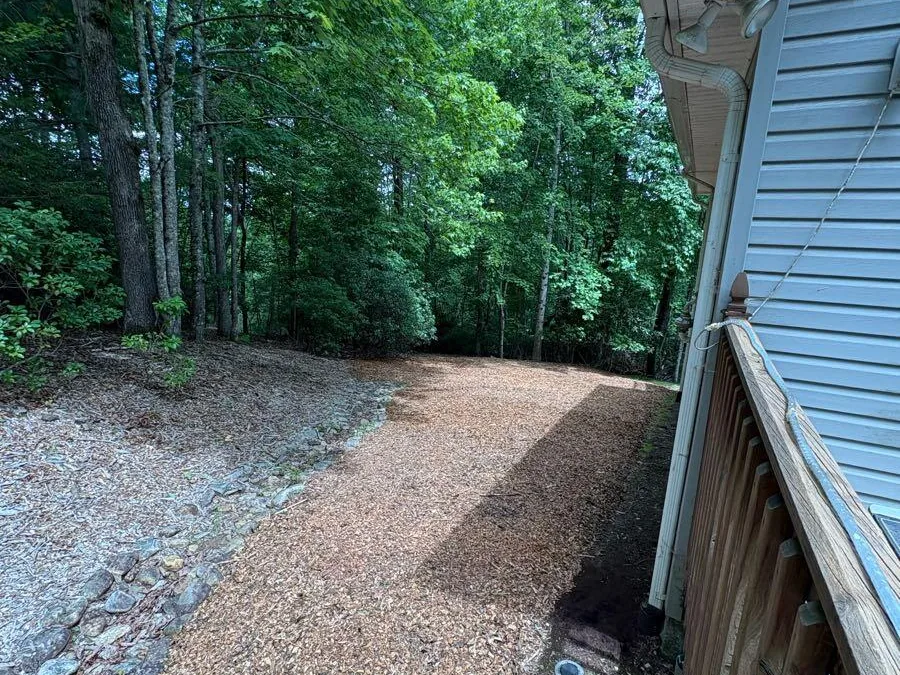
Polk County sits in the Blue Ridge foothills, and the housing stock reflects it: homes cut into hillsides, driveways that drain toward the garage, and downspouts that stop six inches above the dirt. When a gutter clogs and overflows, the water does not pool politely. It runs down the slope, finds the path of least resistance, and reappears at the lowest point of the lot — often the foundation.
The federal record backs up how often heavy water is a factor here: 20 federally declared disaster events have touched Polk County across 1978-2026, most of them storm and flood family. That history is why a cleaning visit that ignores where the downspouts land is only half a job. The National Weather Service's outlooks at weather.gov are a reasonable way to time cleanings before the heaviest seasonal rain.
Local rainfall patterns matter too. The southern Blue Ridge escarpment catches some of the heaviest precipitation in the eastern United States, and the resulting runoff is not evenly distributed. A short, intense summer thunderstorm can dump more water in twenty minutes than a gentle all-day rain, and it does not give a clogged gutter time to drain. That is why a cleaning in late spring, before the afternoon storm season peaks, often prevents more damage than a cleaning in the fall — though both matter if the roof is under pines.
There is also the matter of the soil itself. Much of Polk County sits on clay-heavy ground with limited absorption. Once water reaches the surface, it does not soak away quickly. It follows the grade, and if that grade runs back toward the house, the downspout extension you skipped is doing real damage. A cleaning that ends with a functioning downspout aimed at a splash block a few feet from the foundation has not solved the problem; the water still returns.
Codes, safety, and who should be on your roof
Gutter cleaning itself does not require a permit, but the work touches two areas where the rules matter. First, ladder and fall safety: the Occupational Safety and Health Administration's residential fall-protection requirements are the baseline any legitimate crew should be meeting, and the International Code Council's standards at iccsafe.org inform the roofing and drainage provisions North Carolina adopts. Second, if a cleaning reveals that gutters need re-pitching, replacement, or a drainage tie-in, that crosses into work the NC Office of State Fire Marshal oversees through the state building code, and larger structural jobs may trip the state's general contractor licensing threshold.
Practical translation: a cleaner who flushes downspouts and hauls debris is doing one job. A cleaner who tells you the gutter is pulling away from the fascia and the downspout dumps into a bed is doing a different one, and you should hear that.
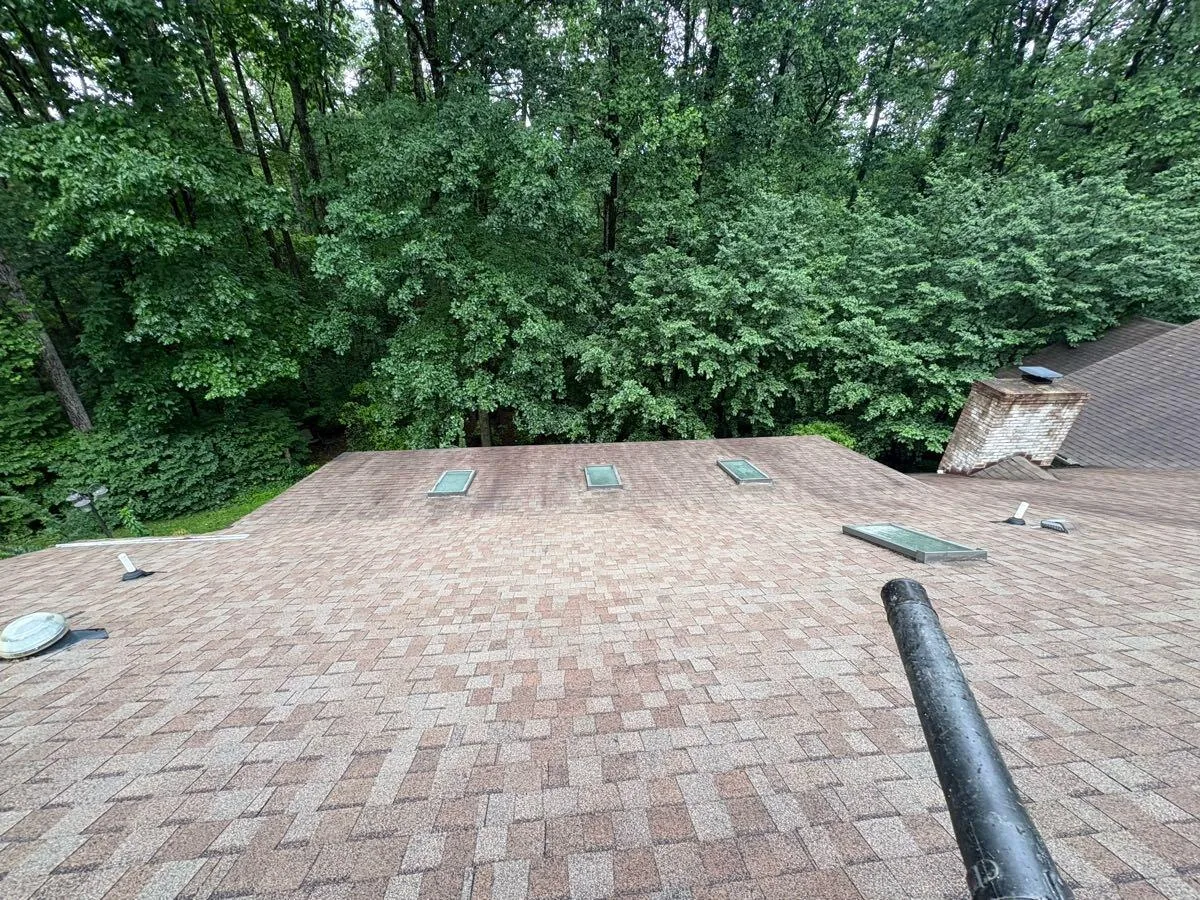
Safety on Polk County roofs is not theoretical. Steep pitches, morning dew, and moss growth on north-facing shingles make walking a roof genuinely risky, and a two-story drop onto a sloped, rocky yard is worse than onto flat lawn. That is why a serious crew will often clean from a ladder with a standoff stabilizer rather than walking the roof, and why the estimate for a steep Saluda pitch is higher than for a flat Tryon ranch. The extra cost is not padding; it is the difference between a controlled job and an injury.
How to keep the price honest and the yard dry
Three habits protect Polk County homeowners in this market:
- Ask where the water goes. A good cleaner will point at the downspout and tell you whether it discharges onto the slope, into a bed, or into a proper extension. If the answer is "into the bushes," that is your next project.
- Time it to the debris, not the calendar. Pine-heavy lots near Tryon and Saluda need attention more often than oak-heavy lots. Two visits a year is a starting point, not a rule.
- Bundle with yard work when it makes sense. If the same crew is already handling your lawn care, adding gutter cleaning to a visit often costs less than a standalone trip — and the person who mows already knows where the low spots in your yard are.
If the cleaning turns up water pooling at the foundation, the fix is a drainage conversation, not a second cleaning. That is the point where the water path, not the roofline, becomes the job. A downspout extension, a splash block, or a simple regrade of the bed can redirect the flow, and in many cases those fixes are cheaper than the cleaning itself.
Keep records too. If you note when the gutters were cleaned and what the debris load looked like, you build a pattern. A lot that needed three visits one year may need only two the next, and a lot that suddenly clogs faster usually has a new source of debris — a downed limb, a nearby construction project, or a neighbor's tree leaning over the property line. That pattern is worth more than any generic interval.