Where the water actually goes on a Henderson County roof
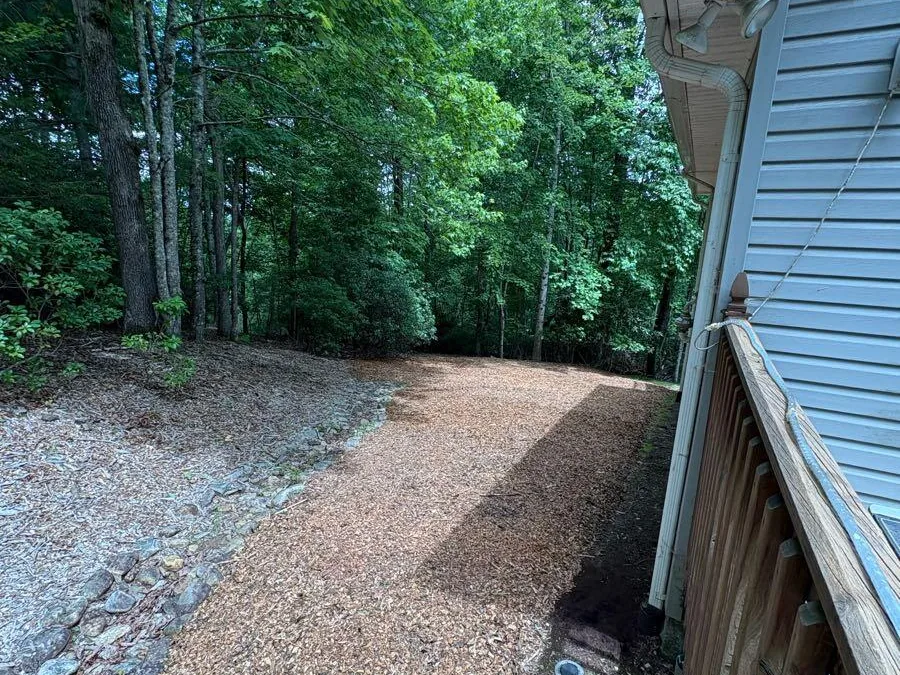
Stand at the curb on a leafy street in Hendersonville or Flat Rock after a hard rain and you can read the whole story. Water leaves the roof plane, drops into the gutter, and either exits a downspout to a splash block that sends it well away from the foundation — or it dumps directly onto a bed, a walkway, or a low spot that never dries. On the older lots near downtown Hendersonville and the shaded hillside subdivisions toward Laurel Park, that second pattern is common, and it is the reason roof cleaning and gutter work are usually the same conversation.
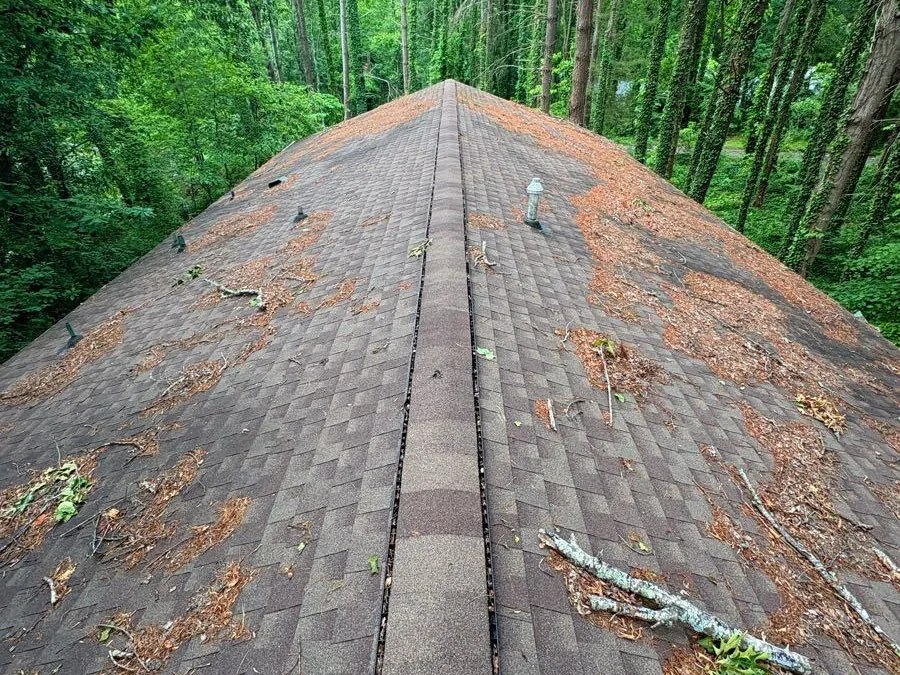
Moss and needle pack are not just cosmetic here. When debris fills a gutter, the first inch of every rain event sheets over the edge instead of running through the downspout. That overflow wets the fascia, stains the siding, and feeds the algae and moss on the roof itself. Cleaning the roof without clearing the gutters just resets the same clock. If your gutters are clogged, our gutter cleaning cost guide covers what that adds to the visit.
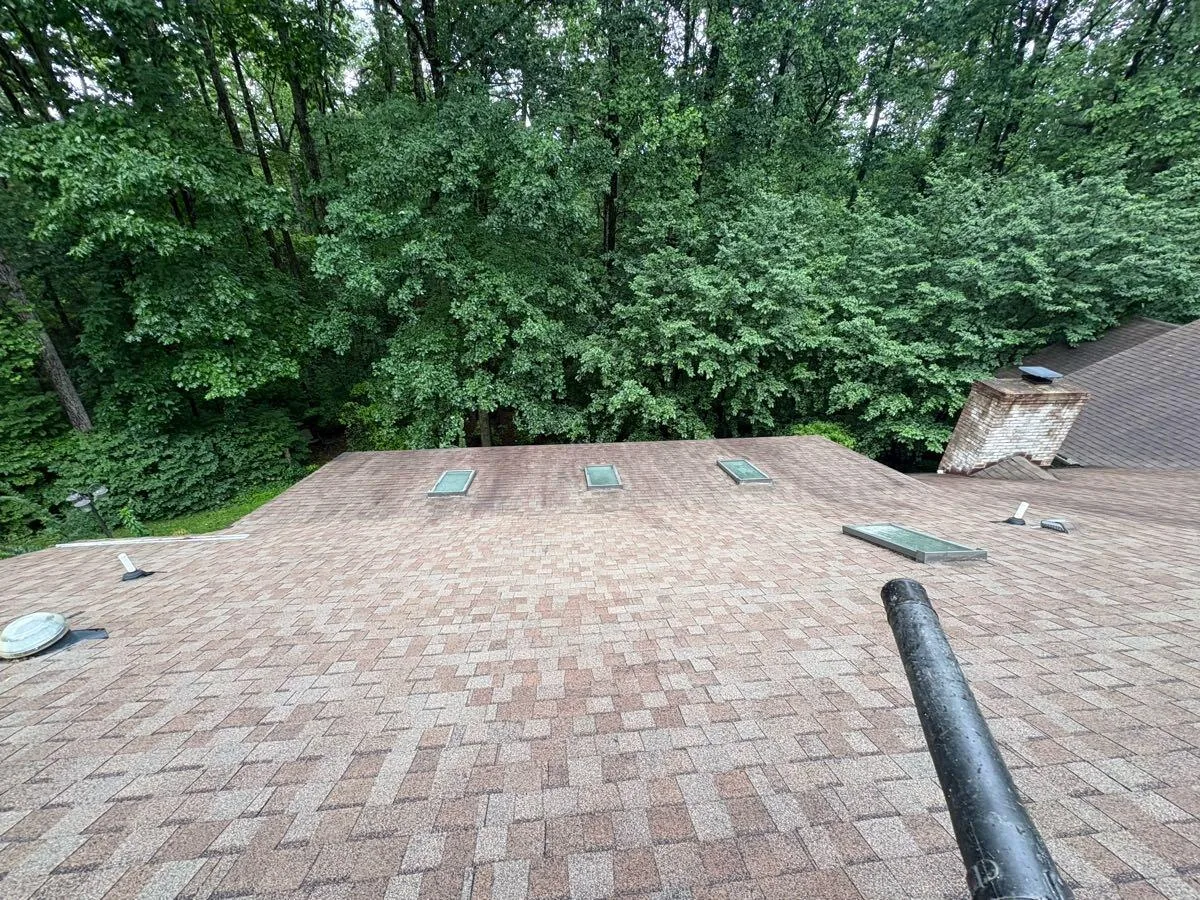
The terrain makes it worse. Henderson County sits where the Blue Ridge escarpment catches moisture coming off the Gulf, and the result is a rainfall pattern that keeps north-facing roof planes damp for days after a storm. On the hillside streets above Hendersonville, where driveways cut into the slope and downspouts often terminate at a retaining wall, the water has nowhere to go but back toward the house. That is why so many roofs here show moss on the shaded plane and clean shingles on the sunny one, sometimes on the same house. The roof is not failing evenly because the weather is not hitting it evenly.
Another local pattern: the older bungalows and mill-era houses closer to downtown Hendersonville often have box gutters or undersized downspouts that were sized for a smaller roof load than they see today. When a gutter cannot keep up, water backs up under the first course of shingles, and that is where you see the fascia rot and the interior ceiling stains that send people looking for a roofer when the real fix is drainage. If your downspouts empty onto a sidewalk or into a foundation bed, the cleaning is only half the job. The other half is getting the water to a place where gravity actually takes it away from the house.
What drives the price on a Western NC roof
The $450–$1,200 band is wide because the work is genuinely different house to house. A single-story ranch with a shallow pitch and light streaking is a fast job. A steep two-story with a valley that catches oak leaves and a north-facing plane that stays damp is a slow one. Crews quote on time, access, and risk, and all three change on these lots.
Access is the quiet cost driver. A house on a flat lot in Etowah with a gentle 4/12 pitch and a clean driveway is a different job than a hillside home off Kanuga Road where the only staging is a narrow gravel pad and the back roof sits two stories above a slope. Ladder setup, fall protection, and the time it takes to move equipment safely all show up in the number. So does the number of roof planes. A simple gable has two; a cross-gable or a house with dormers and a wrap-around porch can have six or more, each one a separate climb and a separate place for moss to hide.
| Scope of work | Typical local range | What drives it |
|---|---|---|
| Light algae staining, single story | $450 – $600 | roof size, pitch, and how much shading the plane gets |
| Moderate moss and black streaking | $600 – $850 | moss coverage, needle pack in valleys, gutter condition |
| Heavy moss with needle buildup | $850 – $1,050 | manual moss removal, number of planes affected |
| Steep or tall access, full package | $1,000 – $1,200 | fall-risk setup, ladder staging, gutter clearing included |
Those are working ranges for a single visit that includes roof treatment and basic gutter clearing, not quotes. A firm number before anyone looks at your pitch and your shade is a guess. If a bid comes in well under $450 for a two-story shaded roof, ask what is being left out — usually it is the gutters, the moss removal, or the plant protection. If a bid comes in over $1,200 for a simple ranch, ask what extra scope is being added, because the base work does not cost that much here.
One more local note: the roofing stock matters. Much of Henderson County is asphalt shingle, but there are metal roofs on barns and newer homes, and slate or tile on some of the older estates. Each surface takes a different approach, and a quote that does not ask what your roof is made of is a quote that has not thought about your roof. Metal can often take a firmer wash; asphalt cannot. Slate and tile need gentler handling and sometimes hand work to avoid cracking. The price band above assumes asphalt shingle, which is what most of the housing stock here uses.
Why moss matters more than the stain
Black algae streaking is ugly but mostly surface-level. Moss is structural. It sends tendrils under shingle edges, holds moisture against the mat, and in freeze-thaw cycles it pries tabs apart from the inside. Henderson County sits in a rainfall belt that keeps roofs damp for long stretches, and the federal record reflects it: 16 federally declared disaster events have touched this county over 1978-2026, many of them storm and flood related. That kind of recurring moisture is exactly what moss needs.
The practical read: if you can see green, the roof has been holding water long enough to matter. Chemical treatment alone kills moss but leaves the dead mat and the lifted shingles behind. Our guide to moss on roof shingles explains why removal and prevention are two separate steps, and why skipping the second one brings you back to the same spot in two seasons.
Moss also hides the problems underneath it. A patch of moss on a north-facing plane can be sitting on top of a soft spot, a lifted tab, or a nail that has backed out, and you will not know until someone gets up there and pulls it back. That is part of why moss removal costs more than a simple wash: it is not just killing the plant, it is checking what the plant was doing to the roof. On the shaded lots in Laurel Park and the older streets near downtown, we see moss in the same spots year after year — the valley behind a chimney, the north plane above a dormer, the low slope over a porch. Those are the places where water sits longest, and they are the places worth watching even after a cleaning.
The freeze-thaw piece is easy to underestimate. Henderson County gets cold enough in winter for water to freeze in the seams of a shingle, and when it does, that ice expands and works the tab loose. Moss makes it worse by holding moisture right at the edge. A roof that would otherwise last its full service life can lose years off the back end because of a moss mat that nobody dealt with. Cleaning is not just about curb appeal here; it is about not paying for a new roof earlier than you have to.
Soft washing, pressure, and the rules that matter
Asphalt shingles should not be pressure washed. High-pressure water strips the granules that protect the mat and shortens the roof's life, and it drives water under tabs where it does not belong. The standard method for shingle roofs is a low-pressure chemical wash, often called soft washing, followed by a rinse. That is the approach you should expect on any quote inside the $450–$1,200 band.
Two regulatory points are worth knowing before you hire. First, the cleaners and runoff leaving your roof go somewhere: to a bed, a driveway, or a storm drain, and the state treats those discharges seriously (NC Department of Environmental Quality). Ask what the crew does to protect plants below the drip line. Second, any contractor working on your home should be able to speak to state licensing thresholds (NC State Board of Examiners of Plumbing, Heating & Fire Sprinkler Contractors) where the work touches related systems. A roofer who cannot answer either question plainly is not the one you want on a steep pitch.
There is also the safety side, which is where a lot of the risk sits on these hillside lots. Roof work is fall-risk work, and the state has rules about how it is done for good reason. When you get a quote, ask how the crew anchors and whether they use harnesses on steep pitches. A crew that shrugs at that question is a crew that is cutting corners you cannot see from the ground. The NC Department of Insurance and the state building code both touch on how structures and safety are handled, and a legitimate operation will not be offended when you ask about it.
Finally, check insurance. If a crew is working above your landscaping and your gutters and something goes wrong, you want to know they carry coverage. Ask for a certificate of insurance before work starts. That is not a difficult request, and any established operation will have it ready. If a bidder hesitates on insurance or licensing, that is your answer about whether to hire them. The cheap quote is not cheap if it leaves you holding a repair bill.
How to compare bids without getting burned
Three things separate an honest quote from a cheap one:
- Roof, gutter, or both. Make sure the scope says explicitly whether downspouts are cleared. A roof-only price that leaves a clogged gutter in place is a job done halfway.
- Method in writing. The bid should name soft washing, not "power washing." If it says pressure, walk.
- Plant and runoff protection. A reputable crew covers or pre-wets landscaping before treating. Ask; the answer tells you what kind of operation you are dealing with.
If you want the full service picture for this county, see roof cleaning for what a visit includes, or check the gutter cleaning cost page if your downspouts are part of the problem. Roof and gutter are one system, and pricing them together almost always beats pricing them apart.
A fourth thing worth asking: what happens after the cleaning. A good crew will tell you what to watch for and when to expect the next visit, and they will not pretend the roof will stay clean forever in this climate. Shade plus rain means moss comes back, and the honest answer to "how long will this last" is "it depends on your trees and your drainage." Anyone promising a permanent fix is selling you something they cannot deliver. The realistic expectation on a shaded Henderson County lot is a re-clean every couple of years, and budgeting for that is cheaper than reacting to a leak.
When you compare bids, compare the scope line by line, not just the bottom number. A $500 quote that skips gutters and plant protection is not cheaper than an $800 quote that includes both — it just pushes the cost to a different visit. On the steep, shaded lots around Hendersonville and Flat Rock, the difference between a thorough job and a quick one shows up within a season. Water finds the low spot either way, and the question is whether you dealt with it or the next hard rain did.