Getting a ladder to the back of a Hendersonville house
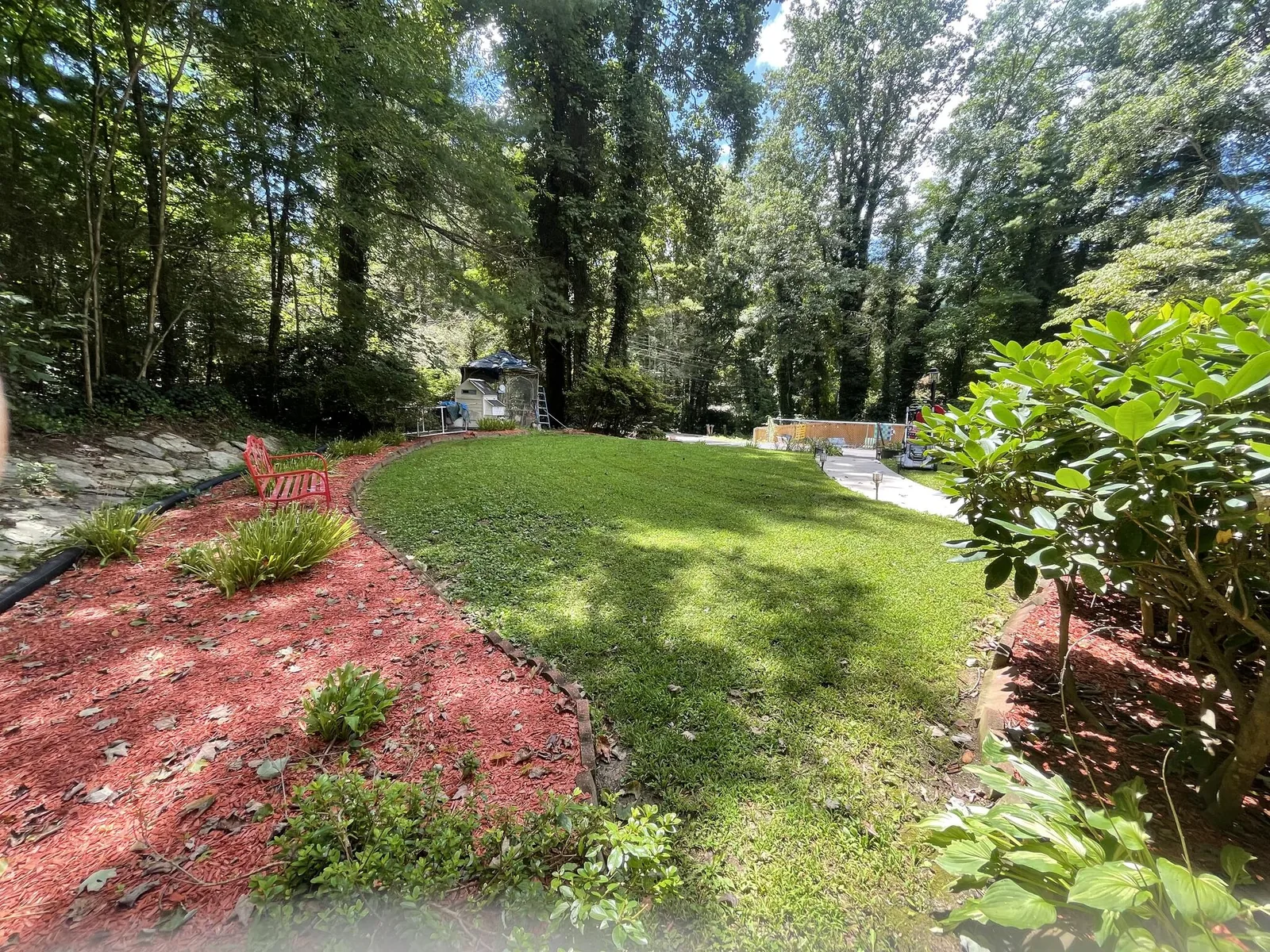
Hendersonville sits in a bowl of the Blue Ridge, and the housing stock reflects it: 1920s bungalows on tight in-town lots off Main Street, mid-century ranches on half-acre shade lots, and newer builds tucked onto graded slopes with a walk-out basement and a four-pitch roof. What they share is tree cover. White pine, tulip poplar, oak and maple drop needles, tassels and leaves onto roofs all year, and the north-facing slope behind the ridge line never quite dries. That combination, shade plus debris plus our wet spring, is why moss gets a foothold here faster than on an open suburban roof.
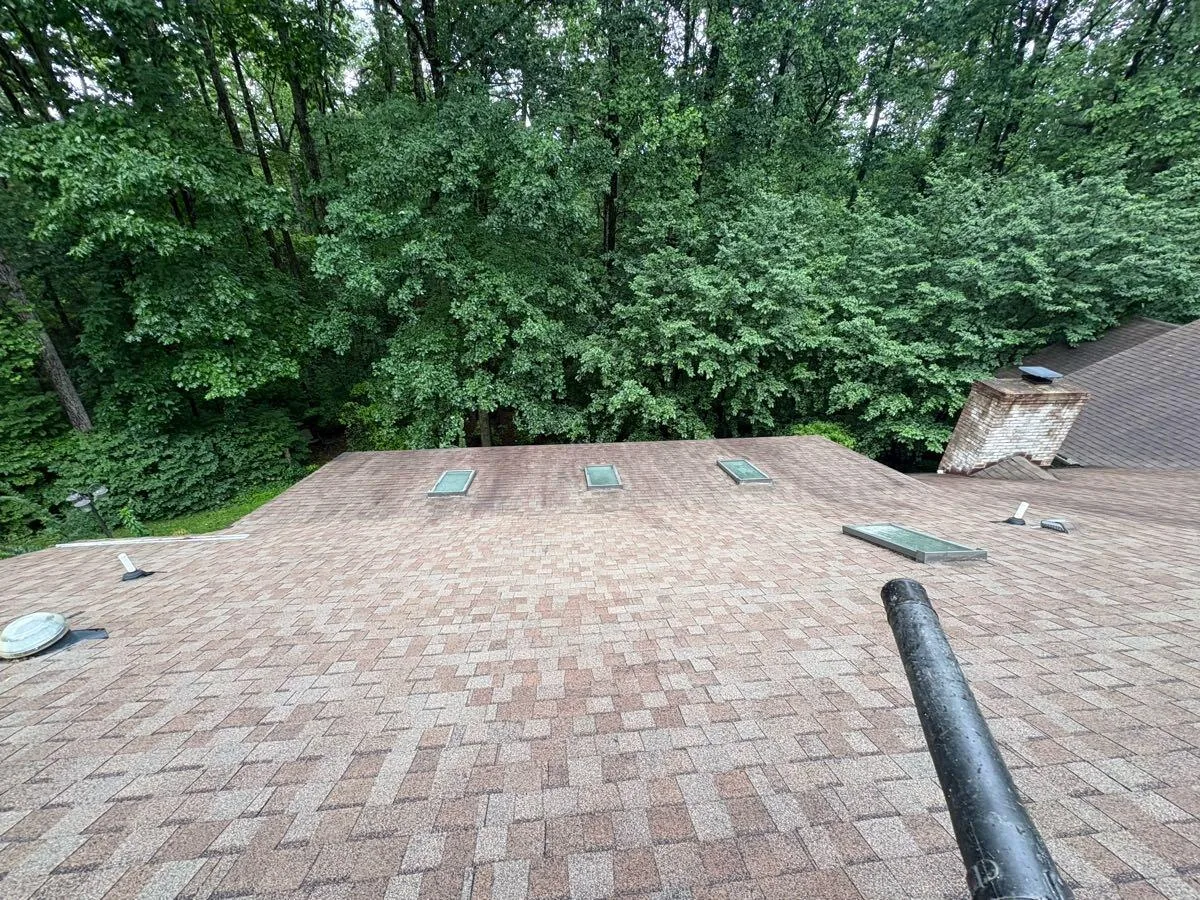
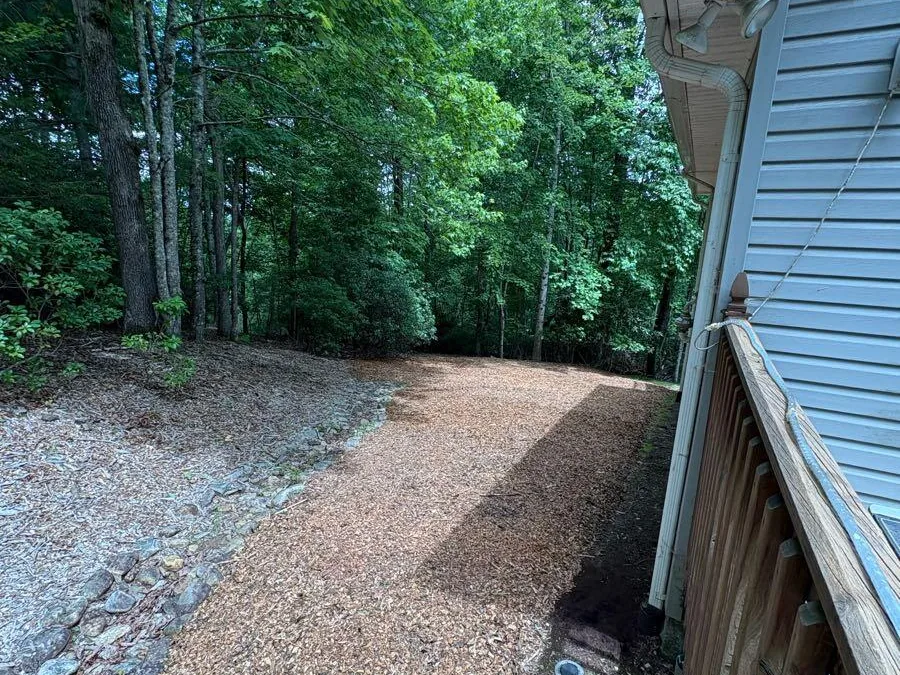
The access problem comes first, before anyone talks about cleaning method. A steep 10/12 rear pitch with a deck below it and a fence at the property line can't take a ladder anywhere near where it's needed, and neither can a ranch whose only dry approach is over a bed of established shrubs. On those homes the crew is working from the roof itself, anchored, or from a lift.
What actually gets removed, and what gets left alone
Roof cleaning is not one job. On a Hendersonville roof it's usually three, and they cost differently:
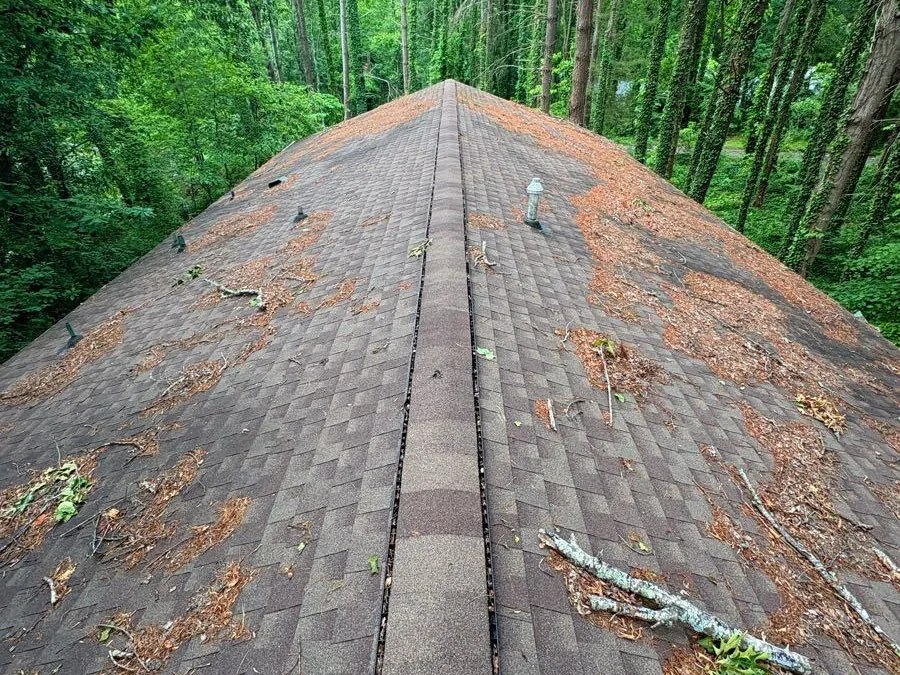
- Moss. Lifted by hand or with a soft tool, never pressure-washed off. Moss holds water against the shingle and its root rhizoids work under the granules; scraping it is unglamorous and it's the work that matters.
- Needle and leaf pack. Blown and raked out of valleys, behind chimneys and along the lower courses where it dams water.
- Black streaking (Gloeocapsum). Treated with a low-pressure chemical wash and allowed to die off over weeks, not blasted away.
What gets left alone is the shingle itself. Asphalt shingles here are typically three-tab or architectural, and a pressure washer at the wrong angle will strip granules and shorten the roof's life by years. The NC Department of Insurance publishes roofing guidance through the state code process, and it's worth knowing that most shingle manufacturers condition their warranties on not being pressure-washed. A soft-wash method is the standard for a reason.
If gutters are packed with the same debris and overflowing onto the fascia, that's a separate line item and a separate visit — gutter cleaning is usually booked alongside roof work because the two problems feed each other.
Scope, pitch and what the number looks like
Prices below are for an average Hendersonville-area house. Pitch and access push a job toward the top of the band; a simple low-slope ranch with good ladder access sits near the bottom.
| Scope | Typical range | What moves it |
|---|---|---|
| Single-story ranch, light debris, good access | $450–$650 | Roof area, one-story reach |
| Standard two-story, moderate moss on north slope | $650–$900 | Pitch, amount of hand removal |
| Heavy moss plus packed valleys, steep pitch | $900–$1,200 | Anchoring, staging, disposal |
| Add gutter clearing (same visit) | quoted separately | Linear feet, downspout count |
A full breakdown of what drives the number lives on the roof cleaning cost page. Soft-washing the siding, deck or driveway on the same visit is often cheaper than booking it separately, since the equipment and setup are already there — pressure washing on a Hendersonville home usually means the shaded north wall.
Why water history is the real reason to keep up with moss
Moss and needle pack aren't just cosmetic. They trap moisture against the shingle field, dam water at valleys and penetrations, and send overflow down behind the gutter, where it finds fascia, soffit and eventually the wall. In a county that has seen 16 federal disaster declarations over 1978-2026, most of them flood and storm events, the roof-to-drainage chain is the part of a house that gets tested first. The National Weather Service office covering western North Carolina issues the flood and severe-weather warnings; the practical translation at the house is that a roof shedding water where it should is cheaper than a crawl space drying out after the fact.
That's also why chemical roof treatments here should be applied by someone who knows what runs off. The NC Department of Environmental Quality regulates stormwater and surface water in the state, and a wash that dumps concentrated cleaner into a creek-fed ditch on a slope lot is a real problem, not a theoretical one. A crew that rinses, dilutes and controls runoff is doing the job correctly.
Timing it around Henderson County weather and trees
The honest schedule here is late spring and early fall. By late spring the pollen and tassels have dropped and any moss that survived winter is visible and dry enough to remove cleanly. Early fall, before the hardwood leaf drop, is the second window: get the roof and gutters clear and the first big rain of autumn runs off instead of soaking into a mat of leaves on the north slope. Mid-summer is fine but hot and slow on a steep pitch. Deep winter is the worst time, both because the moss is waterlogged and because a wet, cold roof is a fall hazard.
If you're not sure whether the roof actually needs cleaning or whether you're looking at something else, an on-site look beats a phone diagnosis. Granule loss, cracked flashing and flashing at the chimney can all look like staining from the ground.