The line items that move the price
A one-story ranch off Kanuga Road with light moss along one north slope is a different job than a two-story house on a ridge above Flat Rock with growth creeping under the second-course shingles. The price gap is almost never the moss-killing product, which is cheap. It is access, pitch, and how much hand work the growth has already forced.
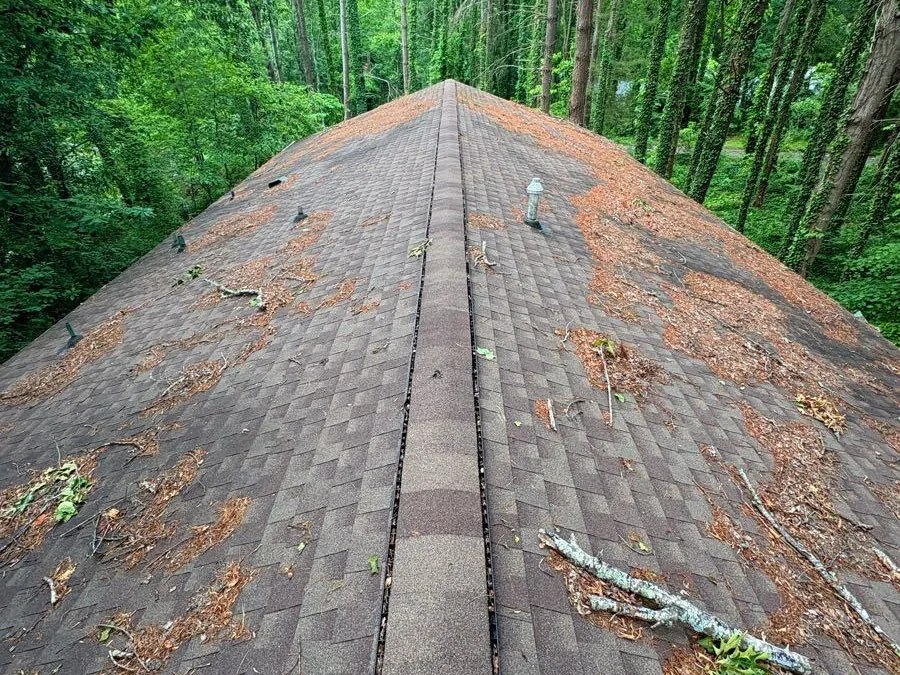
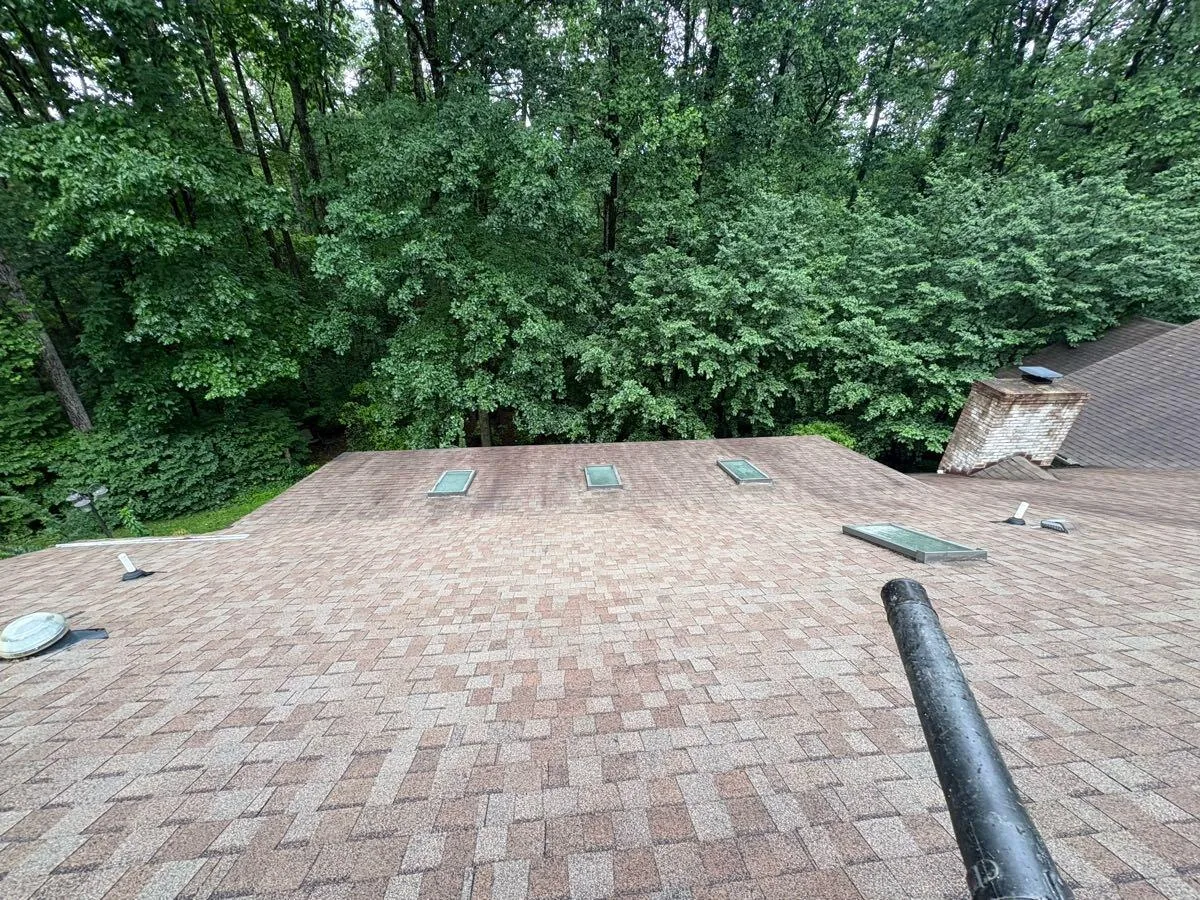
What actually drives the number: roof height and steepness (a walkable 5/12 versus a 10/12 that needs fall protection on every pass), total square footage of affected slope, how deep the moss has rooted into the shingle mat, gutter and downspout load from the debris you rinse off, and whether the growth has spread to the flashing transitions where removal gets delicate. A roof with a single north-facing problem slope prices near the bottom of the range; a roof where moss has colonized multiple slopes plus the valleys prices at the top.
One honest note before any quote: moss is a symptom of a wet roof, not the disease. A north slope under tree canopy in Henderson County's humidity will grow it back. Any scope that removes moss without addressing shade, debris, or drainage is selling you the same job twice. The roof cleaning overview lays out what a complete visit should include.
For current official guidance, see the North Carolina State Board of Examiners of Plumbing, Heating & Fire Sprinkler Contractors. For current official guidance, see the North Carolina Department of Environmental Quality.
Scope versus realistic price range
| Scope | Typical range |
|---|---|
| Single slope, light growth, walkable pitch, one-story | $350–$600 |
| Multiple slopes, moderate growth, some hand work | $600–$1,100 |
| Heavy growth under canopy, steep pitch or two-story | $1,100–$1,800 |
| Moss plus full shingle-safe soft wash of the roof | $800–$2,000 |
| Removal plus minor shingle repair where edges lifted | add $200–$900 |
These are regional bands for Henderson County residential roofs, not a flat rate. Steep-pitch and high-reach work carries real safety cost, and it should. If a bid lands far under these ranges, ask what it skips: the rinse, the gutter flush, or the fall protection.
Why this county grows moss so well
Henderson County sits at the eastern edge of the Blue Ridge, where moist air off the Gulf and Atlantic stalls against the escarpment. That means more fog, more dew, and more days with moisture sitting on a roof than the Piedmont sees. Add the tree canopy that defines older neighborhoods around Hendersonville and the apple-country edges of the county, and north-facing slopes stay damp long after the sun has dried everything else. Moss does not need rain to grow; it needs the roof to stay wet. That is the whole story here.
The federal record backs it up: 16 declared events touch this county across 1978-2026, overwhelmingly storm and flood family. Each one pushed water and wind-driven debris at roofs that were already shaded and slow to dry. It is not that storms create moss, it is that they keep the roof wet long enough for it to take hold.
How it actually comes off without wrecking the shingles
The wrong method is a pressure washer. Blasting shingle granules off a roof to remove moss trades a cosmetic problem for an asphalt problem, and it voids nothing but your own warranty hopes. The right method is a shingle-safe approach: gentle chemical treatment that kills the moss at the root, a controlled rinse, and hand work in the valleys and along flashing where growth clings.
The pressure washing page covers the surfaces where high pressure belongs, and a roof is not one of them. Removal timing also matters. Work in dry, mild weather so the roof dries between treatment and rinse, and expect the moss to brown out over days before it releases. That wait is normal, not a sign the job failed. If a contractor offers to blast it off today and guarantee no granule loss, walk.
When moss turns into a repair
Moss is patient. It holds moisture against the shingle mat, and over seasons that moisture lifts shingle edges, rots the felt, and works into the deck. Once growth reaches the flashing transitions, the valleys, or the ridge, the scope stops being cleaning and starts being repair. The tell is a soft spot underfoot, a curled shingle edge, or granules collecting in the gutter in unusual volume.
This is where code and licensing matter. Roof work that crosses into structural repair or replacement is governed by the state building code, administered through the NC Department of Insurance. Ask any contractor how they handle the transition from cleaning to repair, and get it in writing before work starts. That single question separates maintenance crews from the ones that will find a way to sell you a new roof.
Keeping it from coming back
You cannot change the weather or the tree canopy, but you can change how long the roof stays wet. Keep gutters flowing so water does not back up under the first course. Keep debris off the north slope, especially after storm season. Trim overhanging limbs where practical, because canopy is the moss's best friend here. And put a recurring treatment on the calendar for the shaded slopes, because prevention on a roof that grows moss well is cheaper than the repair it prevents. See the roof cleaning cost guide for what recurring care typically runs.