How tree cover and elevation set the mowing clock in Henderson County
Walk any of the older streets off Main Street in Hendersonville in May and you will hear mowers on the same block twice in eight days. That is not a sales tactic. This county sits in a wet pocket of the Southern Appalachians where the valley floor holds clay and the hillsides above it drain fast, and from late March through June the grass simply pushes. Most average yards here fall into a 7-to-10-day interval during that spring flush before stretching to two or three weeks in the dry heat of late July and August.
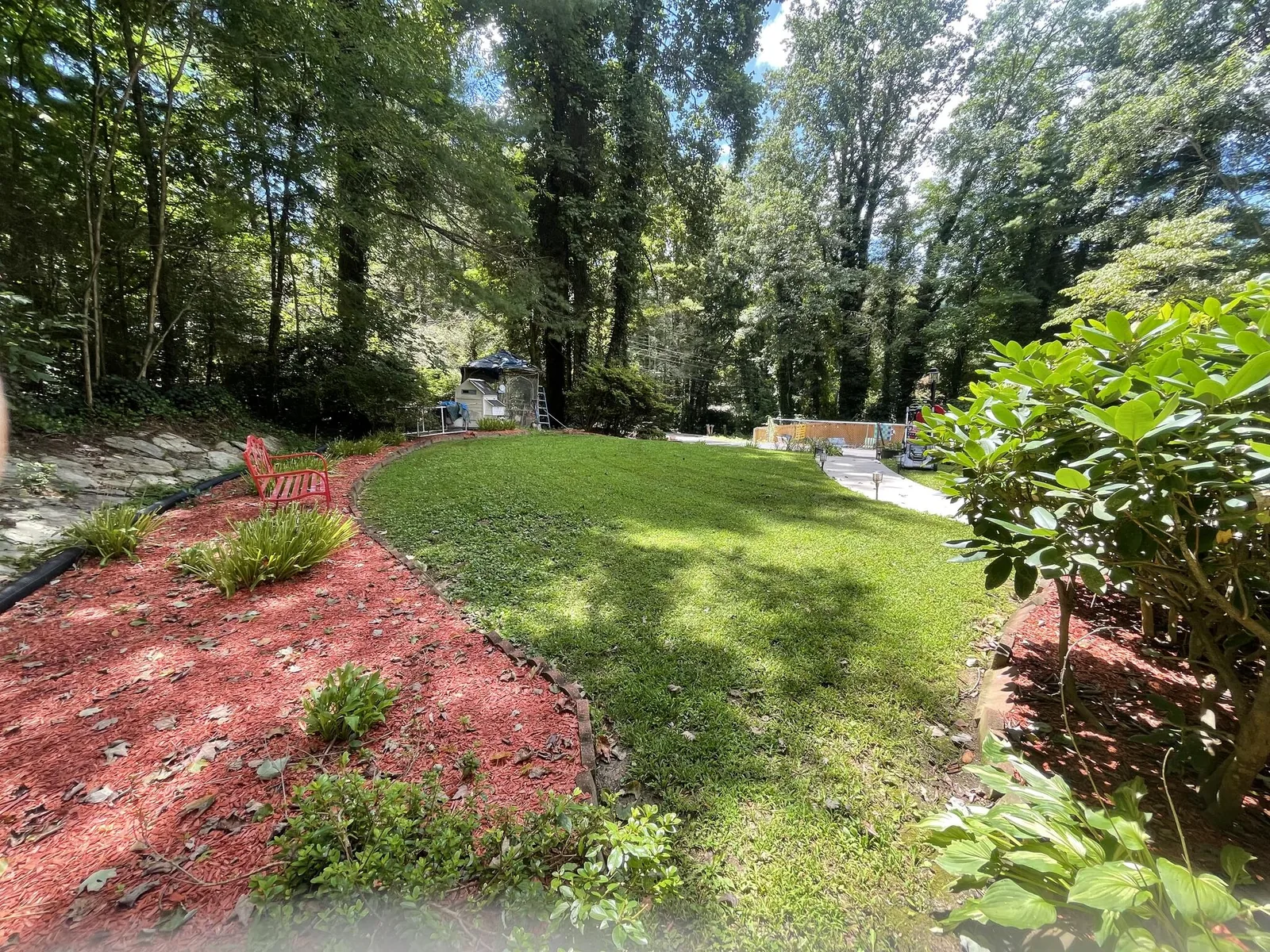
The tree canopy is the other half of the schedule. Hendersonville is genuinely wooded, and shade does two things at once. It slows blade growth in deep pockets so those patches look shaggy while the sunny half is still tidy, and it holds morning dew on the grass long enough that mowing wet becomes a real problem rather than a minor inconvenience. A lot that is half shaded and half full sun usually ends up on the sunny schedule anyway, so the shaded half just gets cut more often than it strictly needs.
That interval is why per-visit pricing only tells part of the story. A $55 cut every ten days runs about $165 a month in peak season. A $70 cut every three weeks runs closer to $95. Before you compare two bids, ask each one what interval they are pricing, because you are not comparing the same service otherwise.
Elevation matters too. Properties up toward Flat Rock and the higher ridges tend to green up a touch later and dry out faster than the valley floor, while low ground near the French Broad bottoms stays wet longer after a storm and can be too soft to cut for days. A crew that knows the county will already be factoring that in.
What each job type runs in the Hendersonville area
Ranges below sit inside the local band and reflect what actually drives price here: lot size, slope, obstacles, and how much trimming the property line demands.
| Scope of work | Typical Hendersonville range | What drives it |
|---|---|---|
| Small in-town lot (under ~1/4 acre, open) | $25 – $45 per visit | gate access, parking, trim line length |
| Average yard (~1/4 to 1/2 acre) | $45 – $75 per visit | obstacles, slope, bagging vs. mulching |
| Large lot (1 acre or more) | $90 – $120 per visit | open vs. wooded, mower width needed |
| Steep or terraced hillside lot | top of the size band | push mower or walk-behind only, slower passes |
| Overgrowth or first cut of the season | top of band plus taller-grass charge | height of grass, bagging volume, disposal |
Those are working ranges, not quotes. A property with a fence line, a retaining wall, and three shade trees takes longer than the square footage suggests, and a bid should say so honestly rather than surprise you once the work starts. Small in-town lots around the historic district tend to price at the low end because they are open and easy to access, while a lot with a long gravel drive off a county road will often carry a small trip charge folded into the visit price.
One more local variable: properties on well and septic often have a drain field that has to be mowed short and carefully, which can rule out a heavy rider and slow the job down. Ask any bidder whether they have worked around a drain field before.
Why hillside lots cost more per visit
A mower that cuts a quarter acre of flat valley lawn in twenty minutes takes twice as long on a lot cut into a slope, and most residential property outside the immediate downtown grid here has some grade to it. Steep ground rules out the wide zero-turn mowers that make flat work fast, which means narrower decks, slower passes, and more string trimming at the edges and around retaining walls.
There is a safety side to this too. Mowing on slopes is one of the more common ways homeowners get hurt with equipment, and the guidance from the EPA and equipment makers on fuel handling and safe operation matters more on a grade where a mower can slide. If a bidder proposes to run a rider up a slope you would not walk up in wet grass, that is a signal about how they work and what else they might cut corners on.
The upside is that a hillside lot with established ground cover often needs less watering and holds up better in the dry stretches, so the maintenance cost is front-loaded in labor rather than in irrigation. Terracing and plantings can reduce the mowed area over time and bring the annual number down, which is worth thinking about if you are on a slope long term.
Standalone services priced alongside mowing
Most Hendersonville homeowners do not buy mowing alone forever. Once the grass is under control, the next line items tend to be cleanup, mulch, and seasonal trimming. Knowing where those sit helps you build a yearly number instead of guessing month to month.
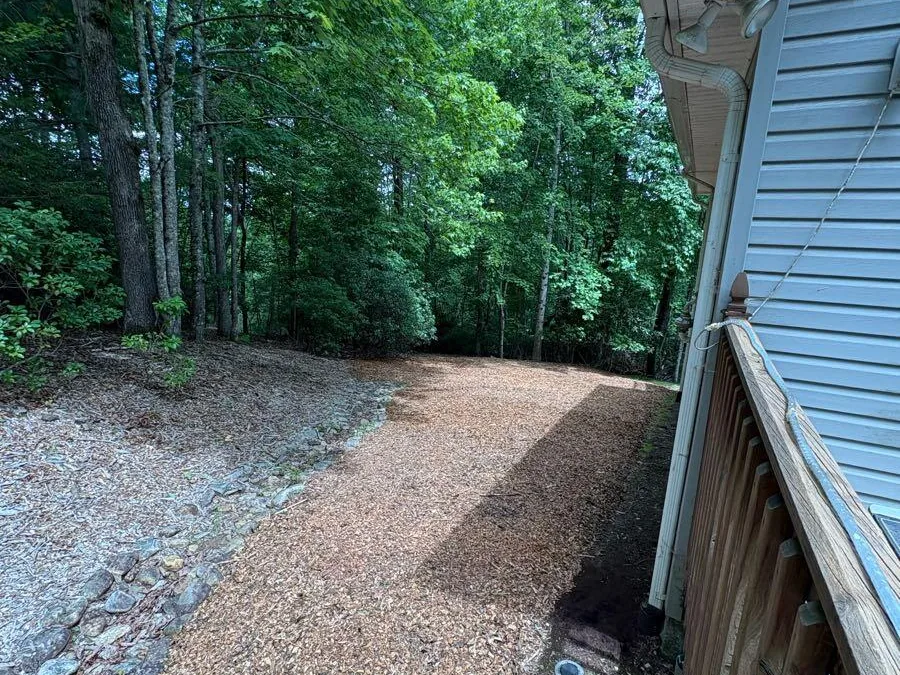
Mulch refresh is the one that surprises people, because beds around here are large on wooded lots and the material adds up fast. The mulch installation cost guide breaks down what a full bed refresh runs. If you are weighing whether to keep mowing and trimming on one contract or split them, the lawn care cost page walks through how those bundles typically price, and the lawn mowing service page covers what a standard visit actually includes. Seasonal leaf removal is its own conversation in a county this wooded, and it is almost always priced per cleanup rather than folded into the mow.
Fertilization and weed control sit in that same bundle territory. On a shaded lot, moss and thin turf are common, and a program that treats for shade rather than pushing sun-loving grass into a dark yard tends to get better results. That is a service decision, not just a cost one, and it is worth asking how a provider plans to handle it before you sign a full-season contract.
Rules, safety, and what a fair contract looks like
Lawn mowing itself is not a licensed trade in North Carolina, so the consumer protections that exist sit in general contracting law and in how a business is set up. The NC Licensing Board for General Contractors sets the threshold where a job crosses into licensed work, and if a mowing company is also doing retaining walls, hardscaping, or drainage work, that threshold is worth understanding before you sign. For anything involving grading or stormwater, the NC Department of Environmental Quality has jurisdiction over erosion and sediment concerns, and heavy rain here makes that relevant rather than theoretical.
Weather is a real scheduling factor in this county. Summer afternoon storms roll through the mountains and stall, and the record backs that up: 16 federally declared disaster events touch Henderson County (1978-2026), most of them storm and flood related. The National Weather Service outlook for the mountains is something a good crew actually checks before loading equipment. That means a fair contract includes language about rescheduling after heavy rain and what happens if a visit gets pushed. A crew that mows saturated ground tears up turf and creates ruts you then pay to fix.
Three things protect you on a mowing contract:
- Price the interval, not just the visit. Get the per-visit number and the expected frequency in writing so your monthly cost has no mystery in it.
- Confirm what is included. Edging, blowing off hard surfaces, and bagging are the usual add-ons. Ask before the first cut, not after.
- Check the rain policy. A one-line rescheduling clause saves arguments in a wet mountain summer.
If you are hiring more than mowing, the same general contracting rules and insurance expectations apply. Ask for proof of liability coverage before anyone runs equipment on your property, and if the scope grows into structural or drainage work, confirm the license situation first.