Hendersonville Leaves Aren't a Leaf Problem — They're a Water Problem
Drive any road off Kanuga or up toward Jump Off Rock in late October and you'll see it: oak, hickory, maple, and poplar dropping in waves for six weeks. What makes leaf removal in Hendersonville different from a Charlotte suburb isn't volume — it's where that volume lands. Creek-side lots shed into ditches and swales. Sloped driveways funnel leaf mat straight to garage thresholds and crawl-space vents. And when 16 federally declared events over 1978-2026 are on record for this county, a blocked fall drainage path isn't cosmetic — it's the first inch of the next water intrusion.
So the real question isn't "who will blow my leaves." It's whether the crew you hire treats leaf removal as a debris-hauling job or a water-management job. That single distinction drives every scope, price, and warranty answer below. Fixing leaves once, before winter rains, is cheaper than fixing a wet crawl space in February — and it's why we build the clean around drainage first, not piles first.
This is the same logic behind gutter cleaning and proper lawn care on mountain lots: the leaves have to leave, but where they leave to matters more than how fast they go.
What a Complete Clean Actually Covers
A finished leaf job on a wooded Henderson County property includes all of the following, not some of it:
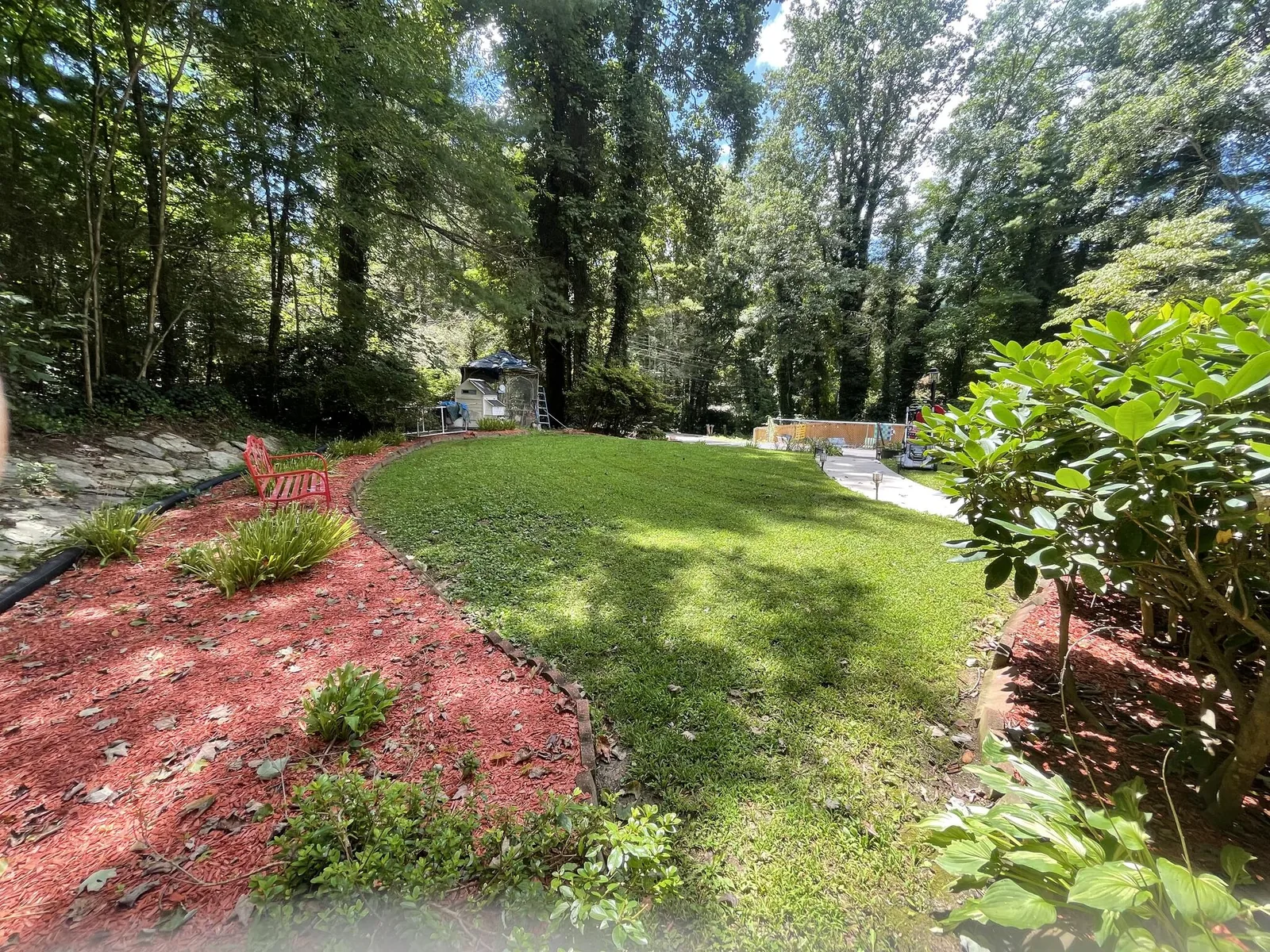
- All turf and bed surfaces — not just the visible front yard; the back slope and under-deck zones are where matting starts.
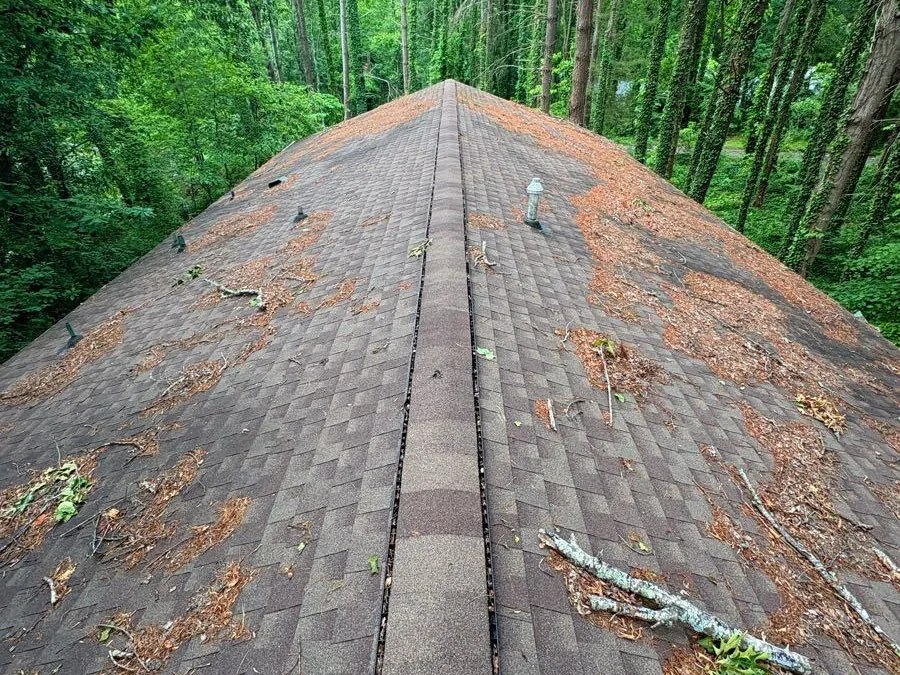
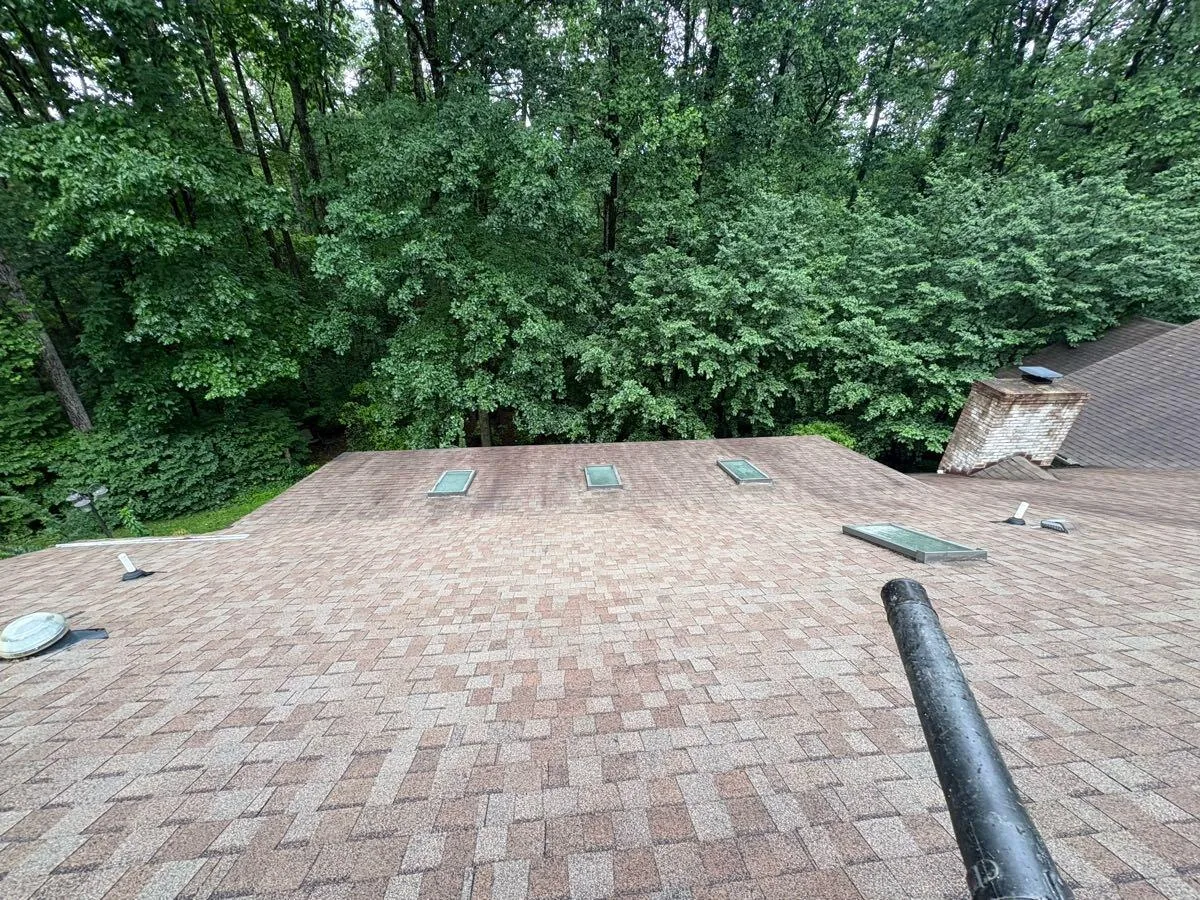
- Roof valleys and lower pitches — leaves pile here and wick water under shingles; a tarp-and-blower approach protects the shingles and the gutters below.
- Gutters and downspout runs — cleared and flushed, since a leaf-filled gutter is a delayed roof leak with a schedule. This is where our leaf work overlaps directly with gutter cleaning — same fall visit, one crew.
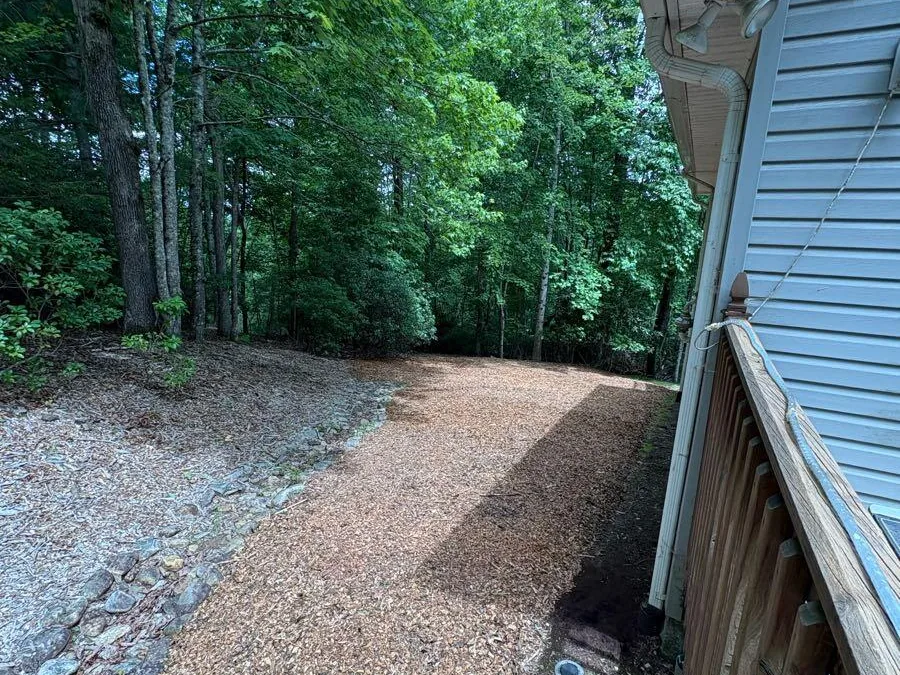
- Drainage swales, ditch lines, and culvert mouths — the county-specific piece most out-of-area crews skip.
- Haul-off or a designated on-site windrow — decided in advance, in writing.
- Post-clean blow-down of hard surfaces — driveway, walk, patio, so the property looks finished and not just "worked on."
Because Henderson County sits in a canopy-heavy, mixed-hardwood belt with late-dropping oaks, that full sequence is usually a two-pass job: once mid-fall, once after the last hard freeze. One-pass pricing often looks cheaper until you pay for the second visit anyway.
Costs by Scope: Where Your Yard Sits
Pricing scales with canopy, slope, access, and how the debris leaves the property. The table below reflects how we scope most Hendersonville-area calls. None of these figures exceed the site's published band of $250–$900; all are inside it.
| Scope of Work | Typical Range | What Drives the Number |
|---|---|---|
| Single-pass cleanup, light canopy, curb-lot | $250–$350 | One visit, small debris volume, easy blower and truck access |
| Full fall cleanup, average mixed canopy | $350–$550 | Two passes, roof valleys, gutters, moderate slope |
| Wooded lot, gutters + drainage included | $550–$650 | Dense oak/hickory, ditch or swale clearing, haul-off |
| Heavily wooded, steep, multi-pass | $700–$900 | Slope work, dump-trailer haul, two or more scheduled visits |
Two access facts move the number more than square footage in this county: whether the lot has a drivable path to the drop zone (steep-woods properties often don't, so debris moves by hand or winch), and whether haul-off is on site or to a transfer facility. Both get quoted in writing before the first leaf moves. Full line-item detail lives on the leaf removal cost page.
Blow-and-Go vs. Done Correctly: What Separates Them
"Do it once properly" comes down to four things a stranger with a backpack blower cannot fake:
- They know where the water goes. Every Hendersonville property drains somewhere specific — a swale, a county ditch, a creek. A crew that blows leaves into that path just moved the problem ten feet.
- They clear the roof, not just the ground. Ground leaves are visible. Roof-valley leaves are the ones that cause the February call. Shinagled roofing surfaces and tarping around gutters protect the shingles while the debris comes off.
- They schedule the second pass up front. Because late-dropping oaks in this region are still dropping when the first crew wraps, an honest quote names the return visit at the start. A "one and done for the season" promise is almost always the beginning of a callback.
- They document the haul. Photos before and after, plus a written debris destination, keep the job accountable and prove the material actually left the property.
That last point connects to lawn care — leaf mulch left piled on turf smothers the grass, and it's a fall decision that shows up as bare spots in April. If mulch stays, it stays thin and even. That judgment call is exactly the kind of thing an experienced local crew makes without needing to be told.
Storm Season, Safety, and the Rules That Apply
Two compliance realities touch leaf work here. First, roofing and exterior work done at height should follow the manufacturer's and model-code guidance; the fall-protection and installation standards published by the International Code Council are the baseline any reputable crew works to, particularly when leaves sit on walkable roof pitches. Second, and more directly applicable: North Carolina's outdoor-burning rules and county burn bans change by the week in fall, and burning leaf piles that then catch a slope or a wood line is a preventable risk. When a burn ban is active, debris must be hauled off, not burned — that's a scope and cost item, and it's why haul-off is quoted as a line, not a vague "debris fee."
Storm surge in the water table matters too. With 16 declared events across 1978-2026 on record in this county, saturated ground plus a leaf-choked swale is the classic setup for a wet crawl space and a shifted downspout. Cleaning gutters and their below-ground runs, as covered on the gutter cleaning page, is the cheapest insurance against that sequence that a homeowner can buy in the fall.
For current official guidance, see the North Carolina State Board of Examiners of Plumbing, Heating and Fire Sprinkler Contractors. For current official guidance, see the North Carolina Department of Insurance, Office of State Fire Marshal — Code Officials Qualification Board.