Follow the water: where it leaves the roof on a Henderson County lot
On a sloping lot off Kanuga or up toward Jump Off Rock, the gutter's job is to move roof water away from the house before gravity and clay soil do the rest. The path is short and unforgiving: roof to gutter to downspout to grade. When it overflows in a downpour, the failure is almost always at one of those four joints, and locating the actual failure is the whole diagnosis. A gutter that only spills during the hardest ten minutes of a storm is usually not clogged at all. It is undersized for the roof area it drains, or a downspout is too small to carry what the gutter is delivering.
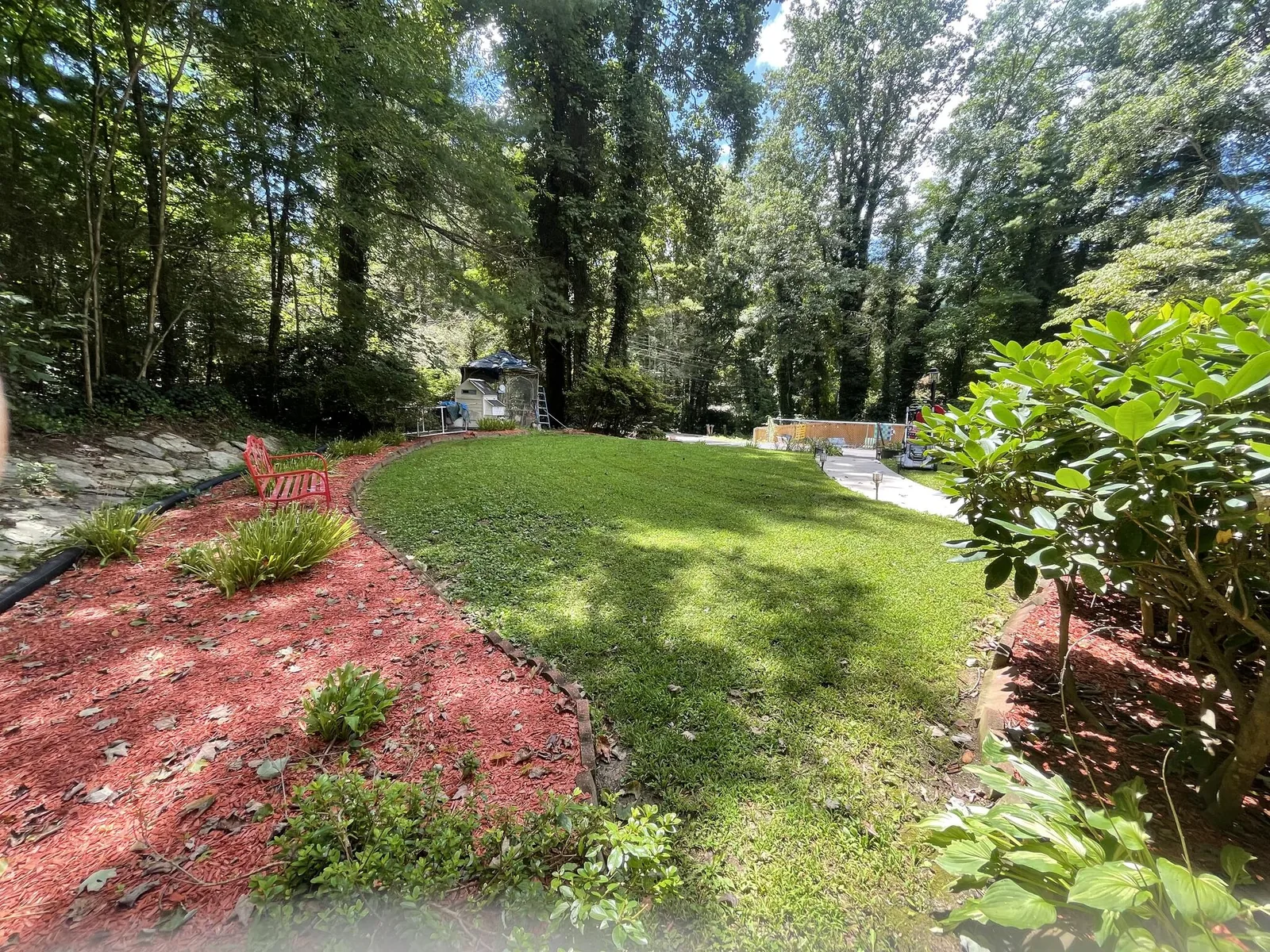
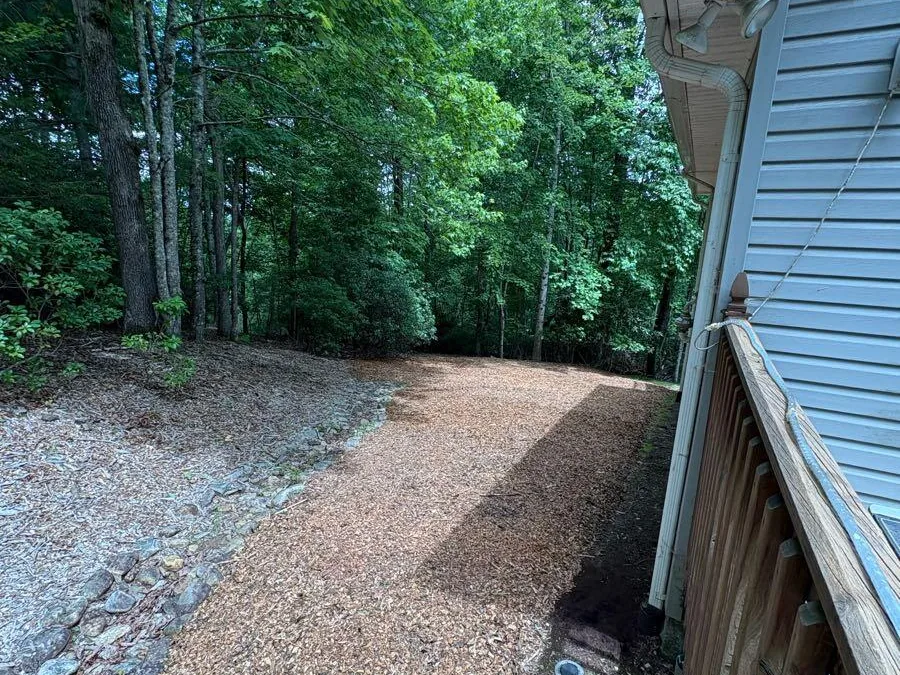
The Henderson County version of this has a specific fingerprint. Lots here are cut into grade, so a downspout that discharges two feet from the foundation sends water straight back to the lowest corner of the house. That is how a gutter call becomes a wet-basement call by the next spring. The overflow you see at the fascia is often the second problem; the first is where the water has been going for years.
The three causes, separated by when they spill
Timing tells you which failure you have. A gutter that drips and trickles year-round is clogged with leaf litter, shingle grit, and the pine debris that never stops falling in this part of the state. A gutter that runs clean in a light rain and sheets over the front edge in a heavy one is either pitched backward or too small for the roof. A gutter that pours from one specific spot, usually at a corner or an inside miter, is a seam, an end cap, or a hanger that has pulled loose.
Each cause wants a different fix, which is why a blanket "gutter cleaning" quote can miss the point. If the run is pitched wrong, cleaning it changes nothing. If the downspout is undersized, cleaning it changes nothing. The right first step is a look at the run in a real rain or after a hose test, not a guess from the ground. The full cleaning scope covers what a proper visit includes and what it does not.
What the work actually costs around here
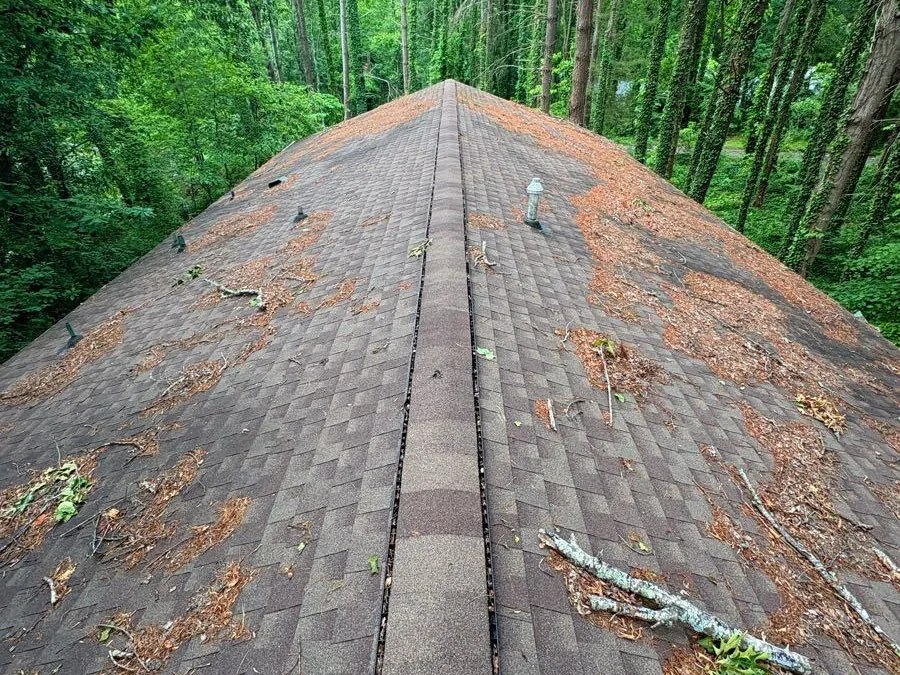
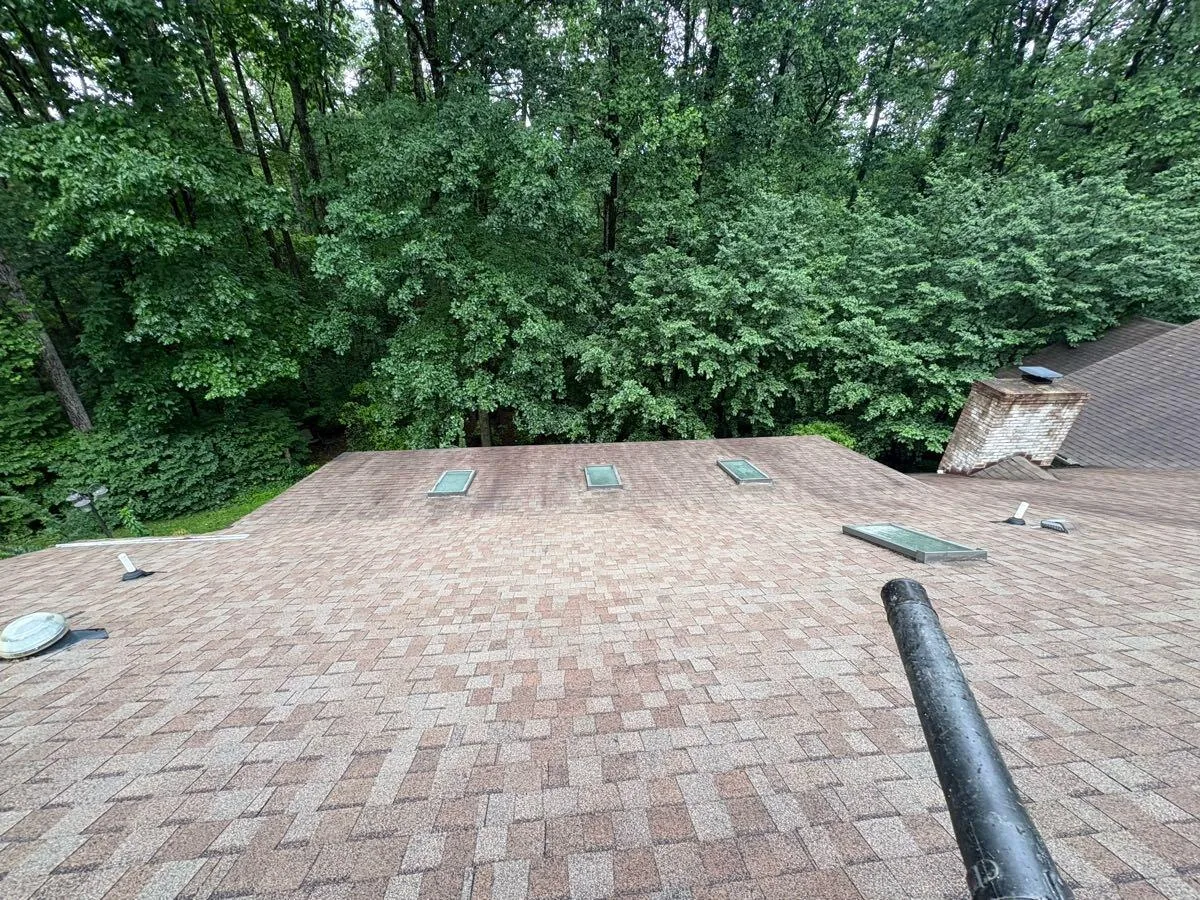
Prices below are regional bands for Henderson County and the Asheville area, not flat rates. Two-story runs, steep roof pitches, and heavy debris loads all push toward the top of each range. Any job that touches the roof surface itself, like clearing a valley that feeds a stubborn gutter, will price alongside roof cleaning because it is the same kind of work.
| Scope | Typical Range | What it covers |
|---|---|---|
| Single-story clearing, light debris | $150-$250 | Full run, downspout flush, ground check |
| Two-story clearing, heavy debris | $250-$450 | Full run, downspout flush, bagging debris |
| Downspout unclog or reroute | $200-$600 | Clearing the drop, extending discharge away from foundation |
| Pitch and hanger correction | $400-$1,400 | Resetting slope, replacing pulled hangers, sealing seams |
| Gutter replacement, partial or full run | $1,200-$2,200 | New sectional or seamless run, downspouts, splash control |
For reference on the maintenance end, the cleaning cost breakdown shows what a seasonal schedule runs versus a one-off rescue after a storm.
Why this county floods the way it does
Henderson County sits in the path of the same storm systems that have hammered western North Carolina repeatedly: 16 federally declared events touch this county across 1978-2026, and the overwhelming majority are storm and flood family. The National Weather Service has documented how the mountain terrain here intensifies rainfall in short bursts, which is exactly the condition that finds a weak gutter. A run that handles a steady drizzle without complaint can fail in the first ten minutes of a summer cell, and that failure is diagnostic rather than random.
The consequence of chronic overflow is not just a wet walkway. Water that hits the soil at the foundation wall keeps that soil saturated, and saturated soil moves. On the cut-and-fill lots common around Hendersonville, that movement is what eventually shows up as cracks and sticking doors, work that belongs in a different trade entirely. Gutter repair is cheap prevention; foundation repair is not.
When to call, and what to have ready
Call when the spill happens in heavy rain rather than steady rain, when a downspout empties against the house instead of away from it, or when you can see the gutter pulling away from the fascia. Have the roof area of the affected run, the number of stories, and any history of the problem ready for the first conversation. A crew that asks about the water path before quoting is the one that will actually fix the cause.
Two honest checks before you hire: ask whether the crew will test the run with water rather than just bag the leaves, and ask where the discharge will end up once the downspout is clear. For anything that touches roofing material or structural work, licensing thresholds in North Carolina are set through the NC Department of Insurance and Building Code Council, and a legitimate crew will not hesitate to confirm their standing. For general drainage and runoff questions on a property, the NC Department of Environmental Quality maintains the state's stormwater guidance.