The Edneyville debris calendar
Edneyville is apple country, and the orchard canopy sets the maintenance rhythm here in a way that flatland suburbs never see. Spring brings blossom drop and the first flush of pollen off the ridges; late spring and early summer are when the hardwoods above the orchards shed seed tassels and cottony debris that packs gutters fast; fall is leaf season, and in this part of Henderson County it runs long and heavy because the tree cover is dense and the lots are sloped. Winter adds wind-blown twigs and the occasional ice load.
What that means practically: a gutter on a wooded Edneyville lot can go from clear to overflowing in a single storm week in October, and roof valleys catch the same load. The right schedule is not once and done. It is a spring pollen clean, a late-summer seed-tassel check, a fall leaf cleanout, and a winter inspection after the first hard wind event.
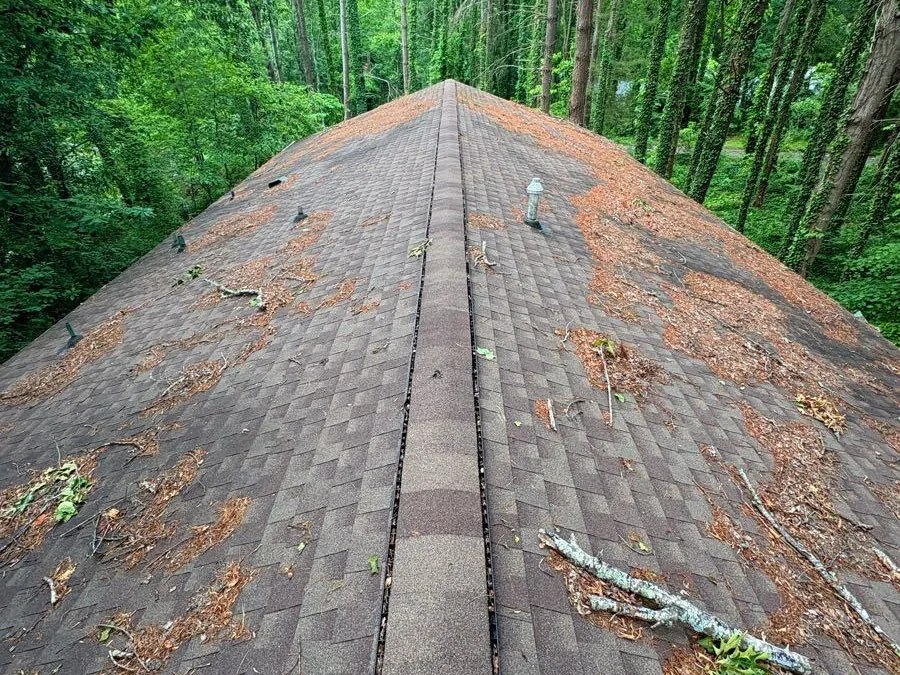
The debris itself changes character through the year, and that matters for how we work. Spring pollen arrives as a fine, sticky film that clings to shingle granules and gutter bottoms — it does not rinse away with a light rain, it cures. By June the hardwoods are dropping catkins and seed tassels, light and dry, which blow into valleys and pile at downspout mouths. By late September the first tulip poplar and walnut leaves are down, and those are heavy and leathery; they mat instead of draining. By November the oaks and maples finish the job, and on a steep lot that load slides downhill into the same gutters that just cleared. Every one of those phases needs a different technique — blowing, hand-scooping, flushing, or a combination — and treating the whole year as one 'leaf season' is how gutters get missed.
The orchard blocks themselves add a component most homeowners do not think about. On properties that back up to working apple ground, spring spraying schedules and fall harvest traffic mean dust and fine organic particulate settle on roofs and in gutters faster than on a lot surrounded by lawn. It is not dramatic, but it is steady, and it is one more reason the calendar here is tighter than a typical suburban one.
How the slope shapes the work
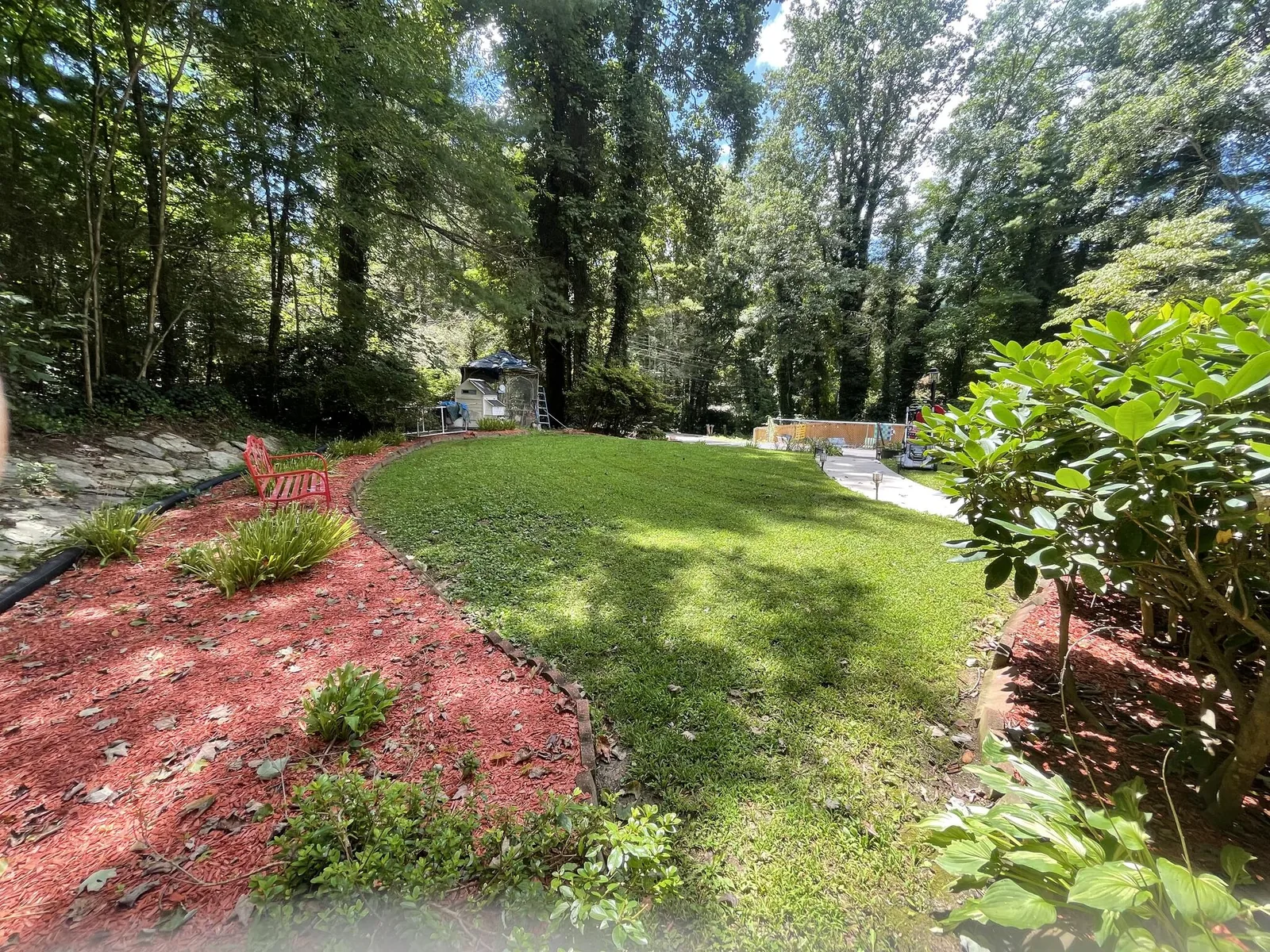
Terrain in and around Edneyville is rolling to steep, with orchards and wooded hillsides above many homes. That grade does two things. First, it pushes water toward the house — so gutter capacity and downspout discharge matter more than they would on flat ground. Second, it makes access part of the job: ladders on grade, hauling mulch and debris up and down, and staging that keeps equipment off wet slopes.
It also changes the failure mode. On flat lots, a slow gutter usually just stains the fascia. On a sloped Edneyville lot, an overflowing gutter sends water down the foundation wall on the uphill side, where it has nowhere to go but into the crawlspace or against a retaining wall. We see this most on homes cut into a hillside with a walk-out basement — the downhill side looks fine while the uphill side quietly takes on water all fall.
The National Weather Service storm record for this county tells the same story the ground does. 16 federal disaster declarations touch Henderson County across 1978-2026, and the majority are storm, flood, and wind family. That history is why drainage and roof-water management belong in the same conversation as planting and mulch.
Access planning is not a formality here. A two-story home on a steep drive may need ladder stabilization on grade that a flat-lot crew never thinks about, and mulch deliveries sometimes have to be staged at the bottom and carried up rather than dumped at the bed. We figure that into the walkthrough, not the invoice.
What this work actually costs
The short version: most jobs run $150-$1,500. A routine gutter clean sits near the bottom of that range; a mulch bed refresh or a seasonal cleanup lands in the middle; roof cleaning, full gutter cleanouts on a tall wooded lot, and larger bed rebuilds sit at the top. Slope, tree cover, and how long since the last service are the three things that push a quote up within that band.
| Scope | Typical range | What moves the price |
|---|---|---|
| Gutter clean, single-story lot | $150-$300 | Linear feet, tree cover, downspout count |
| Gutter clean, two-story or heavy canopy | $250-$500 | Ladder height, roof pitch, debris volume |
| Seasonal cleanup (leaves, beds, walkways) | $300-$700 | Lot size, bed count, disposal |
| Mulch bed refresh | $350-$900 | Bed square footage, edging, material |
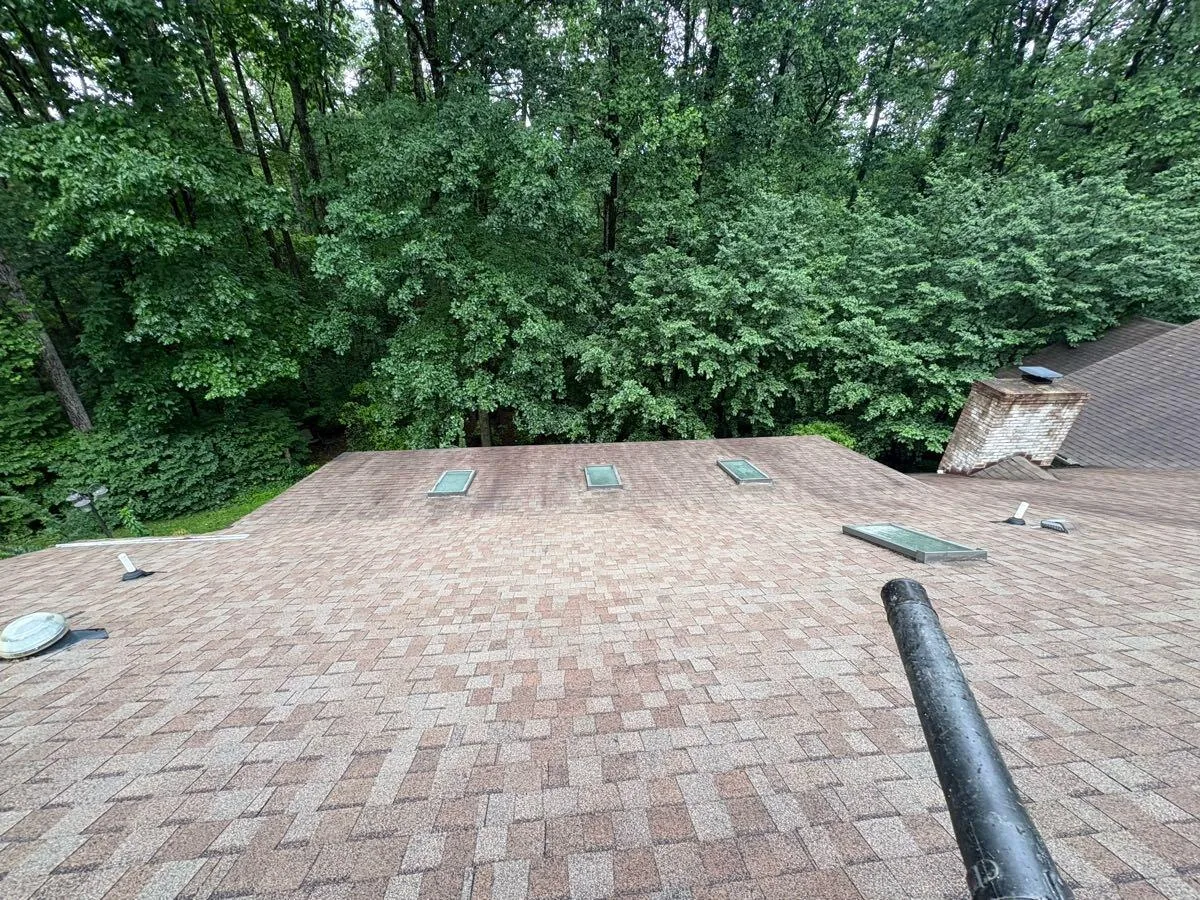
| Roof cleaning and full cleanout | $700-$1,500 | Roof size, pitch, organic growth, access |
For a closer look at the gutter side specifically, the Henderson County gutter cleaning cost breakdown shows how those numbers build up line by line.
Two things that surprise people in this area. First, disposal is not free — debris hauled off a heavily wooded lot has real volume, and shingle-safe roof cleaning uses products that cost more than a pressure-wash pass at a car wash. Second, a 'simple' gutter job on a two-story home under oaks can be genuinely more involved than a much larger single-story job on an open lot; the range reflects that honestly rather than pretending all cleanouts are the same.
Planting and care that fits orchard country
Edneyville sits in a climate that suits fruit and flowering trees, native shrubs, and tough groundcovers. It also sits in a place where deer pressure and summer dry spells are real. That argues for native and well-adapted plantings, sensible bed design that handles runoff from uphill slopes, and mulch depth that holds moisture without smothering roots.
Deer pressure here is not a rumor. On lots that back up to woods or orchard edge, young deciduous plantings can be browsed hard through winter, and any design that ignores that will look fine in June and picked-over by February. We favor plants that deer tend to leave alone, and where a client wants something more tender, we place it closer to the house and busier parts of the yard rather than out at the tree line.
Our lawn care work here leans on that same principle: build the soil and the drainage first, and the grass follows. The EPA publishes practical guidance on water-wise landscaping and runoff that matches what this terrain demands.
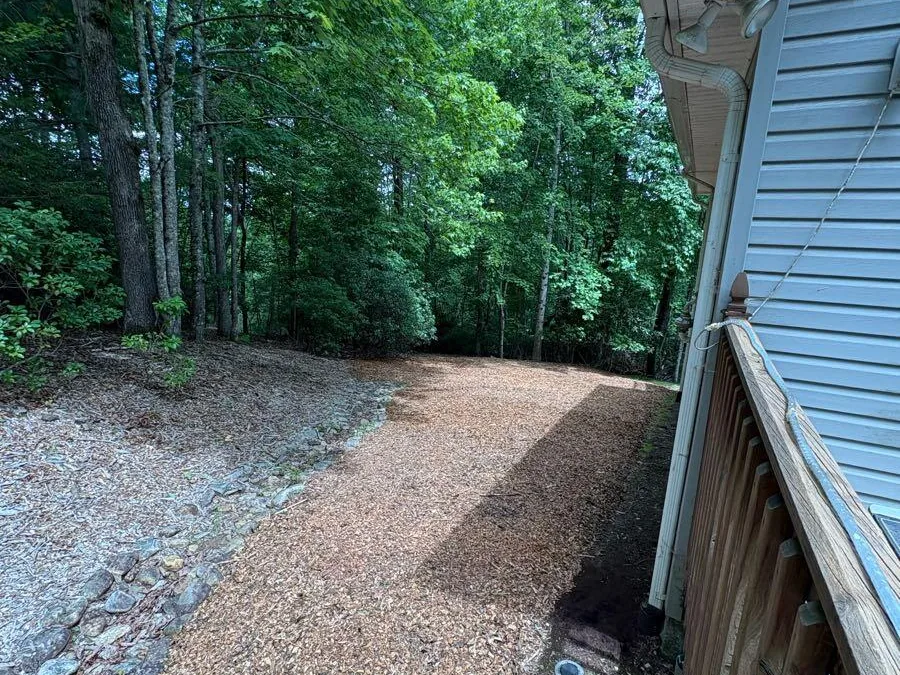
Mulch matters more on these slopes than on flat ground. Too thin and the summer sun bakes the beds and runoff cuts channels; too thick and roots stay wet and shallow, then struggle in a dry stretch. We aim for a moderate, even depth that lets water move through the bed and holds moisture where the roots actually live, and we keep mulch off the trunk flare and away from the siding line.
Timing your service through the year
A working calendar for an Edneyville lot: late winter for a structural inspection of gutters, beds, and drainage; early spring for pollen cleanout and a first mulch pass; early summer for seed-tassel and roof check; fall for the main leaf cleanout; and a post-storm walk-through after any significant wind event. Two-story homes under a wooded canopy sometimes need an extra mid-fall gutter visit, and we flag that on the first walkthrough rather than after problems show.
If you want the gutter side scheduled separate from the rest, our Edneyville gutter cleaning service runs on the same calendar. When something is actively backing up or overflowing, say so in the request and we prioritize it.
Two local notes on timing. The fall leaf window here tends to run later than in the flatland towns east of the county, because the ridges and orchard blocks stay cool and the hardwoods hold longer; booking a first leaf clean in early October usually misses the bulk of the drop. And spring pollen hits early on warm south-facing slopes — often before the ornamental trees in town have finished flowering — so a 'first clean' scheduled in late spring can arrive after the gutter has already run over once or twice.
What to expect when we quote
A real quote starts with a real walkthrough. We look at roof pitch and access, gutter linear footage and downspout discharge points, bed size and condition, drainage paths across the slope, and how long since the last service. That is what separates a number that holds from one that changes on service day. If a scope crosses into work that needs local permitting or a licensed contractor, we say so and point you to the right channel up front.
We also tell you what we are not seeing. If the gutters look fine but the fascia has staining that suggests past overflow, that goes in the quote notes. If a downspout discharges straight onto a slope and cuts a channel every storm, we call that out even though it is not strictly 'landscaping.' And if the honest answer is that a job is a two-person half-day, we say that rather than quoting a padded number to cover a hypothetical.
What we do not do is quote from a photo. Slope, ground condition, and access look one way in a phone picture and another way under a ladder, and the quote you keep is the one built on the site visit.