The first thing Moises looks at is what is still standing
On the walk-through of a storm-hit property in Henderson County, the quote does not start with what fell. It starts with what is still up: a leaning oak by the driveway, a half-torn limb hanging over a gutter line, a tilted pine next to a parked car. Those are the things that decide the job, because they are the things that get someone hurt or drop onto a roof while the crew is working under it.
The second pass is the ground. Mud, branches, and roof shingle fragments get pushed downhill fast around here, and they pile against the low side of a house, against a retaining wall, or against the driveway apron. A pile against the foundation holds water exactly where you do not want it. Anything near a downed line or a pole still gets flagged, hands off, and pointed at the utility before a saw starts.
What actually drives the number in this county
Henderson County sits between the Blue Ridge escarpment and the piedmont, so the same storm writes two different bills. Flat in-town lots with pile debris and grass laid over flush out cheaper, because it is mostly raking, hauling, and mowing. Out on the ridge roads and the steeper cut-and-fill lots, the debris ran downhill and packed into fence lines, ditch crossings, and stormwater inlets, and often it needs to be pulled out and hauled up before it can be hauled off.
The federal disaster record is the honest context: 16 declared events touch this county over 1978-2026, mostly heavy rain, wind, and flood family. Those are the events that turn a weekend of raking into a muck-out. The National Weather Service keeps the storm history, and the pattern shows up on the ground as recurrent ditch and culvert clogging, not as one freak event.
Scope vs. price, before anyone touches a saw
Regional bands, not promises — every property is its own job, and what is under a pile changes the number more than the pile's size does.
| Typical scope | Regional range |
|---|---|
| Small debris, limbs, and scattered raking on a cleared lot | $300–$800 |
| Medium tree debris plus haul-off, grass laid over, some mowing | $800–$1,500 |
| Large debris, ditch and culvert clearing, muck-out at the foundation | $1,500–$2,500 |
| Steep access, pull-up equipment, or multi-day hauling | $2,500+ |
Two scope lines worth naming separately: hazardous standing-tree work above a structure is its own trade and needs its own crew, and hauling is priced by load, not by how big the pile looks. The junk removal page covers the hauling side, and the leaf removal service handles the fine debris that a blower alone cannot get off wet ground.
Water off the property matters more than the mess
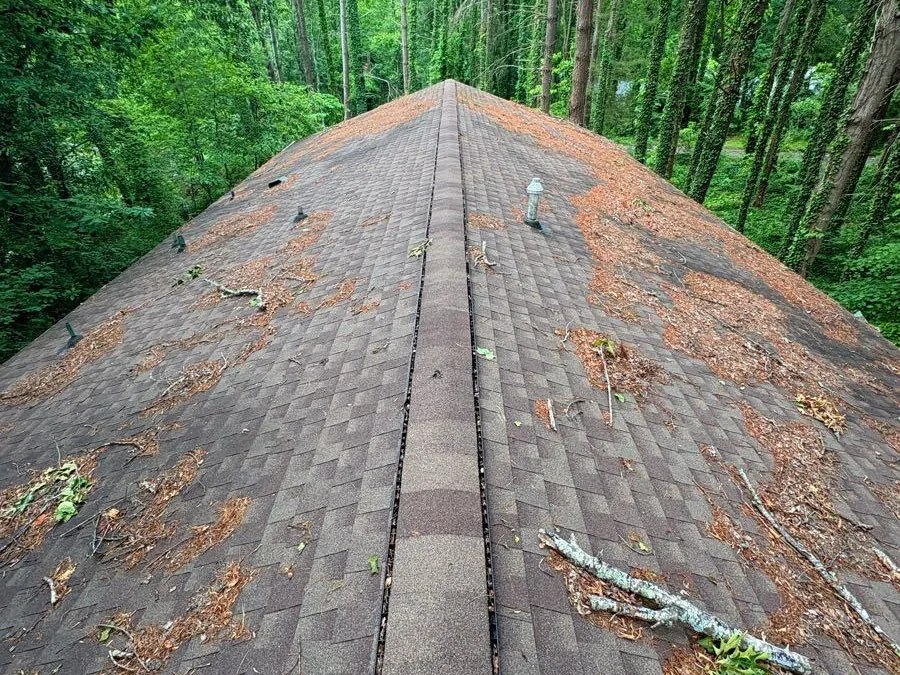
A yard full of branches is a mess; a yard with a blocked ditch is a drainage problem that shows up next storm. This part of the state receives its rain in bursts, and stormwater carries the debris downhill into the same low spots every time. Before rake-and-haul, the honest sequence is: clear the ditch line and the culvert, get the branches off the roof and gutters, then deal with the lawn.
NC Department of Environmental Quality treats yard and storm debris under its waste rules, so burned brush piles, debris pushed into a stream, and yard waste dumped in a drainage area are not free decisions. Separately, anything that lands on a structure is an insurance and safety question first. HUD guidance for post-disaster cleanup is blunt about not re-entering or working under damaged structures, and that applies to a shed and a carport as much as it does to a house.
Where the job splits: us, a tree service, or the utility
Not every storm job is one job. If the only issue is limbs down on open ground and lawn debris, it is a cleanup. If a tree is leaning on a structure, a power drop is involved, or a trunk is hung up in another tree, that gets a licensed tree service and, for the line, the utility — NC licensing rules for the trades that touch structures and utilities run through the state licensing board. Pushing the wrong crew at a job is how a cheap cleanup becomes an expensive repair.
Once the structural and line items are cleared, the recovery usually settles into cleanup, hauling, and getting the lawn back. The lawn care service takes over the ground that was scraped, compacted, or buried, because grass under a week of wet debris will not simply recover on its own. That is the handoff, and it is the point at which a yard cleanup quote stops being guesswork.
How to get a useful quote instead of a guess
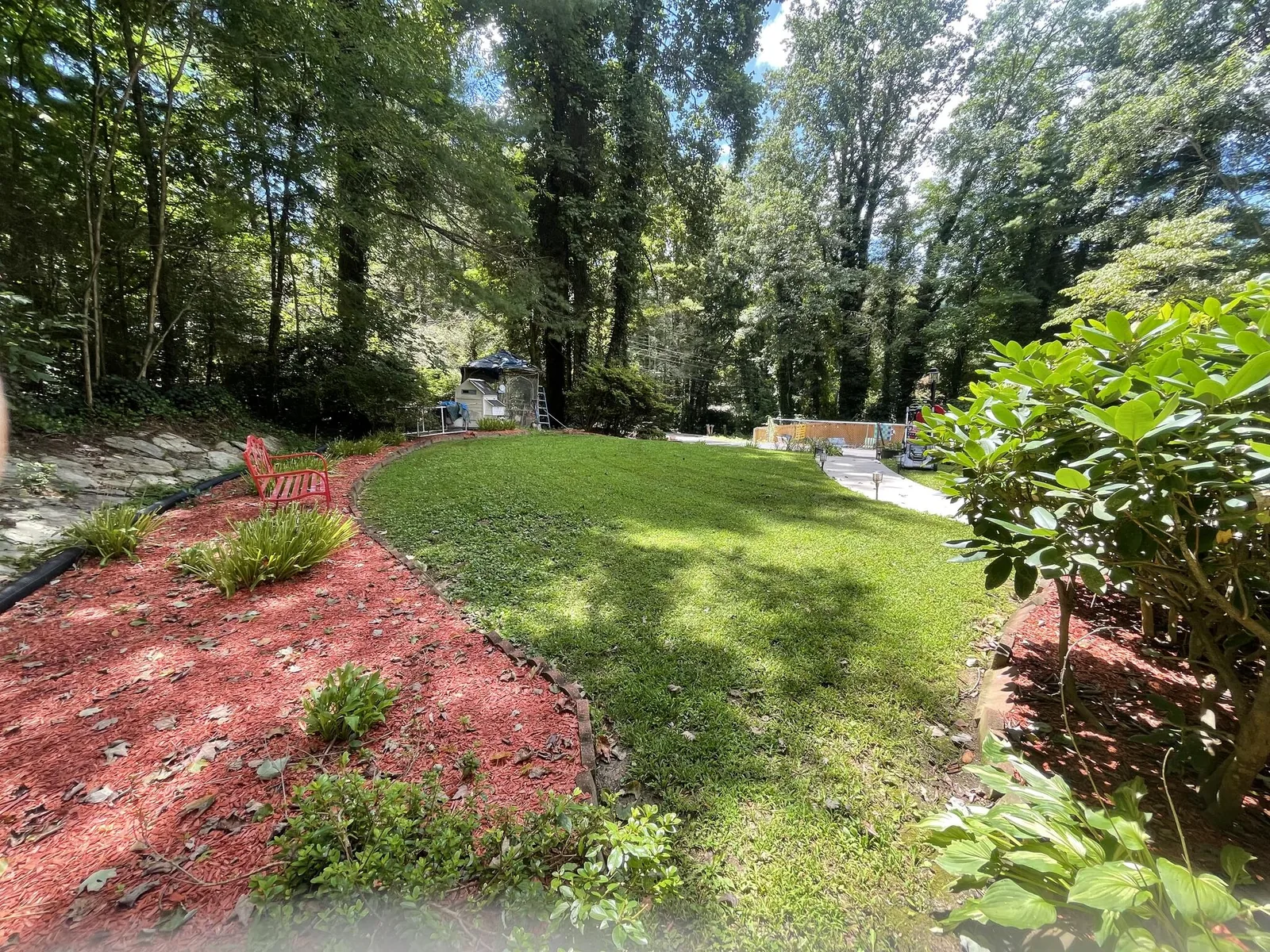
Two photos and one sentence beat a phone call. A wide shot of the whole yard and a close shot of the biggest single problem tells the estimator more than a description of "a lot of branches." Say whether a vehicle or trailer can reach the pile, because steep access changes the job more than the pile does around here.
The NC Department of Insurance resources on property damage are worth a look if a structure is involved, since the insurance conversation should start before the debris does. Flag your timeline when you reach out: debris sitting on wet ground starts killing grass within days, and post-storm hauling schedules in this county fill fast in the first week.