The line items that decide what you pay here
A ranch in Weaverville sitting on flat ground and a two-story on a Leicester hillside can carry the same gutter footage and still price forty percent apart. That gap is the whole story of gutter cleaning in Buncombe County: it is not priced per house, it is priced per hazard. Roof pitch, ladder setup, how many levels the downspouts drain, and what has been falling into the runs since the last visit all move the number before anyone climbs up.
Asheville's housing stock splits roughly into three shapes, and each one prices differently. In-town bungalows and foursquares around Montford, West Asheville and the South Slope are usually one or one-and-a-half stories with moderate pitch but tight side yards, so the ladder setup is cramped rather than tall. Ridge and mountain homes above Haw Creek, Reynolds and the Black Mountain side are often two or three stories on grade, with the downhill wall exposed ten to twenty feet above the yard. Valley homes out toward Alexander, Leicester and Sandy Mush sit lower and flatter but take more wind-driven debris off open fields and tree lines. Two houses with identical gutter footage across those three shapes will not quote the same, and they should not.
| Scope of work | Typical Buncombe range | What drives it |
|---|---|---|
| Single-story, standard pitch, light debris | $150 – $190 | roof height, gutter footage, ladder access |
| Single-story, steep roof or heavy pine debris | $200 – $250 | pitch, needle load, number of valleys |
| Two-story, standard pitch | $225 – $300 | second-level reach, downspout count |
| Two-story, steep or long runs | $325 – $400 | high side, total footage, flush-out needs |
Those are working ranges, not quotes. Anyone who names a firm price before seeing how your lot sits is guessing. See the full gutter cleaning cost guide for how these numbers scale with home size elsewhere.
Two more line items show up on Buncombe quotes more than most markets. First, gutter guards: many homes here have some form of screen or brush already installed, and clearing debris out from under guards takes longer than clearing an open run because the guard has to come up and go back down. Second, underground drainage: where a downspout feeds a buried line toward a daylight or pop-up emitter, the line itself can be packed with grit and needle litter, and confirming it flows is a separate step from clearing the gutter above.
Why mountain lots cost more to clean than flat ones
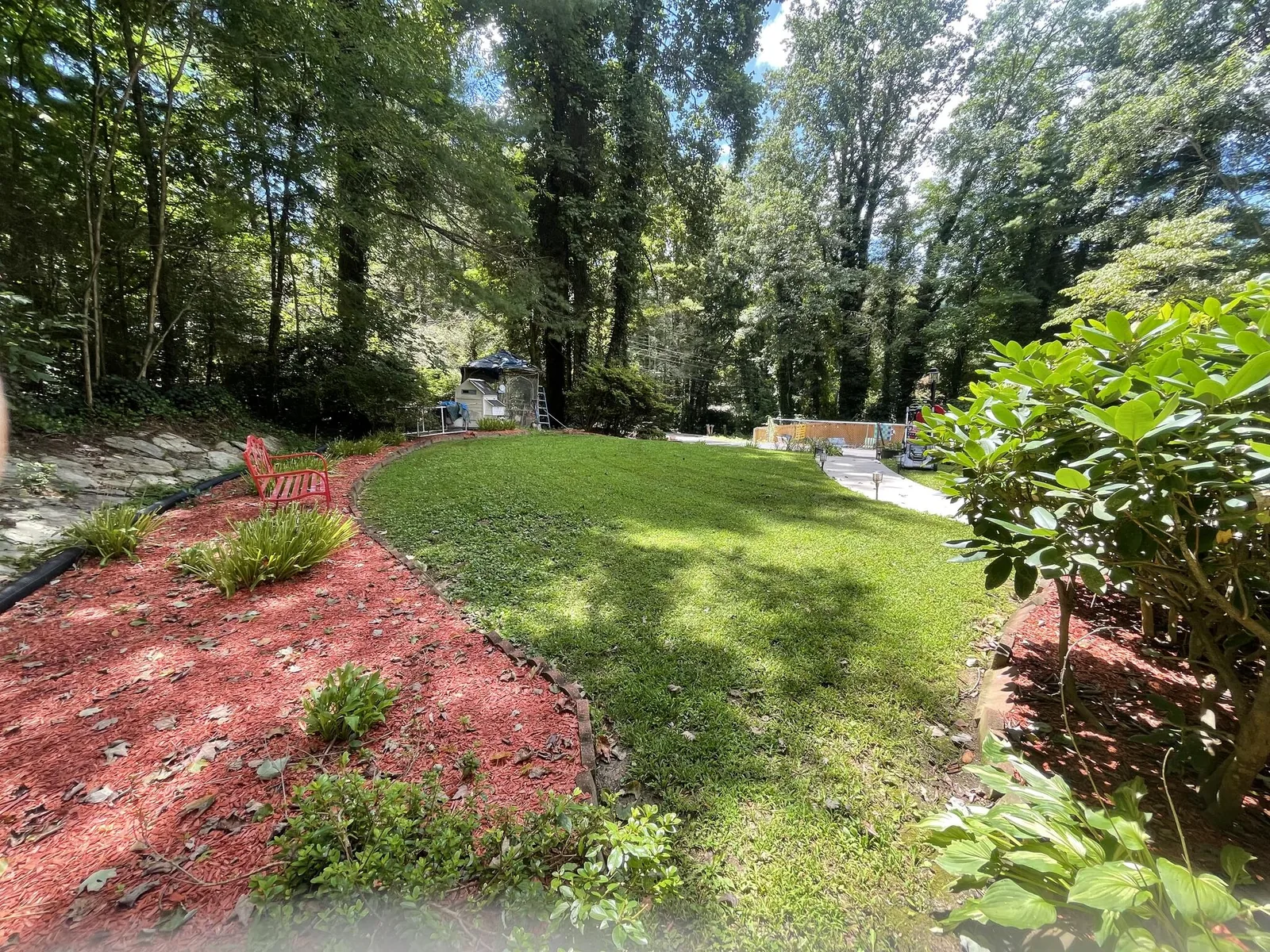
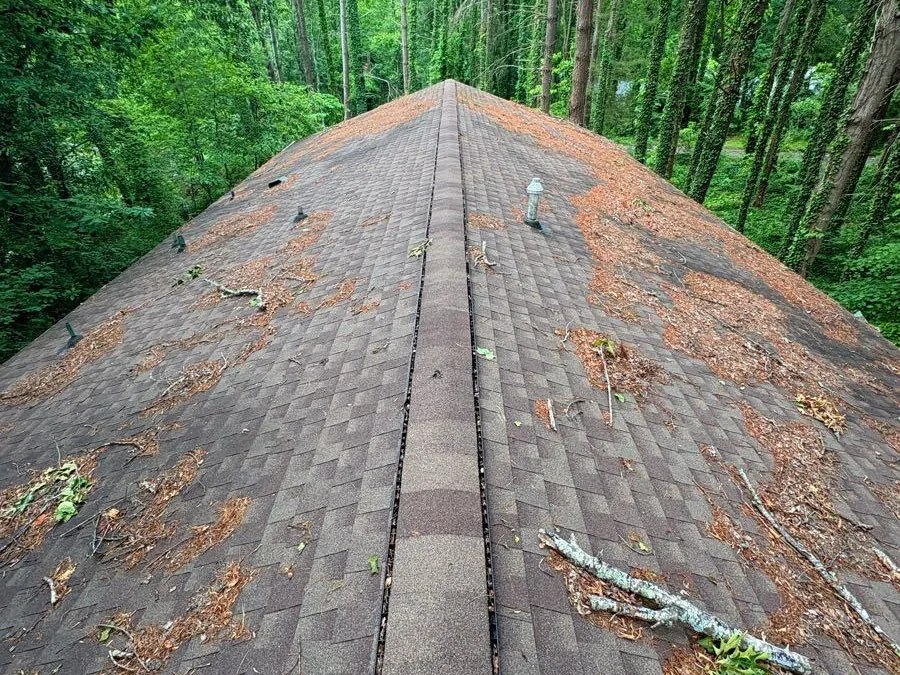
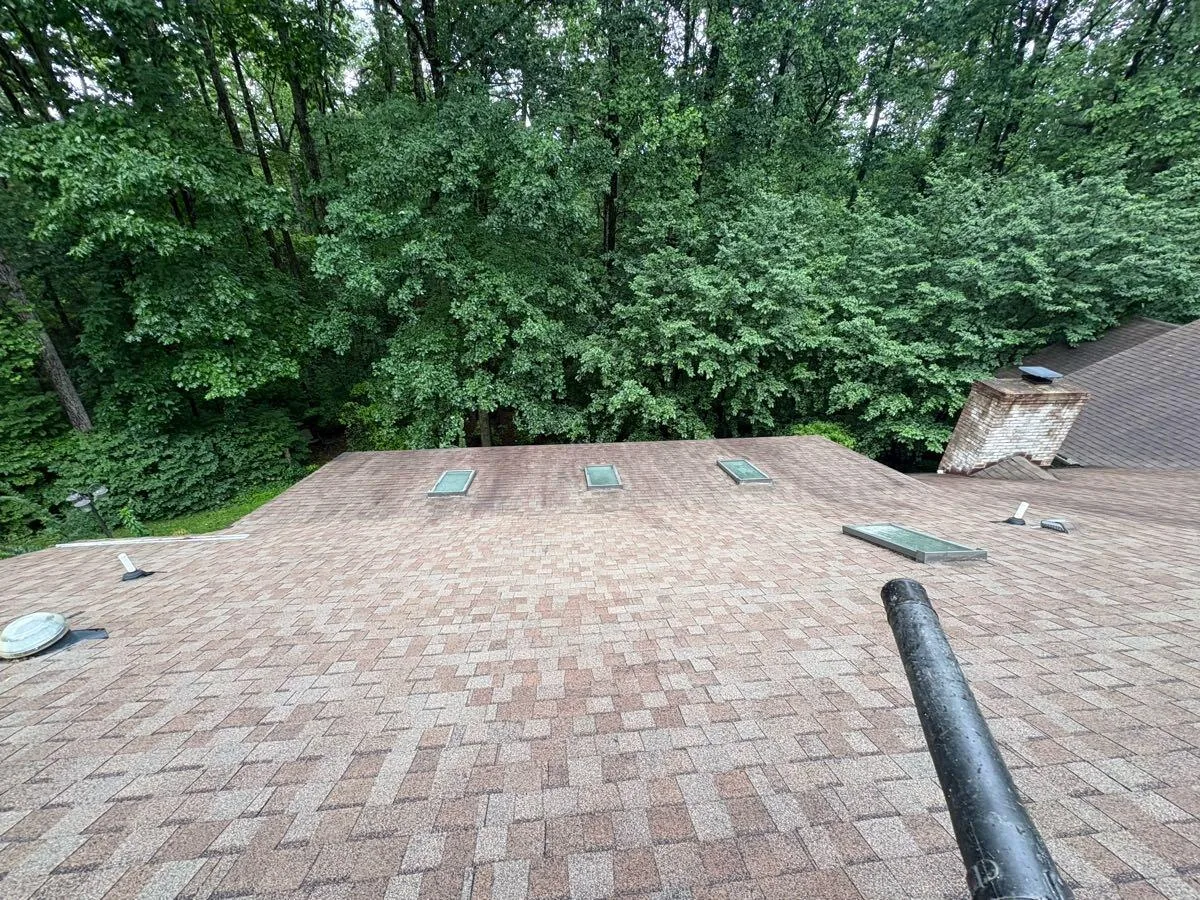
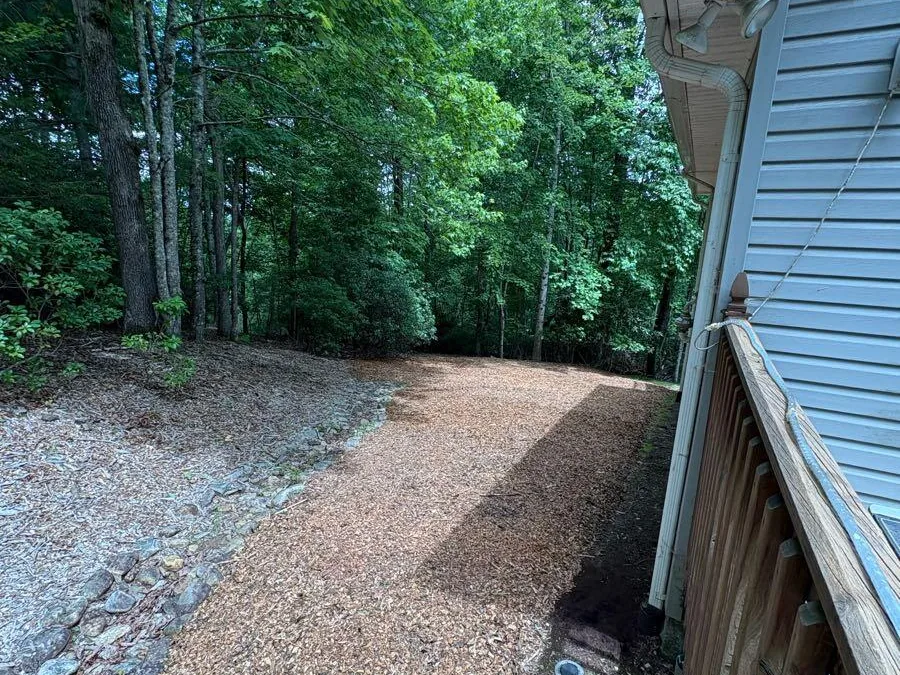
Most Buncombe County homes are not sitting on a flat pad. They are cut into a slope, which means a cleaner has to set a ladder on grade, often on the uphill side, and work around the fact that the far end of the house is fifteen or twenty feet below the near end. Setup alone eats time that a flat-lot market never charges for. Add the Blue Ridge's debris load, and the math changes again: white pine, hemlock and heavy oak canopies over Asheville, Black Mountain and the ridges above Haw Creek drop needles and leaf litter into runs all year, not just in October.
Pollen season is its own shift. Western North Carolina's spring pollen wave coats roof valleys and packs fine yellow dust into gutter bottoms, and that dust turns into a paste when the first heavy rain hits it. A run that looked clear in April can be holding standing water by May, which is why the practical cleaning rhythm here is late spring after pollen and seed drop, then late fall after leaf fall. Homes under pines frequently need a third visit somewhere in between, because needles do not wait for autumn.
Water history matters too. This county carries a real storm and flood record — 19 federally declared disaster events have touched Buncombe County over 1973-2026 — and clogged gutters are exactly what turns a heavy rain into a fascia, soffit and foundation problem. The pattern is familiar to anyone who has watched water sheet off a clogged run during a summer downpour in the French Broad valley: it goes over the front edge, down behind the siding, and pools at the foundation wall. If you are already chasing water, our gutter cleaning service page covers how we sequence a clearing against drainage. Pair it with a seasonal plan on the lawn care side and the debris never gets a full season to pack down.
Safety and code issues that shape the price
Ladder and fall protection on residential work is not a formality — it is the reason a two-story job costs more than a one-story job with identical footage. North Carolina follows the residential code's provisions for roof and egress safety under the state code program (NC Office of State Fire Marshal), and the International Code Council's model provisions (ICC) are the foundation most local rules build on. A steep roof with a low pitch-to-ground ratio is a genuine fall hazard, and any crew that treats it casually is underpricing its own risk, usually right up until someone gets hurt.
On a Buncombe hillside, the setup is often the hazard. A ladder footed on sloped ground has to be leveled, tied off or replaced with a standoff and roof anchors, and the downhill side of a mountain home may need a ladder long enough that two people are required to raise it safely. That is real time on the clock. A one-story home in a flat Weaverville subdivision can be walked with a single ladder and no anchors; the same footage on a steep Black Mountain lot may need two setups and a spotter. When a quote on the steep property comes in higher, that labor is the reason, not padding.
There is also a weather call. The National Weather Service (weather.gov) issues the flood and high-wind watches that make a scheduled cleaning unsafe on short notice in this county. A cleaner who will not reschedule around an active watch is cutting a corner you will pay for later. Wind is the one to watch here: exposed ridge lots can be gusting well above what it feels like down in the valley, and a ladder that is stable at street level may not be stable on the ridge.
How to keep the quote from drifting
Three habits keep a gutter cleaning bill honest in this market:
- Show the debris load. Ask for before-and-after photos, especially on the first visit. You are paying for what comes out, and a steep roof hides a lot.
- Price downspouts separately. A run that clears at the gutter but still backs up at the downspout is half a job. Confirm whether a flush-out is included.
- Compare against the band above. If a bid lands well outside the table, make them explain what is different about your roof. Sometimes it is real — a steep side or a ton of pine — and how they explain it tells you whether they know the property or are guessing.
Set it on a seasonal rhythm rather than a one-off, and the per-visit cost tends to drop because the debris never gets a chance to compact. A packed, wet gutter is heavier, slower to clear and more likely to have pulled a hanger loose, so the twice-a-year visit is usually cheaper per cleaning than the once-a-year emergency call after the first big storm.
Be wary of a phone quote that lands at the very bottom of the range without anyone asking about stories, pitch or tree cover. The $150 end of the band is real, but it belongs to a single-story home on manageable ground with light debris. If your house is two stories on a grade with pines overhead, that number was never yours, and a company that quotes it sight-unseen is either guessing or planning to renegotiate at the door. Either way, the honest move is a walk of the property before the price is fixed.