How often Dana beds actually need mulch
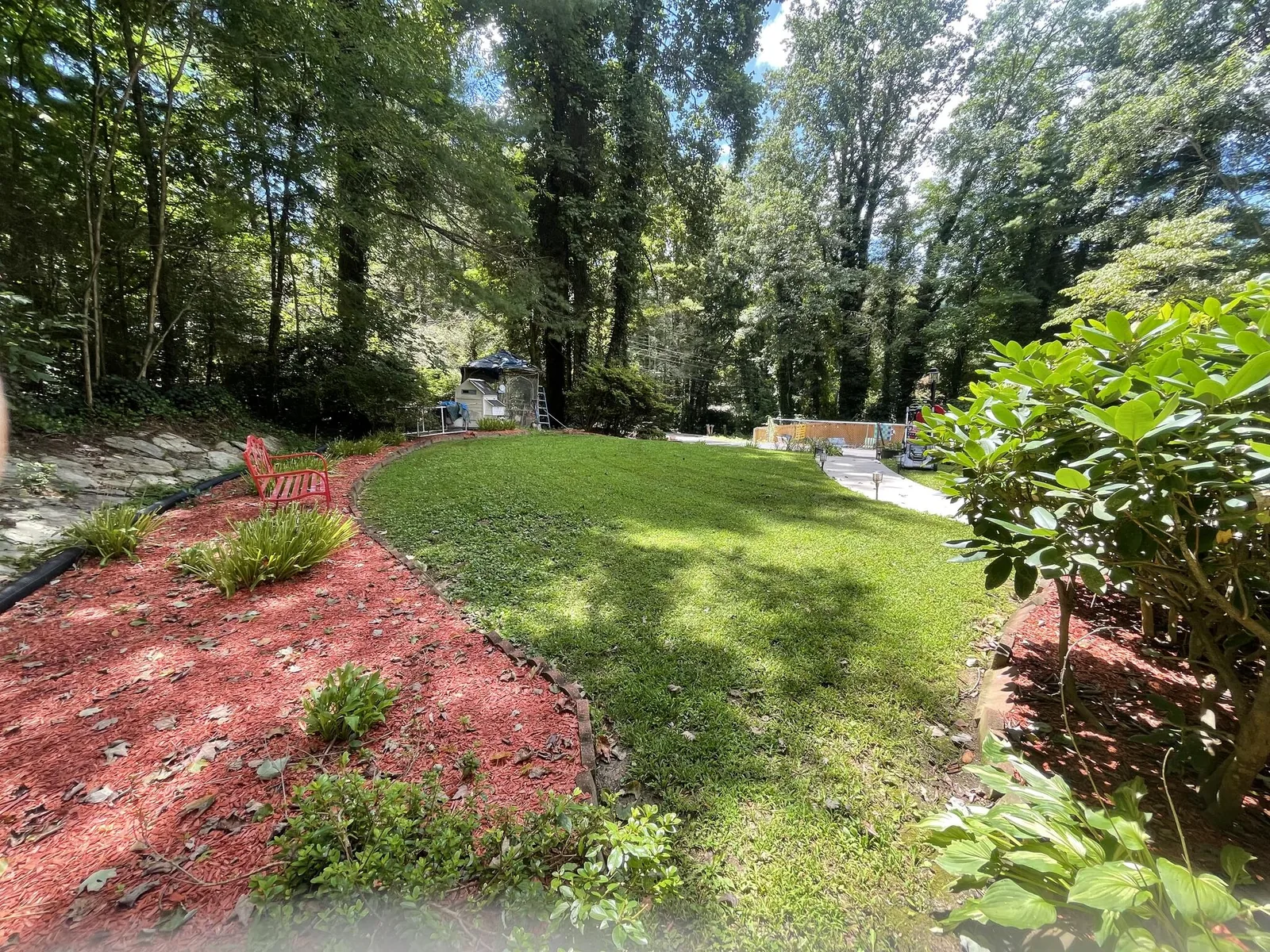
Dana's elevation and tree canopy set the clock here in a way flatland schedules don't capture. Sitting up in the Blue Ridge foothills of Henderson County, this community is shaded by mature hardwoods — oak, hickory, tulip poplar — and that shade is exactly what breaks mulch down fastest. Constant leaf litter, spring moisture, and a steady supply of fungal activity chew through a 2–3 inch layer faster than sun-baked beds down in the valley. Most Dana beds want refreshing every 18 to 24 months; beds under dense canopy or fighting heavy leaf drop may need it closer to every 12 to 18. Sun-exposed beds on cleared ridge pasture stretch to 2 or 3 years.
The tell isn't the calendar though, it's the soil. Scrape back the top inch. If you're mostly hitting bare dirt, weeds, and last year's leaf mat instead of intact bark, the layer is spent and no amount of raking brings it back. The mulch installation guide walks through depth, edge, and cleanup so you can judge your own beds first.
Dana's terrain and what it does to a mulch job
This is not a flat-lot town. Dana sits in rolling to steep ground along the Green River corridor, and a lot of the residential property here is either sloped yard, cut-and-fill around a house pad, or hillside terrace where every load of mulch has to be walked or wheeled to the bed. That labor shapes the quote more than the material does. A pile dropped at the driveway on a flat lot is a half-day job. The same pile walked 200 feet up a switchback in wheelbarrows is a full day — and if the bed is on a slope steep enough that mulch would wash on the first hard rain, we're talking about a different install (a heavier chip, a matted layer, sometimes netting), not a cheaper one.
Wet-weather access matters too. Red clay driveways and hillside lots get slick fast, and a loaded truck or skid steer that can't safely reach the bed means more hand-carrying. Honest scopes here name that up front instead of discovering it mid-job.
The price picture, line by line
Dana pricing sits inside the standard Henderson County range, with the upper end showing up on steep or long-haul lots. Here's what a working table looks like:
| Scope | Typical range |
|---|---|
| Small refresh, single front bed (1–2 yd³) | $85–$260 |
| Standard whole-yard refresh (4–8 yd³), flat or gentle slope | $450–$1,040 |
| Standard whole-yard refresh, steep/hillside access | $700–$1,200 |
| Per cubic yard, delivered and spread | $85–$130 |
| Bed prep add-on (old mulch removal, edge re-cut, weed barrier touch-up) | quoted per bed |
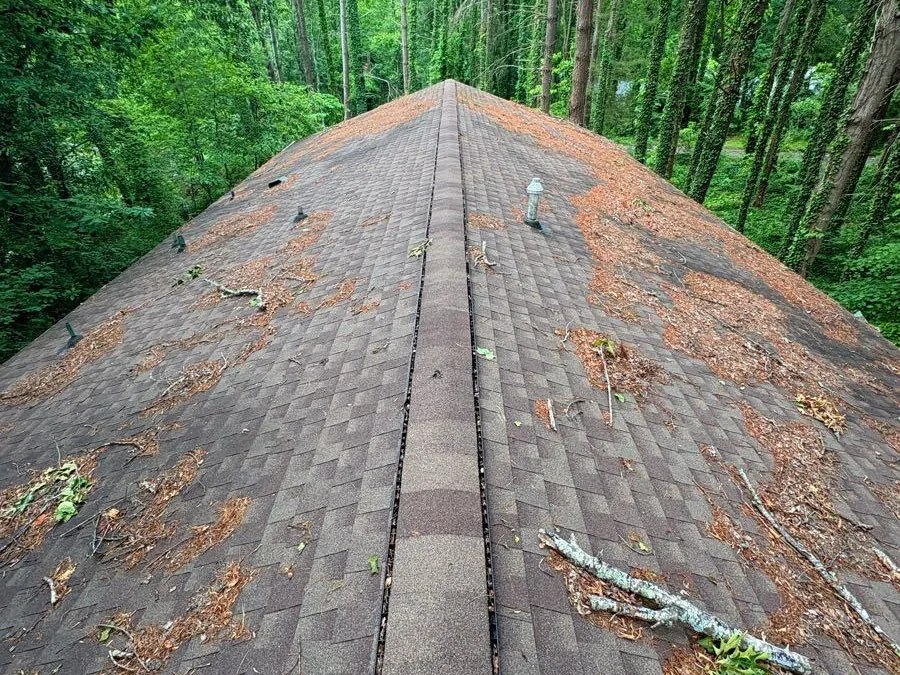
The Henderson County gutter cleaning cost page is worth a look while you're planning fall work — the same leaf load that buries your beds clogs the gutters, and doing both on the same visit saves a trip. Mulch choice moves the number too: standard double-shred hardwood is the everyday pick, pine bark fines cost more, and a locally sourced wood chip is the budget end if you just want ground cover and moisture retention. Regardless of material, depth matters more than brand — 2 to 3 inches is the working layer, and going heavier than 3–4 inches can smother shallow roots and hold moisture against the crown, which is the kind of damage that costs more than the mulch did.
Timing it right in this climate
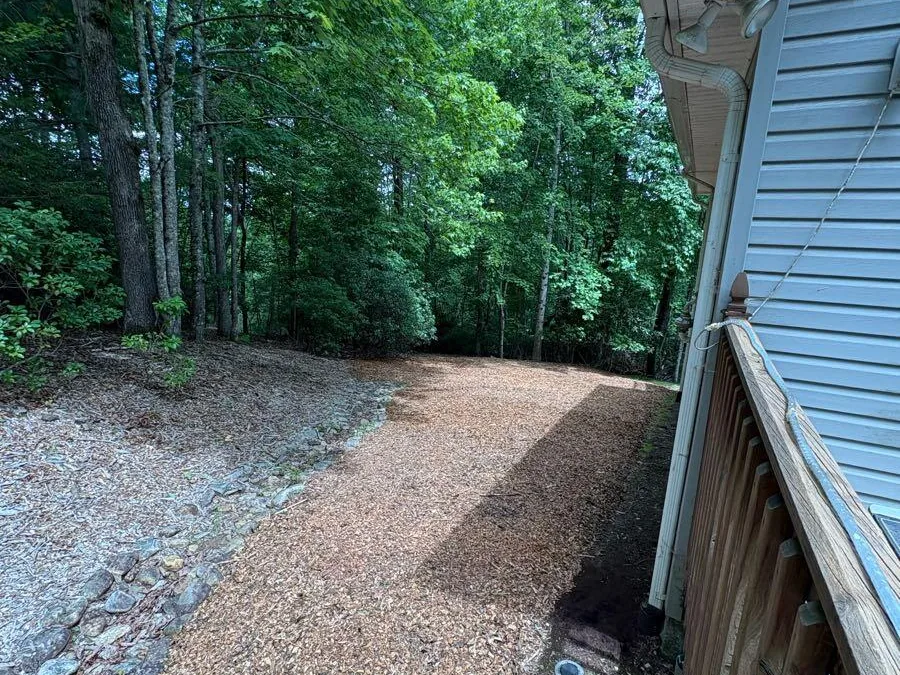
The National Weather Service forecasts for this part of the mountains are your best scheduling tool — weather.gov runs the point forecasts that tell you whether you're looking at a wet stretch or a dry one. Two practical windows: mid-to-late spring, after the last hard freeze and once the beds have settled, and early-to-mid fall, after leaf drop is mostly done but before the ground gets cold. Mulching into a dry spell means watering the beds in to settle the material; mulching just before a soaking rain is free settling. Either way, keep mulch pulled back a few inches from the foundation wall and away from the base of trunks — a mound against siding traps moisture, and a volcano pile against a tree trunk is a slow way to kill it.
One more local note: if your property drains toward the house, mulch can't fix it. Grading, gutter discharge, and where the uphill runoff goes are separate problems. That's the same principle the EPA puts behind its stormwater and yard-care guidance — what you do on the surface affects where water ends up, and in a rainy mountain county that's a first-order concern, not an afterthought. If you handle your own trees and beds year-round, the broader Dana landscaping services page covers the seasonal property-care side.
Who to book and what to ask
A good mulch crew answers three questions before they quote: how many cubic yards the beds actually take (a measured number, not a guess), how they'll get material to the far beds, and what they do with last year's matted layer. If a quote can't name the cubic yard count, it's a guess dressed as a price. Ask whether bed prep — old mulch removal, edge re-cut, weed pull — is included or added, because that's the difference between a $450 refresh and a $700 one on the same beds. And ask them to keep mulch off the foundation and off the trunks; a crew that knows why will say so without prompting.
Steep-lot and long-carry jobs cost more, and a bid that ignores that will either walk away or pad it later. Dana's terrain is honest about itself; get a quote that matches it.