The Fletcher mulch window most homeowners miss
Fletcher sits in a sweet spot between the French Broad River bottoms and the southern Blue Ridge foothills, and that geography writes the mulch calendar. Beds here green up two to three weeks ahead of Asheville's higher elevations, but the real constraint is rain: this corner of Henderson County catches the upslope storms that roll off the Pisgah ridgeline, and mulch laid on saturated soil in a wet April just mats down and molds. The clean install window runs late February through mid-April, before the spring rain pattern locks in and after the ground has stopped heaving from freeze-thaw. Late fall is the second-best slot — mulch applied in October insulates root zones through the first hard freezes, and crews pricing a quiet season will usually meet you closer to the low end of the range. July installs cost more because they work less well: fresh mulch over hot, dry soil bakes the top inch of root zone before it can absorb anything.
The microclimates inside Fletcher matter too. A lot on the north side of a ridge off Gap Creek Road will still have frost in the ground when a south-facing bed near the airport is already thawed and workable. That's why the honest answer to "when should I mulch" is a two-week window, not a date. Crews who work this county know to start on the sunny exposures and finish the shaded, higher-elevation properties last. If you book a single day for a whole-property job, you're gambling on the weather that week.
There's also a maintenance rhythm people overlook. Beds that were mulched last spring are usually down to a thin, gray layer by late winter — not gone, but broken down enough that a top-dress of an inch or so restores the look and the moisture barrier. Full-depth replacement every year is a waste of money here. The soil biology is active enough that a two-to-three-year cycle on hardwood mulch is realistic, and a reputable installer should tell you when you only need a refresh instead of a full re-install. That honesty is worth more than any per-yard discount.
What a Fletcher bedding job actually costs
Price tracks volume and access, not the size of the yard. A ranch off Howard Gap Road with wide open beds prices differently than a steep-lot home near the Cane Creek greenway where every wheelbarrow has to climb. Use the table below to scope your own job; the range sits inside the site-wide $85–$130 per cubic yard installed band.
| Scope | Typical range |
|---|---|
| Single bed refresh, 3–5 cubic yards delivered and spread | $450–$700 |
| Full front-yard refresh, 6–8 cubic yards | $650–$1,100 |
| Whole-property refresh, 9–12 cubic yards | $900–$1,200 |
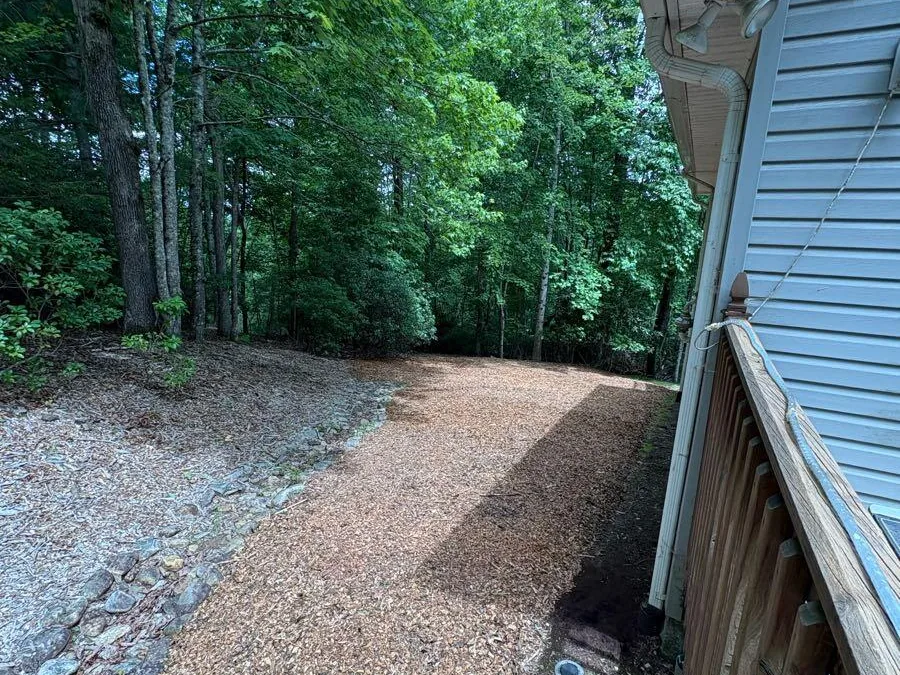
| Playground or dog-run wood chips, per cubic yard installed | $85–$130 |
| Bed prep, edging, and weed fabric add-on | Quoted per bed |
The add-on line is worth asking about. Fletcher's clay-loam soils crust hard after a dry stretch, and spreading mulch over a compacted surface traps the problem instead of solving it. A proper job turns the top inch of soil first. For bedding work tied to a broader property plan, the Fletcher landscaping page covers how mulch fits with planting and grading.
Access is the hidden cost driver nobody mentions on the phone. A property with a paved driveway that a dump truck can back up to is a one-hour delivery; a property off a narrow gravel lane in the rolling country between Fletcher and Hoopers Creek may need the load staged at the road and wheeled in. That's labor, and it shows up in the quote. If your beds are more than 75 feet from where a truck can safely park, expect the number to land toward the middle or top of the range. Be upfront about it when you call and you'll get an accurate estimate the first time.
Why mulch beats bare dirt in this climate
The federal disaster record makes the argument for you: 16 declared events have touched this county over 1978-2026, and the overwhelming share were storm and flood family. When heavy rain hits bare beds on a slope, topsoil leaves. Mulched beds absorb the first inch or two of a downpour and hold it long enough for the ground to take it, which is why mulch, grading, and drainage all get solved together around here. The National Weather Service tracks the same pattern — Henderson County runs on a wet, storm-fed rhythm, not a steady drizzle. Mulch is the cheapest erosion control a homeowner can buy, and it feeds the soil biology that keeps beds from crusting between storms.
There's a temperature story too. Fletcher's summers are humid and hot enough that bare soil bakes to a crust, and plant roots suffer in that baked layer even when the deeper soil is still moist. A two-to-three-inch mulch layer keeps the root zone several degrees cooler and slows evaporation, which means fewer wilted shrubs in an August dry spell and less water hauled from the spigot. On the other end of the year, the same layer insulates roots against the hard freezes that roll down off the Blue Ridge in January.
And the practical one: a fresh mulch bed reads as maintained. Bare dirt with a few shrubs looks unfinished, while the same plants over fresh mulch look cared for. For anyone selling a Fletcher home or keeping up appearances in a neighborhood with an HOA, mulch is the lowest-cost visual upgrade available, and unlike paint or hardscape, it's reversible and low-risk.
Which material belongs on a Fletcher bed
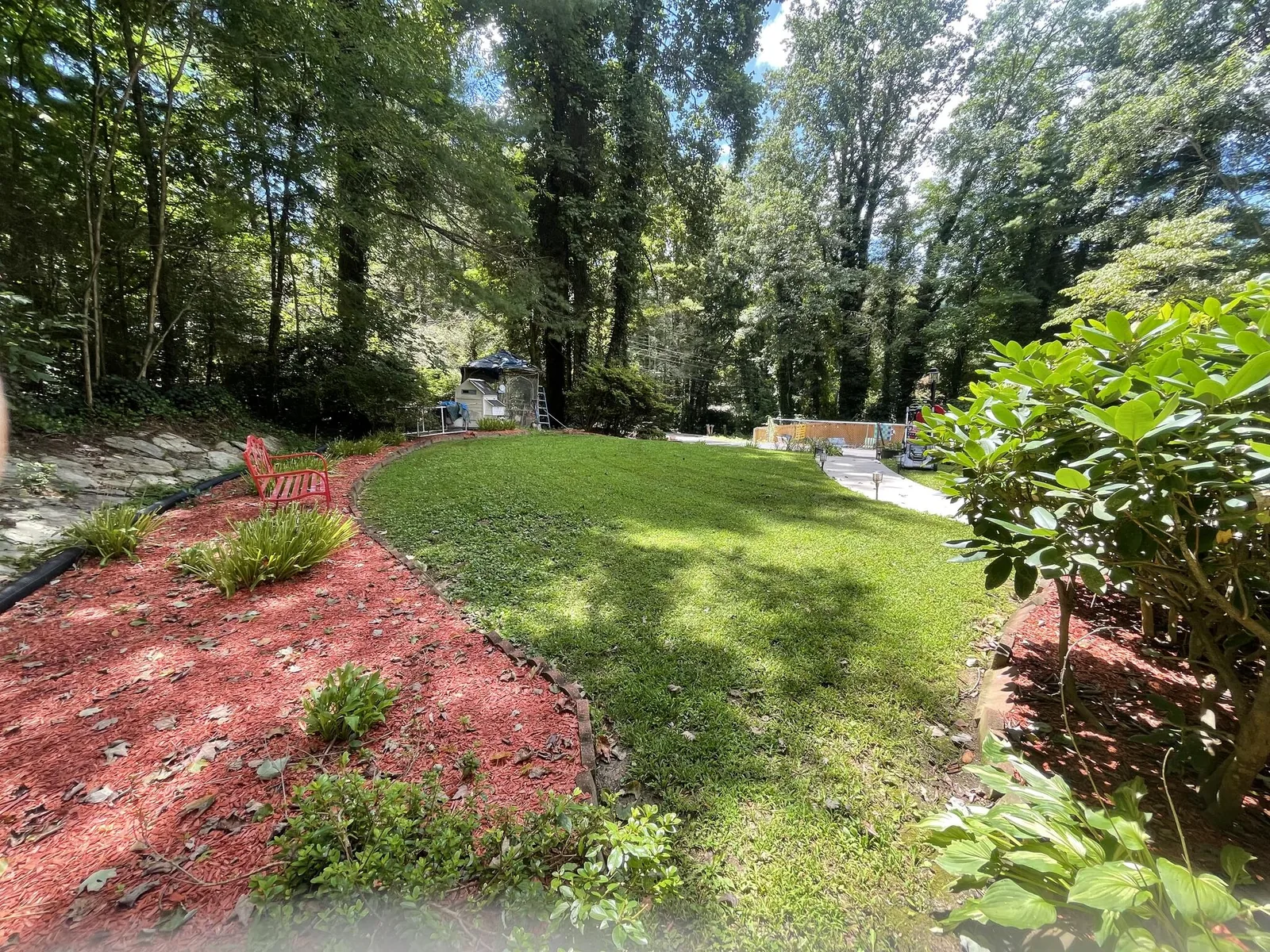
Three honest options, three different jobs. Double-shredded hardwood is the workhorse for foundation beds and shrub borders — it knits together, stays put on a slope, and breaks down over two to three seasons. Pine bark nuggets last longer and suit formal entries, but they float in a hard rain, which matters on the graded lots common off Naples Road and Butler Bridge Road. Wood chips are the value play for paths, tree rings, and play areas — coarser, slower to decompose, and priced at the bottom of the band. Colored mulch is a dye question, not a quality question; ask what the base fiber is before you pay a premium for the color. Whichever you pick, keep mulch off the trunk flare. Piled mulch against bark holds moisture where you don't want it and invites rot, and the EPA guidance on yard and landscape material handling is a fair primer on why decomposition and moisture management matter more than brand.
There's a local sourcing angle worth knowing. Wood chips and some mulch feedstocks come out of the tree work and land clearing that happens constantly around Henderson County as lots are developed and storm damage is cleaned up. That means the supply is genuinely local, but it also means quality varies batch to batch — fresh chips can be green and hot in the pile, and if they're spread too soon they can pull nitrogen from the soil as they break down. A mature, aged product is worth a small premium over green chips for any bed you actually care about.
One more honest note on depth: two to three inches is the target, and more is not better. Over-mulching is a common mistake — it smothers roots, holds too much moisture against stems, and creates a habitat for pests. If your existing beds are already over-deep, the right move may be to remove some material before adding more, and a good installer will tell you that instead of just selling you another load.
Booking the right window, and keeping it cheap
The single biggest price lever in Fletcher is timing, and the second is bundling. Gutter cleaning and mulch are the same season — late-winter debris clogs gutters that then dump water onto the beds you're about to mulch, so scheduling both together saves a trip and protects the new install. See the Henderson County gutter cleaning cost page for how that pricing works. For a deeper look at material options and prep standards, the mulch installation guide walks through what a correct job includes. Book in February and March for the best rate and the best result; by May you're paying peak-season labor to install mulch in the worst month for it.
Bundling is more than a discount tactic. If you're having beds edged, weeds pulled, or shrubs pruned, doing it the same day the mulch goes down means one mobilization instead of three, and the mulch immediately covers the disturbed soil. That's the sequence a good crew follows anyway — clear, prep, edge, then mulch — so folding extra work into the visit is nearly free compared to calling someone back a month later.
Finally, be skeptical of quotes that seem too good. The per-yard band on this page holds for a reason: material, delivery, and labor all cost money in this county, and a number far below the band usually means less material spread thinner, a rushed job, or a surprise charge later. Ask what depth they're spreading to and whether the quote includes prep. Those two questions separate a real estimate from a lowball. A crew that's been working Henderson County beds for years will answer both without hesitating, and you'll know it's the right call before they ever unload the truck.