How often Horse Shoe actually needs work
Most of Horse Shoe sits high enough that spring arrives later and fall comes earlier than down in Hendersonville, which shortens the growing window but concentrates it. The practical calendar looks different from a flatland lawn: a heavy leaf drop off the hardwoods along the French Broad corridor, a fast green-up once it warms, and a second flush of growth in early fall that catches people who stopped mowing in August. That is why the honest interval for a full cleanup here is twice a year, not once, and why gutters on a wooded lot need clearing more than the once-a-year that works in open country.
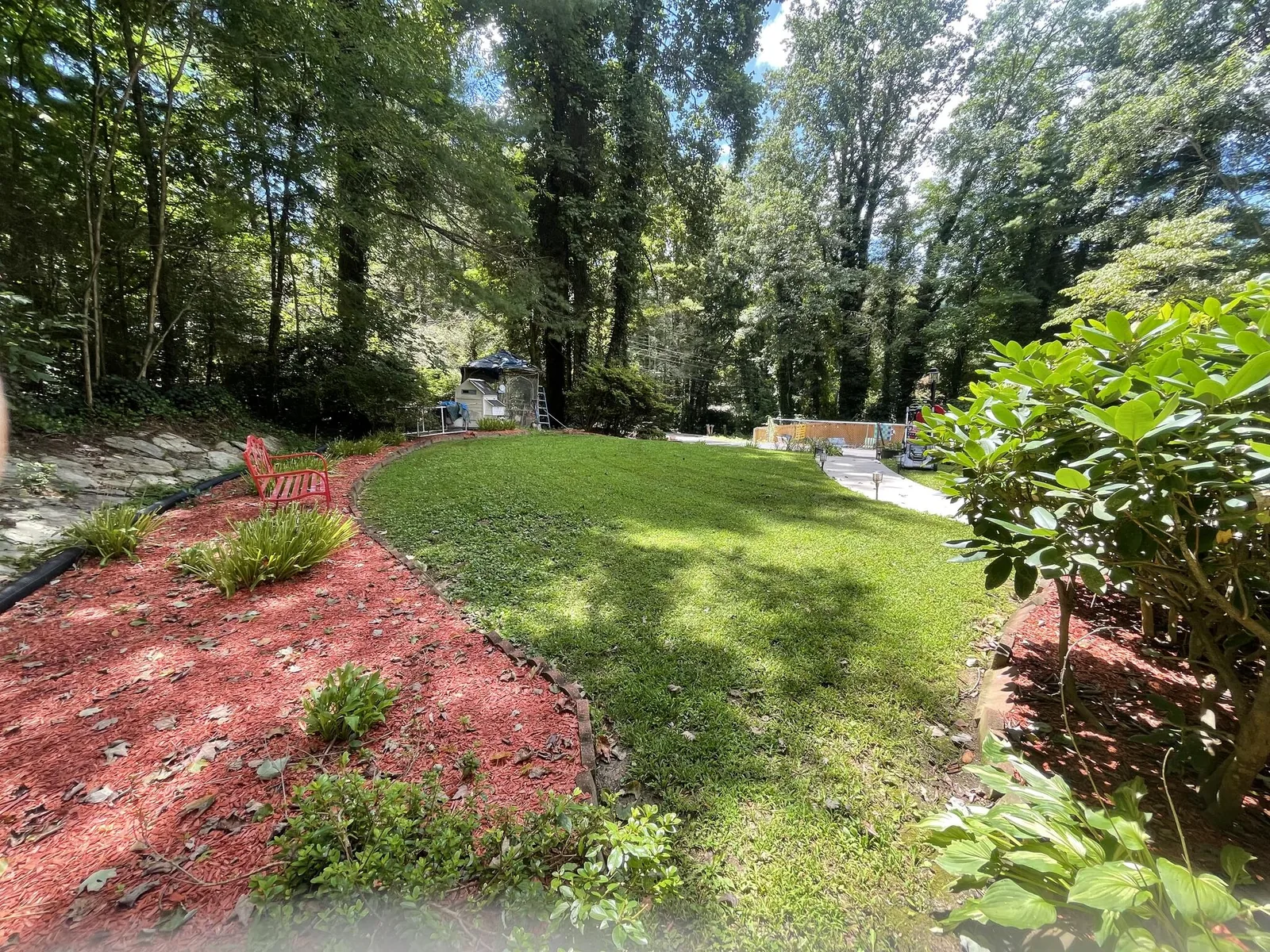
The terrain reinforces it. Ridge and slope lots shed water quickly, which is good for the lawn and hard on the beds — mulch washes, edges blur, and anything planted on a grade needs its soil held in place. If you only remember one thing about landscaping horse shoe nc, make it this: match the schedule to the tree cover, not to the calendar.
Consider the difference between a lot off a ridge road above the French Broad and a lot down in a flat subdivision near the airport. The ridge lot might see oak and hickory leaves starting in late September and continuing into November, while the valley lot finishes in two weeks. On the ridge, that means a fall cleanup timed to the midpoint of leaf drop rather than the end, so the beds are not buried before the second visit. In spring, the ridge lot greens up a week or two later, so mowing can start later and the first cleanup can wait until the soil dries enough to work without compacting it. These are small timing adjustments, but they are the difference between a lawn that comes back strong and one that struggles through May.
Tree cover also dictates how often mulch needs refreshing. On a lot with a heavy oak canopy, the leaf litter breaks down and adds organic matter, but it also mats down and can smother bed plants if left in place. A bed near the drip line of a large tree may need a light turn and a fresh inch of mulch every year, while a bed in a sunny clearing can go two years. The honest answer is to walk the property in early spring, check the depth, and decide based on what the soil and plants are telling you rather than a fixed schedule.
What the work costs, scope by scope
Every typical job on this page sits inside the range below. Nothing here is a sales ceiling; the top of the band is real work, not a padded quote.
| Scope | Typical range | How often |
|---|---|---|
| Gutter clean, single-story, wooded lot | $150–$300 | 2x per year |
| Fall or spring cleanup (leaves, beds, edges) | $250–$650 | 2x per year |
| Mulch bed refresh | $400–$900 | Annually |
| Mowing and lawn care program | $150–$600 | Season-long |
| Roof soft-wash and full cleanout | $800–$1,500 | As needed |
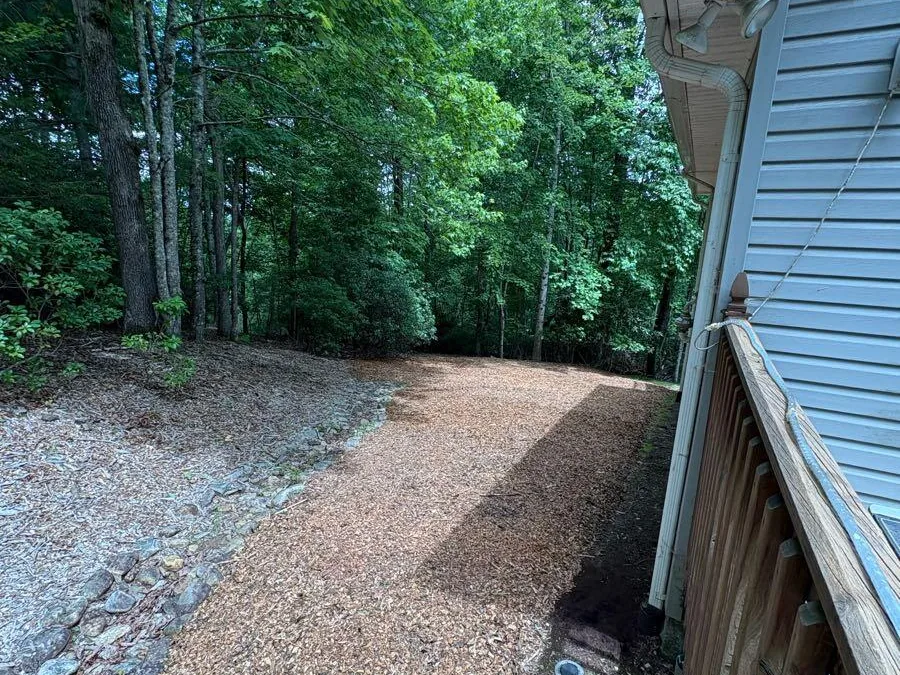
Mulch is the line item people cut first and regret most on a slope lot, because bare soil on a grade leaves with the next hard rain.
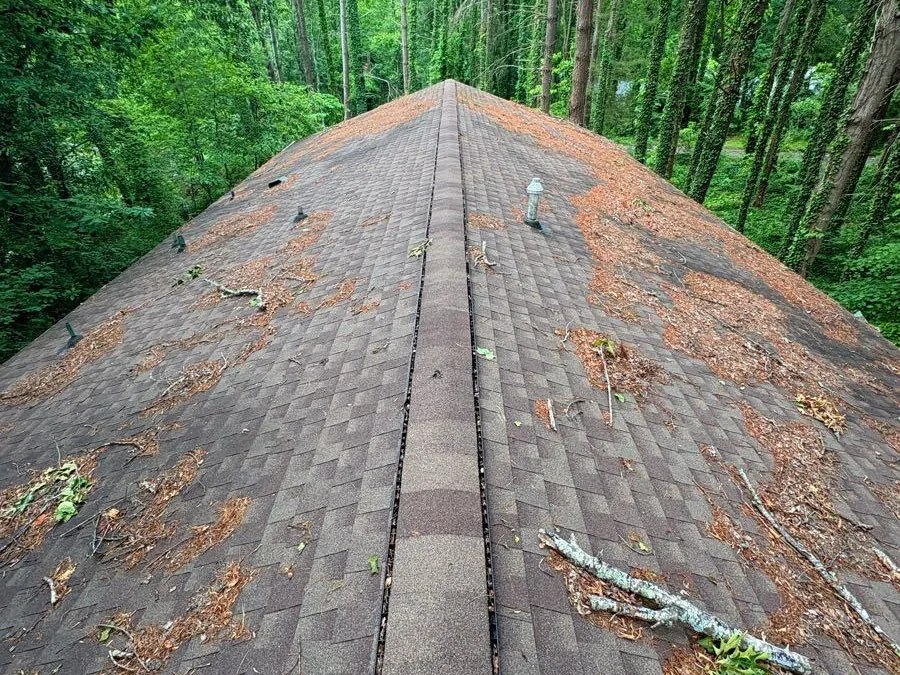
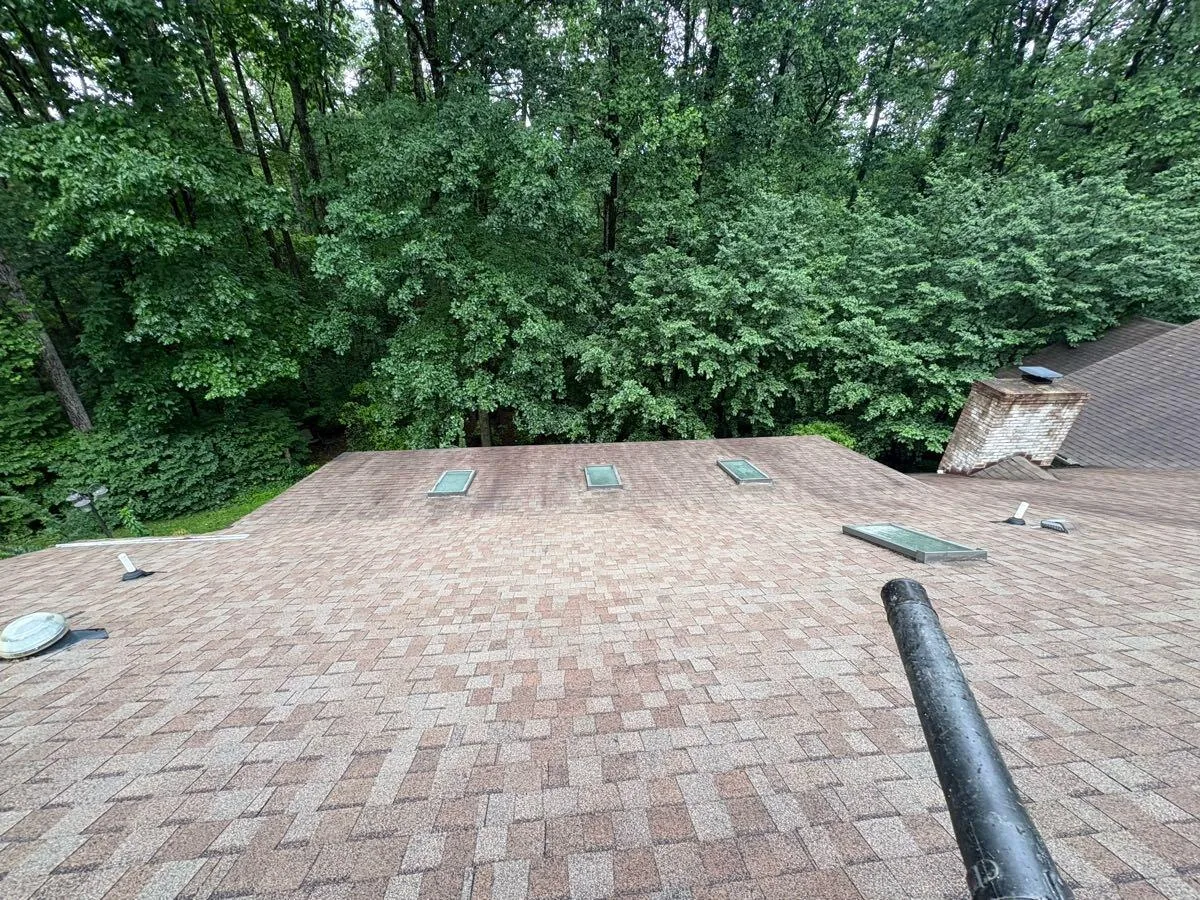
For a typical Horse Shoe property, the annual rhythm might look like this: a spring cleanup in March or April, mulch refresh in late spring, mowing through the summer, a fall cleanup in October or November, and a gutter clean after the leaves are down. Add a roof soft-wash every few years if the north side stays damp and dark. Most homeowners find that bundling the fall cleanup with the gutter clean saves a second trip charge, and pairing the spring cleanup with mulch delivery gets the beds finished in one visit.
It is worth understanding what drives the cost within each range. A gutter clean on a single-story ranch with few trees is at the low end; a two-story with steep pitches and heavy pine needles pushes toward the top. A cleanup that includes hauling off debris costs more than one that leaves it for the homeowner to compost. Mulch cost depends on bed square footage, depth, and how far the pile has to be wheeled from the driveway. On a steep lot, the labor to move material by hand rather than wheelbarrow can add to the mid-range. None of these variables is a surprise if the quote is built from an on-site look rather than a phone estimate.
Water off the roof, soil on the hill
Henderson County's federal disaster record is not abstract: 16 declared events reach this county across 1978-2026, and the pattern is storm and flood family almost every time. Each one pushed water at ground that was already graded to move it. Roof runoff is the piece most homeowners can control — gutters that stay clear carry water past the foundation instead of dumping it at the base of the beds. The county cost breakdown for that work is here, and the town-specific page is gutter cleaning in Horse Shoe.
On the ground side, the U.S. Environmental Protection Agency's stormwater guidance at epa.gov is worth a read before you reshape a slope: bare dirt and loosened mulch are a runoff problem before they are a landscaping problem, and fixing them after a washout costs more than doing it right the first time.
In Horse Shoe, the combination of elevation and clay soils means water moves fast and soils stay wet longer in low spots. A bed on a slope that loses mulch every storm is telling you the grade needs a slight terrace or a row of stone at the toe to slow the water down. On flatter lots near the French Broad, the problem is often the opposite: water pools because the soil is heavy and the grade is nearly flat. There, a shallow swale or a rain garden planted with natives can absorb runoff before it reaches the foundation. Both situations are common here and both are easier to address before a storm event than after.
One practical test after a heavy rain: walk the property and look for streaks in the mulch, sediment on the driveway, or a damp band along the foundation. Those are the early signs that roof runoff and surface flow are not being managed. A few hours of regrading or a gutter extension can solve most of it, but it has to be done before the next big system moves through.
Planting and safety on a wooded ridge
Horse Shoe's tree canopy is the reason the work schedule looks the way it does, and it also sets the safety rules. Limbs over a roof or a driveway are a wind event waiting to happen, and the National Weather Service guidance at weather.gov on severe thunderstorm and wind watches is the trigger to act before the storm rather than after. Anything that requires cutting above head height, or working near a service drop, is not a homeowner task.
For the planting side, the International Code Council's resources at iccsafe.org cover the site and structure basics that apply when landscaping touches a covered porch, retaining wall, or foundation plantings. Practical rule for this town: right plant, right elevation, and enough mulch depth to hold moisture without burying the crown.
Choosing plants for a Horse Shoe yard means working with the elevation and the shade. Native understory trees like dogwood and redbud do well on the edges, while shade-tolerant shrubs such as oakleaf hydrangea and native azalea handle the canopy. On sunny slopes, drought-tolerant perennials like coneflower and black-eyed Susan establish quickly and hold soil. Avoid plants that need constant moisture on a fast-draining ridge, and avoid shallow-rooted species on a steep grade where they might not hold. The goal is a landscape that fits the site rather than one that fights it.
Safety also applies to the trees themselves. A dead limb over a walkway or a split trunk near the house is a hazard that should be assessed by someone with the right equipment and insurance. The same goes for any work near power lines. The National Weather Service and the North Carolina Office of State Fire Marshal at ncosfm.gov both publish guidance on storm preparedness and electrical safety that is worth reviewing before you take on any tree work yourself. When in doubt, hire a licensed arborist; the cost of removal is far less than the cost of damage.
Getting a straight quote in this market
Three checks before you book anyone in Horse Shoe. First, ask whether the crew has worked a wooded ridge lot before — the leaf volume is a different job than a subdivision lawn, and a bid built on the wrong assumption shows up as a half-finished cleanup. Second, ask how they handle the slope: where the mulch goes, where the runoff goes, and whether they will grade a bed edge to hold soil. Third, ask what the interval should be for your tree cover — a crew that quotes a single annual visit on a lot surrounded by hardwoods is telling you something.
If you are starting from zero, pair a lawn care program with a twice-yearly cleanup and let the gutter work ride along with the fall visit. That pattern keeps the property steady without a monthly invoice you did not ask for.
It also helps to know what a quote should include. A written scope that lists the areas to be cleared, the depth of mulch to be applied, whether debris will be hauled away, and how many visits are included prevents misunderstandings. Ask for a certificate of insurance for any crew working on your property, especially if they will be on a roof or using ladders. And ask for a local reference or two, not because you need to call them, but because a crew that has worked in Horse Shoe before will know the soil, the tree species, and the weather patterns that shape the work here.
Finally, be wary of a quote that seems too low for the scope. On a wooded ridge lot, the labor to move leaves and mulch by hand, the time to clean gutters safely, and the disposal fees add up. A bid that ignores those realities will either cut corners or come back with change orders. The right price is the one that matches the actual work, and in this market that usually sits in the middle of the range, not at the bottom.