Why two yards the same size price differently here
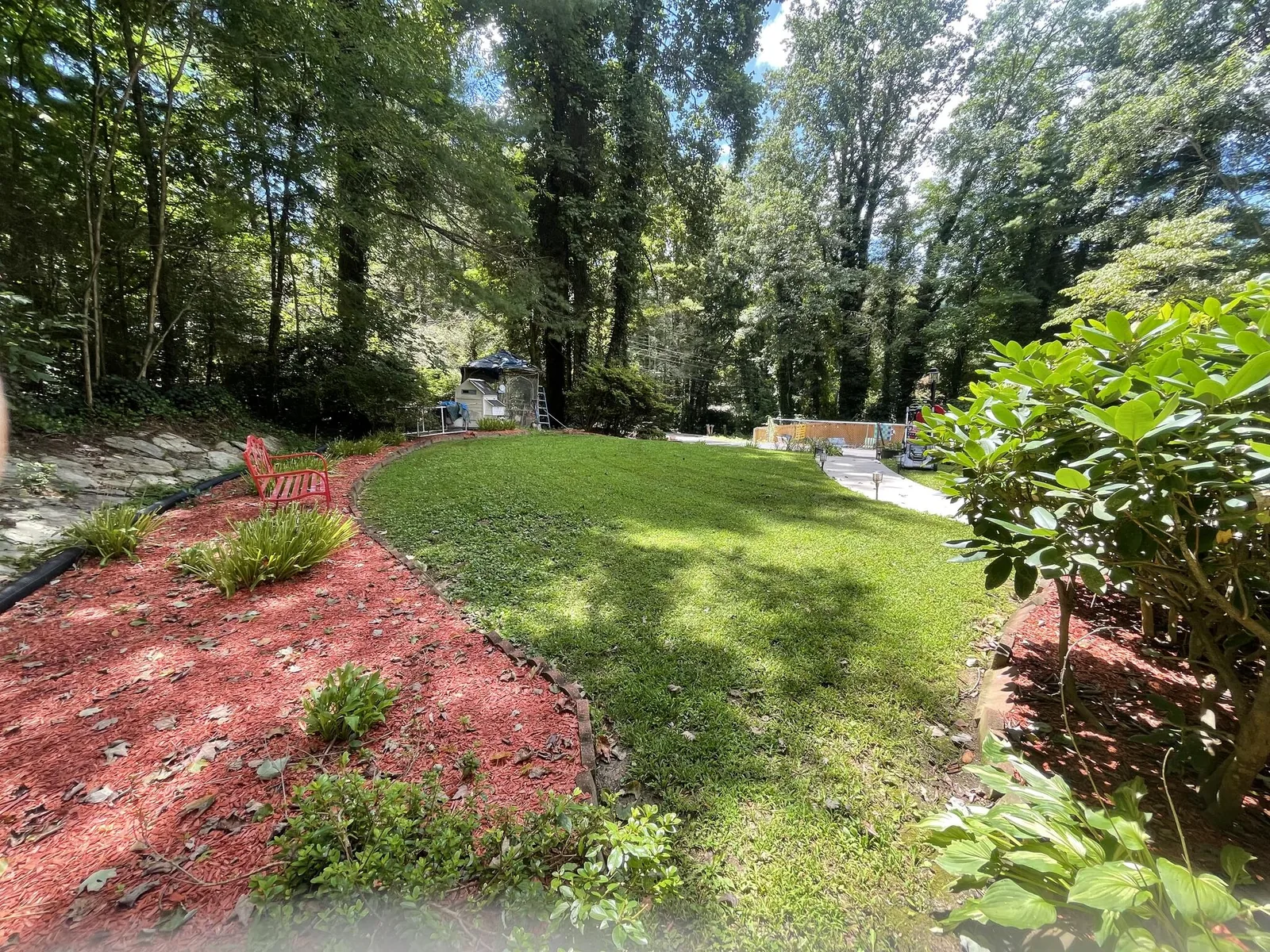
Drive from a flat in-town lot off a numbered street out into the county and the mowing arithmetic changes fast. Henderson County's terrain is what does it: a quarter-acre in town might be an easy 25-minute cut with one gate and a trim pass, while the same quarter-acre on a graded hillside off a mountain road means push-mowing a bank the zero-turn can't hold, weed-eating around a retaining wall, and blowing clippings off a steep drive so they don't wash into the storm drain. Same square footage, two different jobs. That is why this page quotes a band and not a flat rate, and why the honest number for your property depends on a handful of line items you can actually see.
If you want the deeper version of how those line items stack up — seasonal contracts, cleanup add-ons, what a recurring plan saves — the lawn mowing cost breakdown on this site walks through it. The short version: you are buying time, access, and equipment suitability, not acreage alone.
For current official guidance, see the North Carolina State Board of Examiners of Plumbing, Heating & Fire Sprinkler Contractors. For current official guidance, see the North Carolina Building Code Council / NC Department of Insurance.
The line items that move a mowing quote
Most quotes on a Hendersonville-area property come down to five things:
- Slope and terrain. This is the single biggest mover. Banks steep enough that a ride-on can't safely hold traction get walked behind a push mower or a string trimmer, and that time shows up in the price.
- Access. Narrow gates, fenced backyards, parked cars, and steep driveway aprons all slow a crew down. A property you can pull straight onto mows cheaper than one you have to walk equipment into.
- Grass type and growth rate. Fescue in a shady yard and fescue in full sun are different jobs by mid-summer. Irrigation, fertilizer history, and how often the yard has been cut all change how much material comes off each visit.
- Trim, edge, and blow. A cut-and-go price and a full finished pass are not the same service. Beds, fencing, foundations, and walkways all generate trimming, and clippings have to go somewhere that won't clog drainage.
- Frequency. Weekly in the growing season keeps each visit quick. Letting it go three or four weeks means the first cut back is a taller, slower, bagging job.
None of that is guesswork at the property — a walk-through tells you which of these applies within a couple of minutes.
What a visit costs, by scope
The table below maps the scope you actually have to the range you should expect. Every figure sits inside the local band; the job is figuring out where on it your property lands.
| Scope | Typical per-visit range | What drives it |
|---|---|---|
| Small in-town lot, simple access | $25–$45 | Under a quarter-acre, one gate, light trimming |
| Average suburban yard | $45–$75 | Quarter to half acre, normal trimming and edging |
| Half acre to an acre, mowed clean | $75–$100 | More run time, more border, sometimes bagging |
| Acre or more | $90–$120 | Equipment passes, time, disposal of clippings |
| Steep or heavily landscaped property | Toward the top of its size band | Push mowing, string trimming banks, slower crew |
A recurring contract usually prices per visit lower than a one-off cut, because routing and timing get predictable. A first cut on an overgrown yard prices higher, because it is genuinely more work and often needs a bagging pass.
The seasonal reality in this county
Henderson County gets a real growing season and a real dormant season, and mowing schedules here reflect that. Spring green-up through fall is the working stretch; winter visits drop to occasional cleanup or stop entirely. That matters for how you buy the service: a year-round flat monthly rate and a per-visit rate are two different contracts, and it pays to know which one you are signing.
Weather is the other variable. This part of western North Carolina has a documented storm and flood history (16 federal disaster declarations across 1978-2026), and heavy rain seasons are when yards get saturated, when mowers tear up soft turf, and when drainage problems show up as ruts in the lawn. A crew that watches the National Weather Service forecast and reschedules rather than rutting a soaked yard is doing you a favor, even when it costs you a day. If your property has known drainage issues, the lawn care program side of this site is the better starting point than mowing alone.
One-off cut, recurring plan, or full property care
Three ways people buy this locally. A one-off cut makes sense before a listing, after a tenant moves out, or to catch up an overgrown yard — priced at the top of its scope band. A recurring mowing plan is the standard for occupied homes, and it is the cheapest per visit because the crew routes and the yard stays manageable. Full property care bundles mowing with bed work, trimming, and seasonal cleanup, which is where most of the value sits for larger or heavily planted properties.
Shrub and bed maintenance usually rides alongside mowing on the same visit, so if your borders need shaping the shrub trimming service is worth pricing at the same time rather than as a separate trip. One crew, one visit, one invoice.