Why Hendersonville lawns don't grow on a fixed calendar
Drive from the valley floor near downtown Hendersonville up toward Flat Rock or over toward Edneyville and the grass tells two different stories in the same week. Lower, sunnier yards on clay-loam push fescue and bluegrass fast through April and May. Yards tucked under the hardwood canopy that gives this county its character stay cooler and wetter, and that shade slows growth enough that a weekly cut is often a waste of money and a stress on the turf. Elevation does the rest: this town sits higher and cooler than the surrounding Piedmont, so green-up arrives later in spring than most of the state expects and summer heat stress shows up later too.
That is why the honest answer to "how often?" around here is every 10 to 14 days for most yards during the growing push, then stretching as shade, drought, or cool nights throttle growth. A crew that quotes a rigid weekly schedule in summer shade is selling visits, not a healthy lawn. The right rhythm is rainfall and temperature read week by week, which is also why our routine mowing service adjusts height and interval with the season instead of mowing to a stopwatch.
Mow, trim, edge, blow — what a visit actually includes
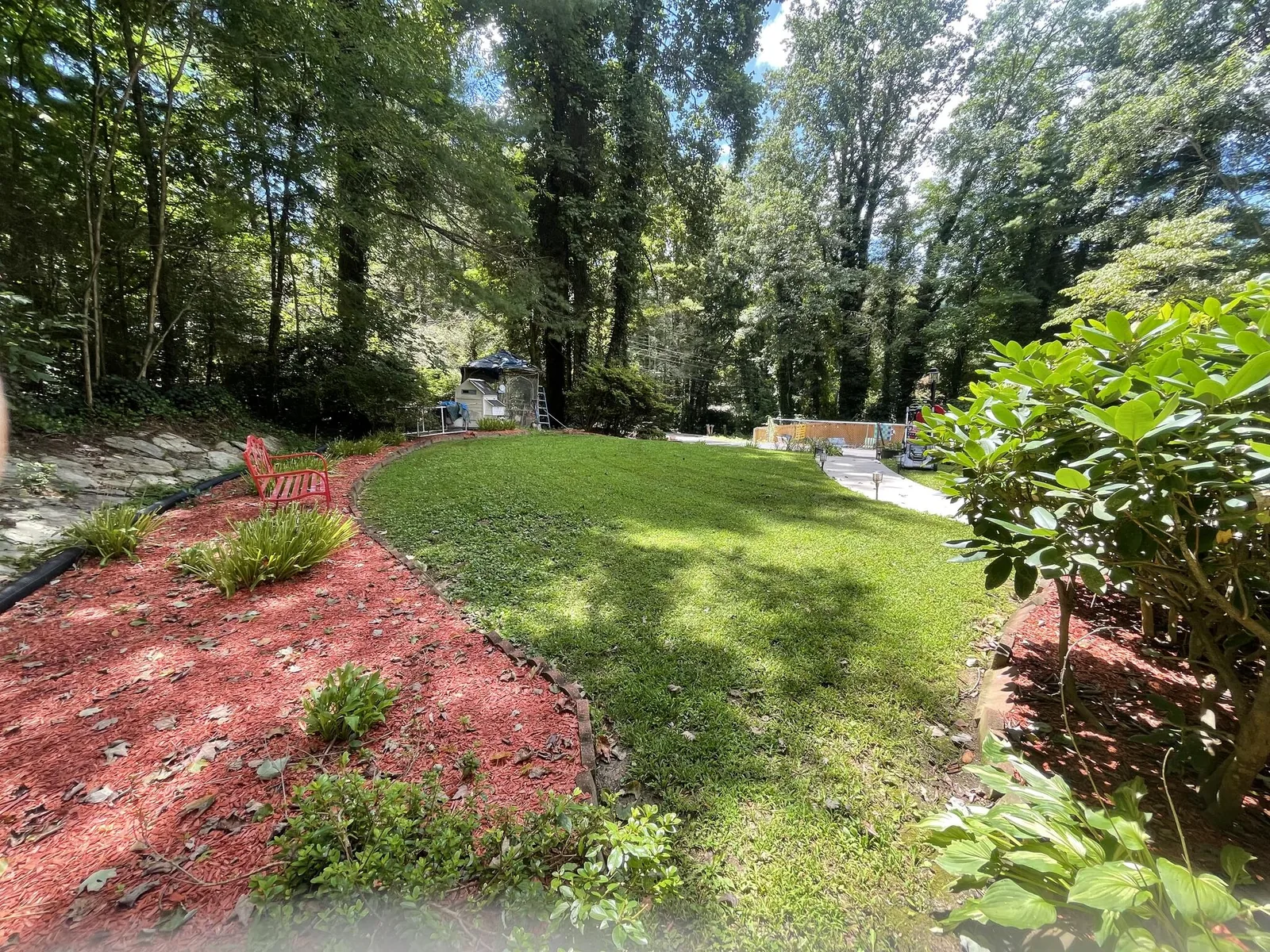
An average Hendersonville yard visit is mow, string-trim, edge, and blow, and the details are where quality shows. Crisp edges along concrete, string-trimming around fence lines and the wooded borders this county's lots tend to have, and blowing clippings off drives and walks rather than into beds or storm inlets. Grass height matters more than most homeowners realize: too short scalps fescue in the late-summer dry stretch, too tall leaves ruts. We keep mowing height in a range that suits the species and shade instead of the same setting on every property.
Places that deserve special care include rain gardens and low spots near the house, which catch runoff from these hills and stay soft well after the rest of the lawn firms up. Keeping mower traffic off saturated ground is why a visit sometimes needs to slide by a day, and it is cheaper than repairing ruts. Leaves change everything in autumn, which is its own subject and its own dedicated leaf removal service.
What lawn care costs here, by scope
Hendersonville pricing sits comfortably in the regional band, and the honest ranges below reflect typical lot sizes in this town. Most variation comes from lot size, slope, obstacles, and how much trimming the property demands, not from the address. The statewide benchmark for a standard plan is $45 to $75 a visit biweekly, roughly $120 to $260 a month for mow, trim, edge and blow on an average yard. A local rule of thumb: heavier shade tends to lower mowing frequency and cost, steeper or heavily landscaped lots push toward the top of the band.
| Scope | Typical price range (Hendersonville) |
|---|---|
| Biweekly mow, trim, edge, blow on an average in-town yard | $45–$75 per visit; about $120–$260 a month |
| Monthly maintenance on large, mostly shaded lots | Toward the lower end of the per-visit band |
| Small yard, light trimming, routine plan | $45–$60 per visit |
| Larger or heavily landscaped property, more trimming and edges | Toward $75 per visit; monthly total near the top of the band |
| One-time cleanup, seasonal catch-up, or overgrown recovery | Quoted per job; typically above a routine visit |
For a fuller breakdown of what moves a quote, see our lawn care cost guide. The one number to distrust is a flat monthly price promised before anyone has seen the yard, especially on the wooded lots that shape this county.
Shade, slope, and water — the local variables that decide quality
Henderson County's tree cover is the single biggest factor in how a lawn performs. Deep shade thins turf, invites moss, and rewards a lighter mowing schedule and a lighter hand generally. Slopes shed water fast, so lawns on hillsides dry out sooner and burn in the late-summer stretch unless watering is thoughtful. Low spots are the opposite problem: they hold runoff and stay soggy, which means mowing them late in the day can ruts a lawn for the rest of the year.
Water itself is where local rules and good practice meet. Outdoor water use and runoff are regulated at the state level, and the NC Department of Environmental Quality maintains guidance on water quality and conservation worth reading before installing irrigation or re-grading a yard. Watching your own property for a season tells you more than any generic watering schedule: which corners dry first, where puddles sit, and how fast the ground firms up after rain. Weather planning matters too, and the National Weather Service outlooks are the source we lean on when a visit should move ahead of or behind a front.
How to keep a lawn plan honest
Ask what happens in a wet week, a drought week, and a leaf week. A plan that only works in perfect weather is not a plan. Ask how mowing height is set and whether it changes with the season; a crew with one setting is a crew that will scalp you eventually. Ask what the visit includes beyond the mower deck, because trim, edge, and blow are where a "cheap" price quietly excludes work and where a fair price includes it.
There is no state-specific license required just to mow a yard, so quality here rests on judgment, not a credential. Where a project crosses into structural or drainage work, though, the rules change, and the NC Department of Insurance and Building Code Council publishes the code requirements that govern anything that alters how water moves across a property. Verify before anyone starts moving dirt near a foundation.