What fills gutters and roofs on Henderson County lots
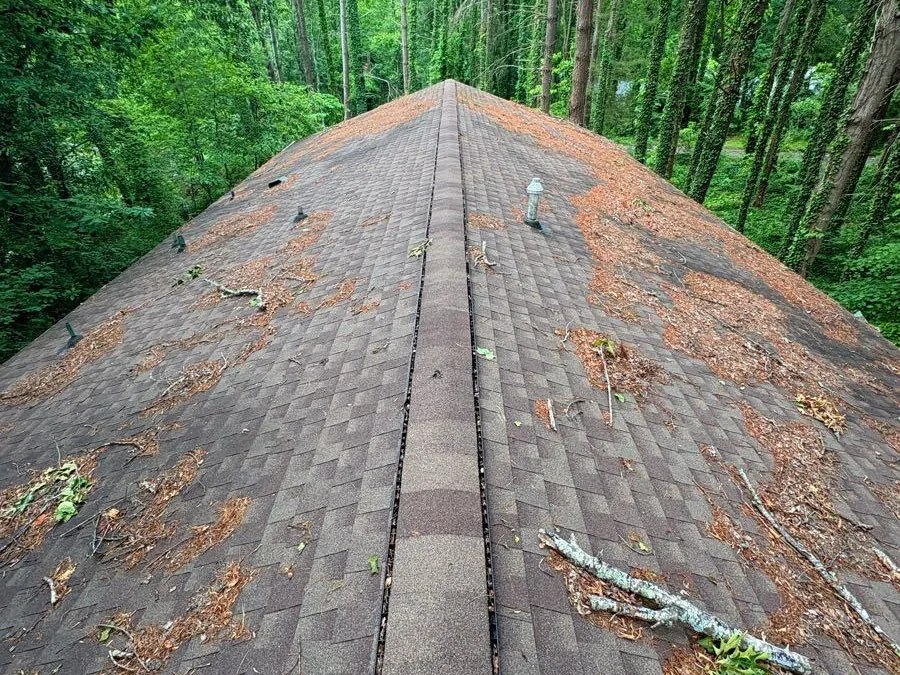
Drive through Flat Rock, Laurel Park, or the older neighborhoods ringing downtown Hendersonville and you can read the pruning calendar in the gutters. This county sits at the transition between Piedmont hardwoods and Blue Ridge evergreens, and the mix lands differently than it does an hour east. Mountain laurel and rhododendron hold dense evergreen leaves year-round, then drop a heavy flush of spent bloom and inner foliage in early summer. Hollies shed a prickly leaf litter that mats rather than blows. Crape myrtle and hydrangea around Hendersonville porches throw spent flower heads that stick to roof valleys. And the white pines above Kenmure and the ridges near Saluda drop cones and needles that pack gutters tight from fall into winter.
The debris calendar here has three distinct peaks. Late spring brings the spent bloom and inner foliage drop from broadleaf evergreens. Midsummer, after the first flush hardens off, shrubs that were shaped in March have pushed six to twelve inches of new growth and start crowding walkways and windows. Then fall into early winter is the needle-and-cone season from the pines and hemlocks that shade so many ridge lots. Each peak fills a different part of the property: bloom litter lands in beds and on walkways, summer growth blocks sightlines and rubs siding, and needle drop goes straight to the roof and gutter line.
The practical consequence: trimming here is not a single annual event. Foundation shrubs around county homes grow through a long mountain spring and keep pushing into early summer, so a set of beds trimmed once in March looks shaggy by the Fourth of July. Homeowners who get on a twice-a-season schedule spend less per visit than those who let hedges overgrow and pay for a hard reset.
It also helps to know which plants are driving the mess. A native rhododendron tucked against a north-facing wall may hold its shape for years, while the same species in full sun on a south slope flushes aggressively and needs annual attention. Boxwood around older Hendersonville homes tends to build a dense outer shell that hides dead interior growth until someone thins it. Holly hedges used as privacy screens along property lines grow steadily and drop leaves year-round, not in one tidy window. Reading your own lot's plant mix is the first step to predicting what you'll be cleaning up and when.
Hendersonville-area price ranges by scope of work
Quotes below reflect local labor, haul-off, and the density of mountain-zone plantings. They are working ranges, not bids.
| Scope of work | Typical Henderson range | What drives it |
|---|---|---|
| Light shaping, small beds | $120 – $200 | count of shrubs, hand-pruning vs. power |
| Standard foundation beds | $200 – $400 | bed linear footage, height, access around rock walls |
| Overgrown hedges, hard reset | $400 – $600 | height, woody growth, disposal volume |
| Full bush removal and stump drop | $400 – $600 | root size, slope, haul distance to the curb |
| Recurring seasonal contract (per visit) | $120 – $350 | frequency, number of beds, whether mulch refresh is bundled |
A small front bed along a Fletcher ranch home might come in at the low end because the shrubs are young, spaced, and easy to reach. A similar count of plants on a terraced Laurel Park slope, where the crew is working above a retaining wall and carrying everything back up to the truck, lands closer to the middle or top of the foundation-bed band. The plant count can be identical and the price still differs by a hundred dollars or more, and that gap is almost entirely access and haul-off time rather than any change in the trimming itself.
The recurring-contract row is where most homeowners save over a season. Two scheduled visits at a modest per-visit rate usually beat one emergency reset in July plus another in October, because the crew is never fighting years of accumulated woody growth. Bundling a mulch refresh into the same visit also trims the total, since the beds are already clear and the crew is already on site.
Anything above $600 usually means the job has crossed from trimming into landscape renovation, which is a different scope. Pairing the trim with fresh beds? See our mulch installation cost guide for how those numbers stack.
The debris calendar that sets the schedule
Timing in this county is not arbitrary. The National Weather Service tracks the freeze and storm cycles that shape when growth flushes and when plants go dormant (NWS), and around Hendersonville that means a narrow window in late winter for hard pruning before bud break, then a lighter touch after the first flush finishes in early summer. Cut a spring-blooming shrub like a native azalea at the wrong point and you remove next year's flowers along with this year's shape.
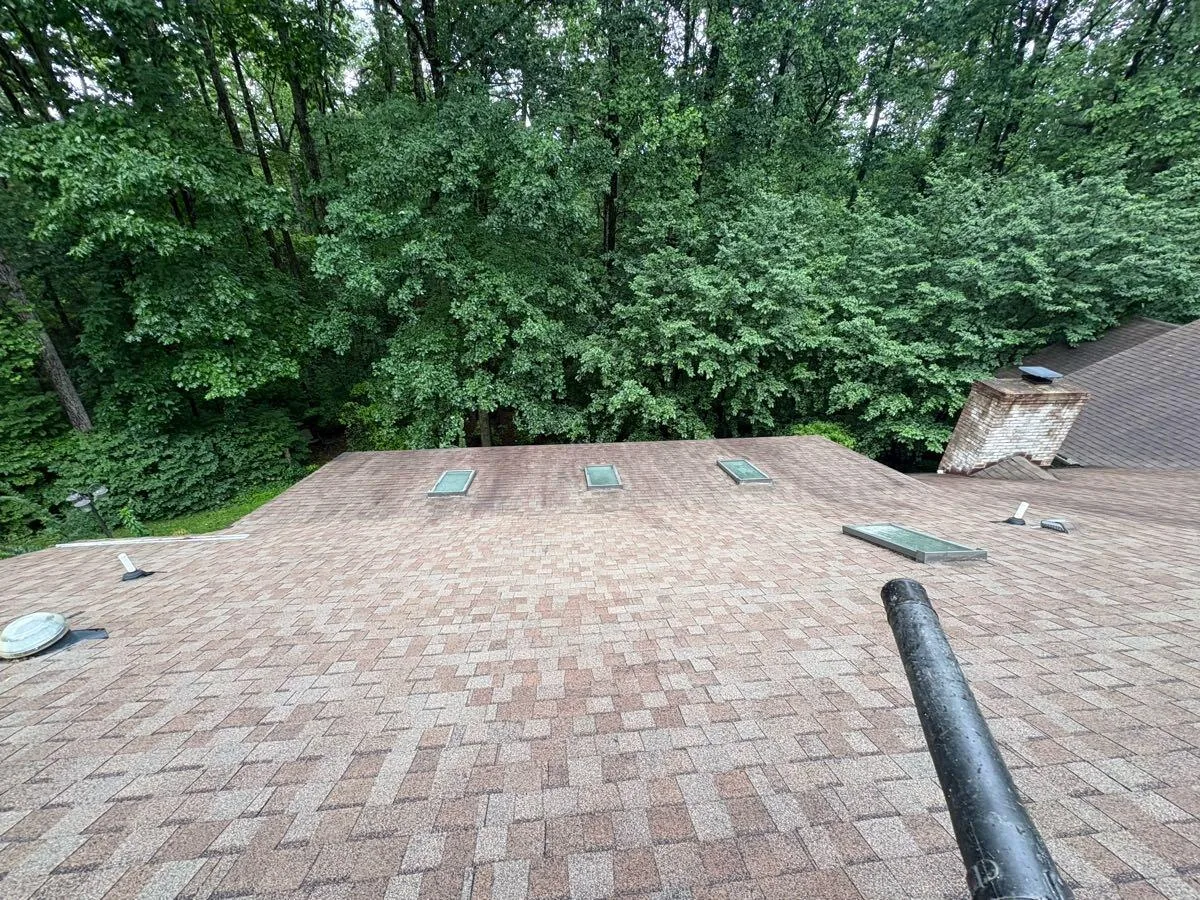
The storm record reinforces why trimming matters beyond looks. 16 federally declared disaster events have touched this county across a 1978-2026 span, and the lean is toward wind and flood-family storms. That history shows up as broken limbs in the canopies above beds and shrubs that grew into the path of falling branches. Keeping foundation plantings at a sane height and clear of rooflines reduces the damage a summer storm can do, and it makes post-storm cleanup cheaper too. If you want the pure service view rather than pricing, our shrub trimming service page walks through what a visit includes.
The calendar also explains why late-winter and early-summer slots book out first. Homeowners who call in February for a March trim and again in June for a July shaping get the pick of scheduling. Anyone waiting until the shrubs are visibly overgrown is often calling during the same storm-cleanup rush that follows a heavy summer system, when every crew in the county is stretched thin.
One more reason the calendar matters: disease and pests follow the same seasonal rhythm. Fresh wounds on certain species heal faster at the right time of year and are less likely to be colonized. That is a general horticultural principle rather than a local statistic, but it is part of why the timing advice is worth following. For anything involving landscape materials or chemical weed control as part of the visit, EPA guidance on safe handling applies (EPA).
Mulch, slope, and why beds here cost more to service
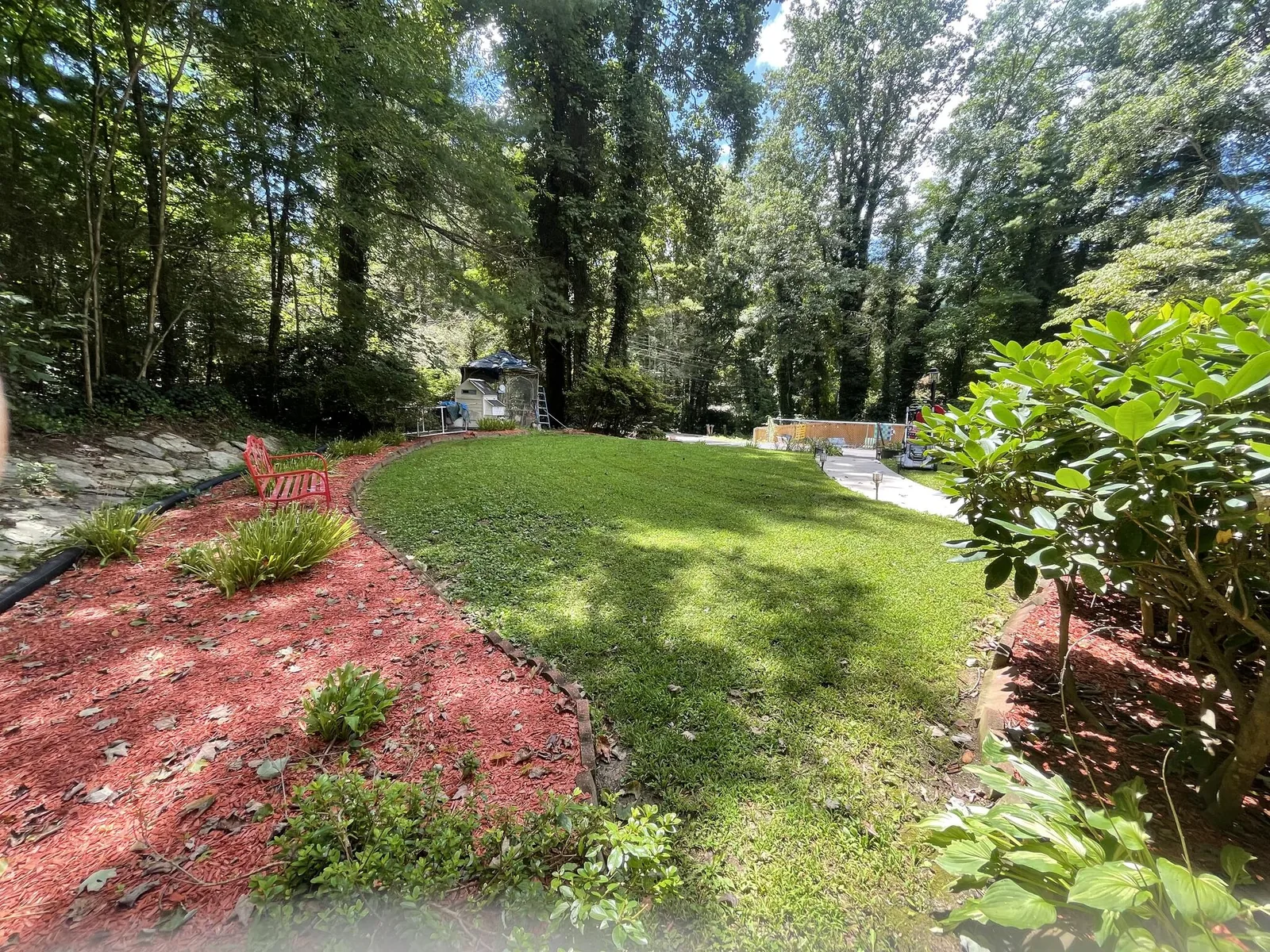
Henderson County lots are rarely flat. The same grade that gives a Laurel Park home its view also makes a wheelbarrow trip to the curb a real climb, and it pushes labor time on every trim. Rock retaining walls, common along older Hendersonville streets and the steep driveways off Kanuga, limit where a crew can stand and where clippings can go. Terraced beds take longer than a single straight run of foundation hedge, and that time shows up in the quote.
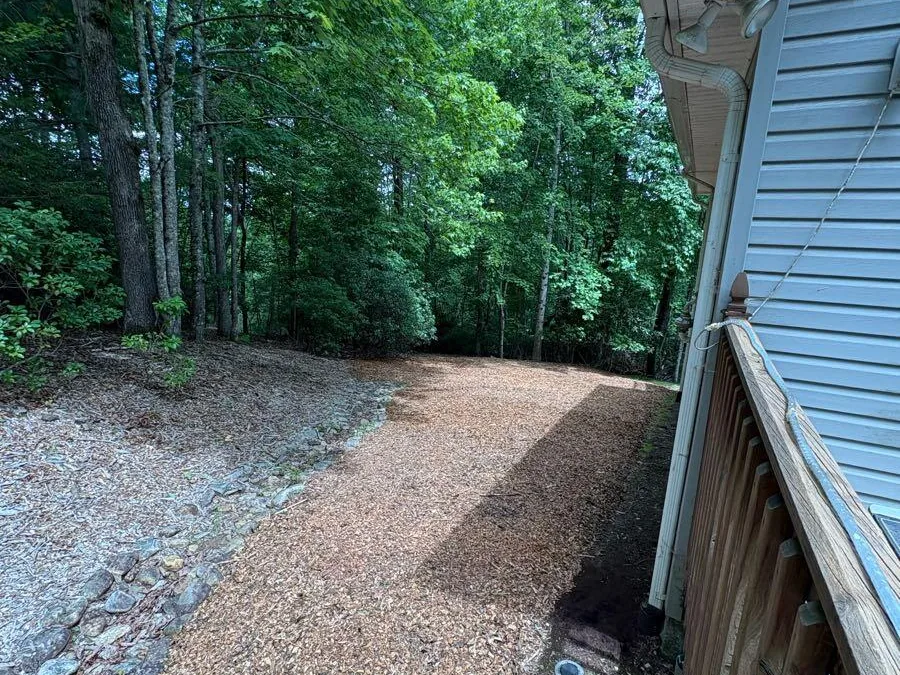
Mulch choice interacts with the trimming schedule. Heavy shredded hardwood, popular here because it holds on slopes, breaks down slowly and suppresses weeds through the long growing season, so beds stay cleaner between visits. Pine straw moves fast on a grade and needs refreshing more often. Trimming and mulching on the same visit usually saves money versus two separate calls, because the crew is already on site with the beds cleared. Our lawn care cost page covers how recurring service pricing works if you want the whole property on one contract.
Slope does more than slow a crew down. It also determines what equipment can reach the beds at all. A walk-behind mower or wheeled cart that works fine on a level Fletcher lot may be useless on a tiered yard where the beds sit above a stone wall. In those cases the work is hand-carried, and the estimate reflects it. Homeowners sometimes balk at a quote until they watch a crew haul a tarp of clippings up a switchback driveway in July, and then the number makes more sense.
Foundation plantings also do real work in a mountain climate. Rooted shrubs on a slope help hold soil that would otherwise move in heavy rain, which is one more argument against stripping beds bare or letting them go wild. Keeping hedges trimmed to a reasonable height and thinned enough to let air move through them supports that function rather than fighting it.
Licensing, safety, and what to verify
North Carolina does not require a specialty license for routine ornamental trimming, but the state does set thresholds for general contracting work, and the Office of State Fire Marshal maintains the building and safety codes that govern most exterior work on a property (NC DOI / OSFM). Where trimming edges into removing a full tree, clearing brush piles, or altering grade around a foundation, code and permit questions can surface. Ask any crew carrying power equipment whether they hold liability insurance and workers' compensation; a homeowner can be exposed if an uninsured worker is injured on the property.
Disposal is the other check. Hauling green waste off a mountain lot costs more than a curbside dump, so ask whether the quote includes removal or leaves you with a pile at the top of the drive. The difference between those two versions of the same job can be the gap between a $300 quote and a $450 one.
It also helps to ask how the crew handles the equipment itself. Hedge trimmers and pole saws near a roofline, ladders on uneven ground, and brush chippers on a grade all carry real risk. A professional crew will have a routine for where equipment is staged and how ladders are footed on slopes, and they will not improvise that on arrival. If someone pitches a price that only works by cutting those corners, the savings are not worth the exposure.
Finally, get the disposal plan in writing. Green waste can be chipped and left as mulch on site if you want it, composted, or hauled to a facility. Each option has a different cost and a different effect on your yard, and a written plan prevents the surprise of a pile of laurel branches sitting at the end of the driveway a week after the crew leaves.
How to keep the quote honest
Three moves protect you in this market:
- Get the plant list, not just the price. A bidder who names the species and knows which ones bloom on old wood gives a better estimate than one quoting a flat per-bush number.
- Ask about the second visit. Given how long the growing season runs here, a single annual trim rarely holds. Know whether you're pricing one visit or a schedule.
- Confirm disposal and access. Slope, rock walls, and haul distance are the real variables. If a bid surprises you, make them walk the property and explain the time.
It also pays to note the condition of the beds before the crew arrives. A photo of the overgrown hedge, the rock wall, and the driveway grade takes a minute and gives you something concrete to discuss if a price changes between the phone estimate and the invoice. Honest crews appreciate the clarity, and the walk-through itself often surfaces access details neither side noticed on the phone.
Want the region-wide picture across services? Compare against the full lawn care cost guide or look at mulch installation pricing to see how a bundled visit compares.