The access problem nobody quotes for in Flat Rock
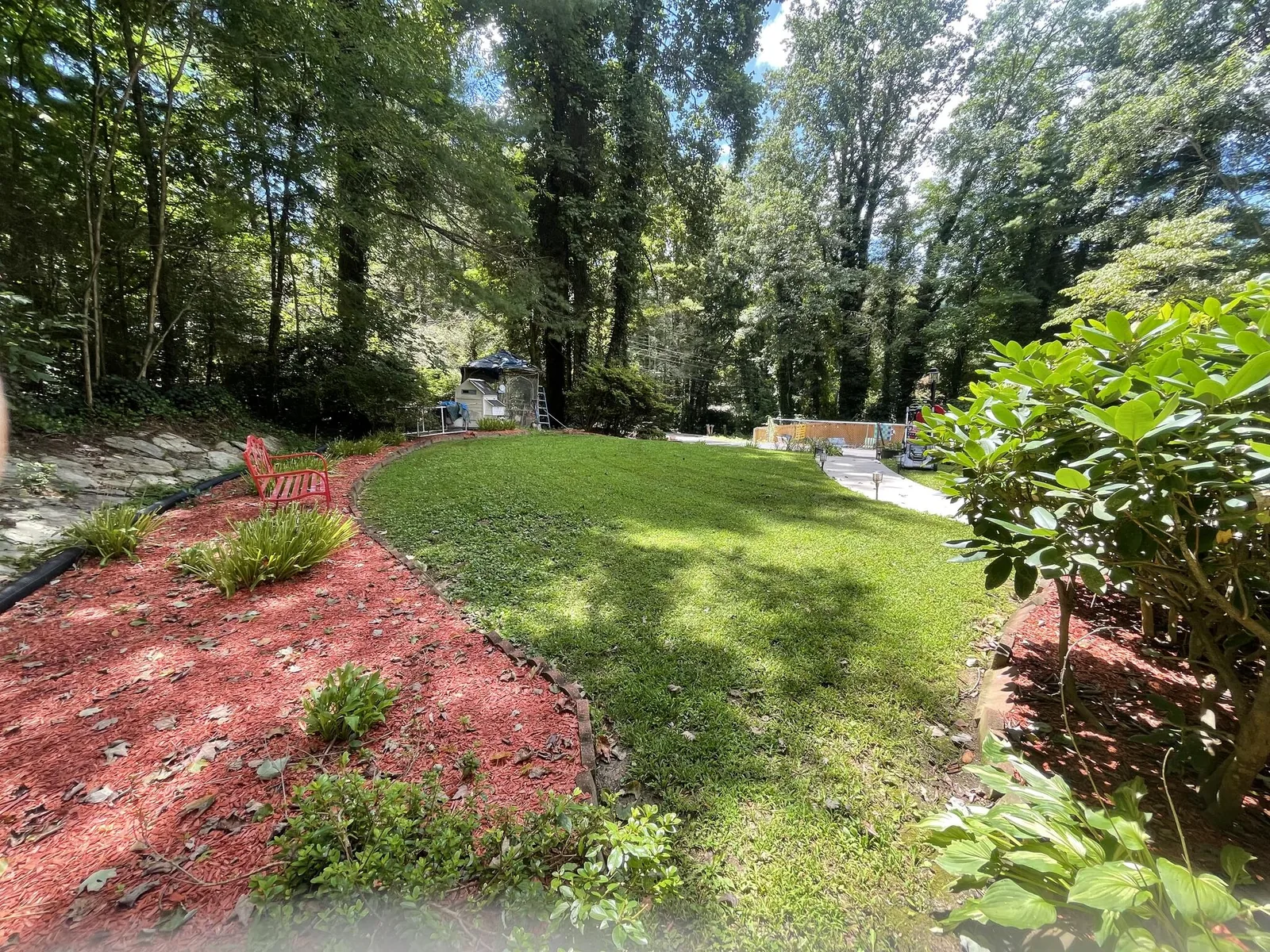
Flat Rock's older homes sit under hardwood canopies behind stone walls, and the beds that need mulch most are usually the ones a wheelbarrow can't reach. The back lawn on a ridge lot off Greenville Highway may be a full grade above the driveway; the beds behind the 1920s cottages off Little River Road tend to run tight against foundation stone where a truck can't turn. This is not a spoiler. It just decides which scope applies. A pull-up-and-spread front bed is a half-day. A 90-foot hose run uphill to a fenced back border is a different job, with the same mulch, and the estimate has to say so before anyone shows up.
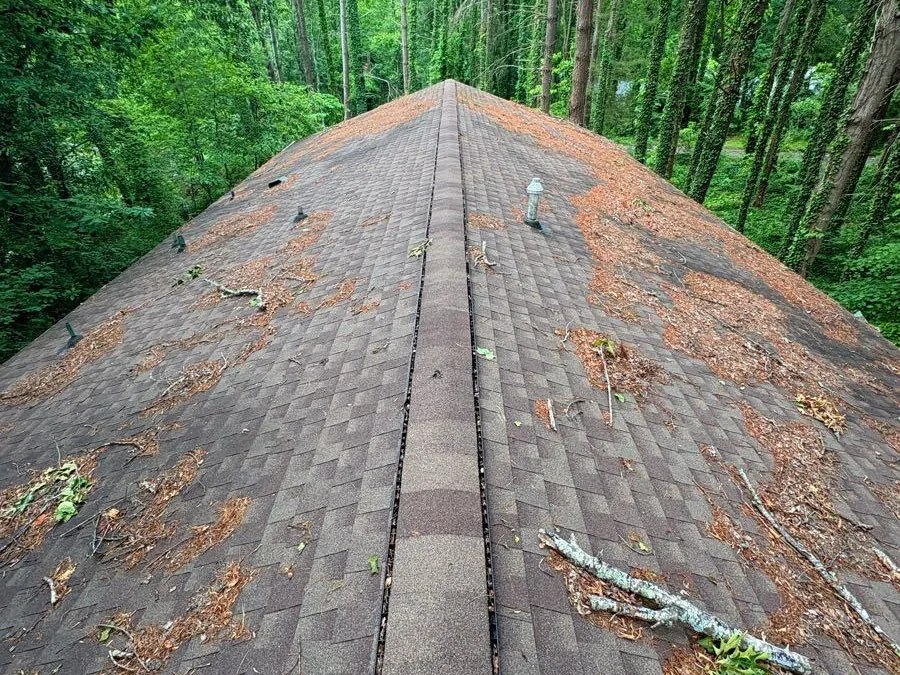
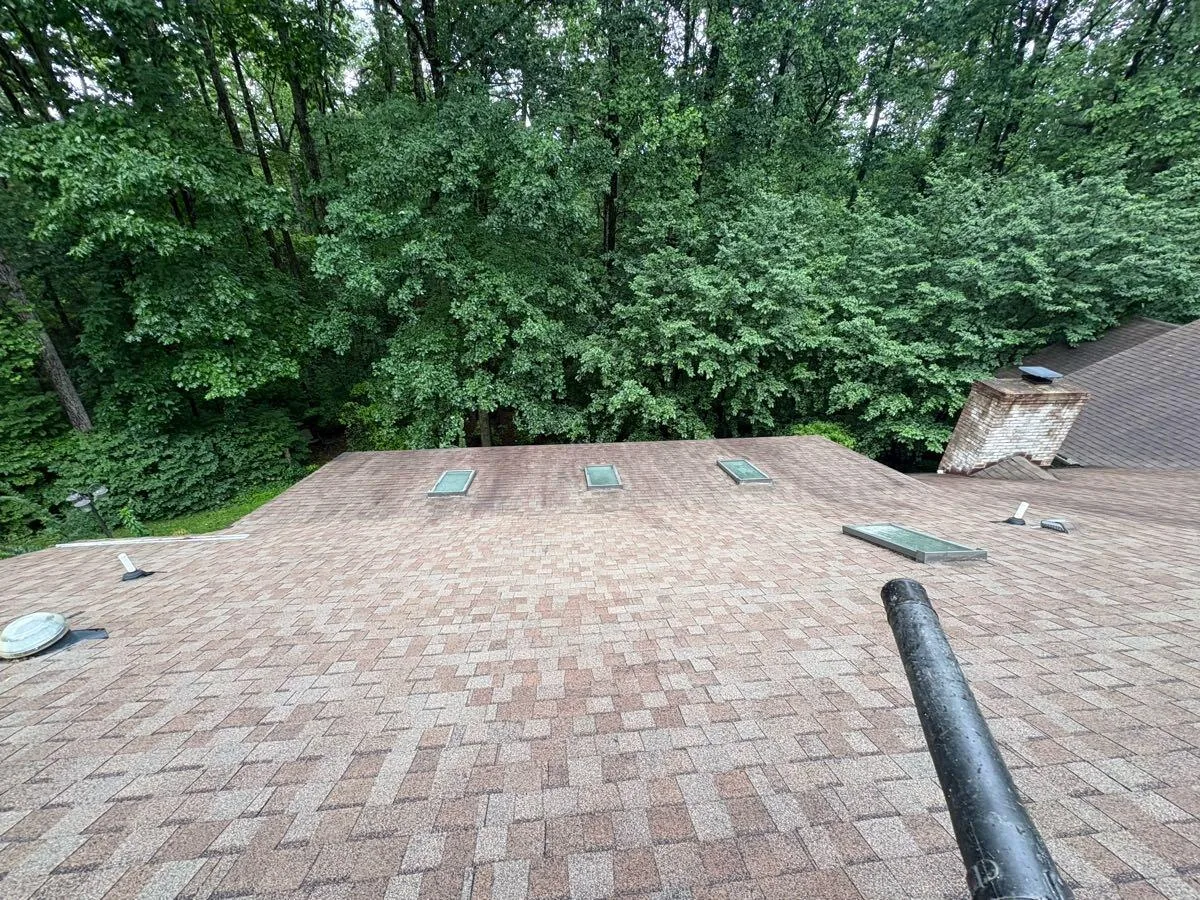
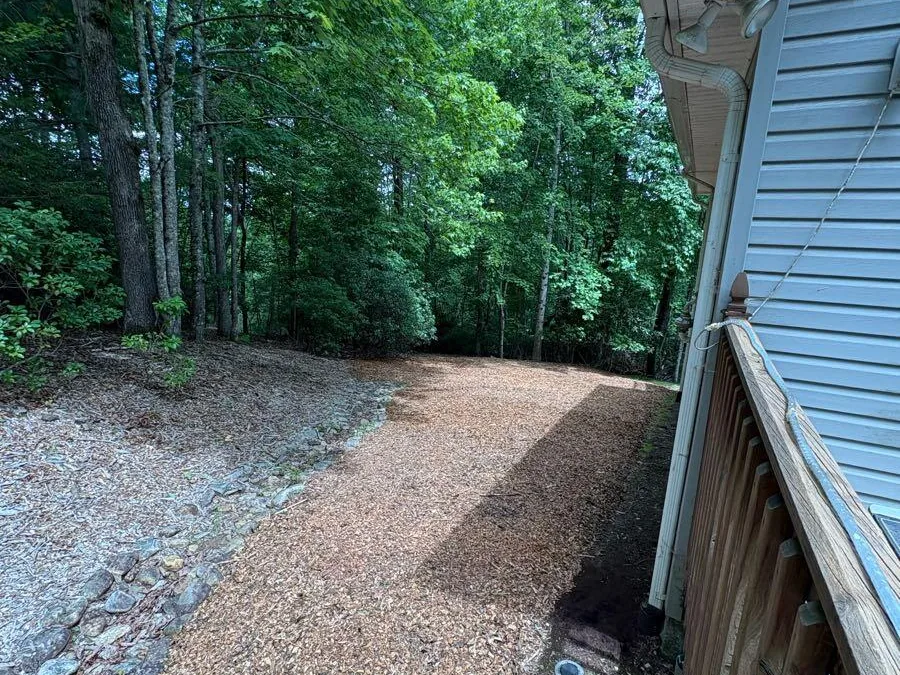
The tricky part isn't the mulch itself — it's the terrain and the roofline. Many Flat Rock houses sit on a slope with a walk-out basement, so the rear bed is one full story below the main floor. That changes how a ladder gets back there and how a wheelbarrow or blower hose gets routed. Roof pitch on one-and-a-half-story houses here can exceed what a simple extendable ladder can safely reach, and tree cover means gutters load up fast — which is why we treat mulch day and gutter cleaning in Henderson County as the same trip whenever the calendar allows. It's cheaper to send one crew than two.
In practice the access decision comes down to a short list of questions that have nothing to do with the mulch grade and everything to do with the lot: Can the truck get within 40 feet of the bed? Is there a grade change or retaining wall between the driveway and the planting area? Are there steps, a fence gate, or a narrow side yard that a wheelbarrow can't clear? A yes to any of those means a longer hose pull or a hand-carry scope, and that gets priced upfront rather than discovered on the day.
Henderson County pricing that actually reflects the scope
Material and labor are usually quoted together for residential beds. The table below is the honest working range for this town. Anything at the top end is almost always an access problem, not a mulch problem — steep banks, long hose pulls, or beds too narrow to fit a blower and rake without hand work.
| Scope | Typical price range |
|---|---|
| Single front bed refresh, truck reachable | $450 – $650 |
| Full front and side beds, 6–10 yards, hose-reachable | $650 – $900 |
| Back beds with grade or fence obstruction | $850 – $1,200 |
| Grade bank or steep side slope stabilization mulch | $700 – $1,200 |
Per-yard pricing stays inside $85 to $130 spread for any of these. Mulch type moves the number less than people expect. Wood chips run toward the lower end; double-shredded hardwood or dark-dyed mulch gravitate toward the top. If a bid you've received is dramatically under $450 for a full refresh, ask what happens to the old mulch, who edges the beds, and where the pile actually gets dropped.
Two things tend to surprise homeowners in Flat Rock. First, "a yard of mulch" spreads further than people picture — about 100 square feet at three inches deep — so a front bed that looks enormous from the porch may only need two or three yards. Second, the labor is often the larger line item on steep lots, not the material. A yard of mulch costs roughly the same whether it lands on a flat bed or gets carried up a hillside in buckets; the difference is the hours. That's why the estimates here are scoped by access first and yardage second.
Material choice does matter for appearance and longevity. Double-shredded hardwood knits together and stays put on a slope better than large nuggets, which tend to roll. Dark-dyed mulch holds color longer in full sun but fades fastest on south-facing beds. Wood chips are the budget option and break down faster, which is fine if you're topdressing annually anyway. We'll recommend based on the bed's sun exposure and slope, not on what's cheapest to load.
Why drainage and mulch depth matter more here than in the piedmont
Henderson County's federal disaster record is dominated by storm and flood events — 16 declared events across 1978-2026, per the public record. Most of those sent water downward through hillside yards and against foundations. That's not trivia for mulch work. A bed installed four inches deep against a downhill foundation wall holds the exact moisture the HUD guidance on moisture management warns about: it looks tidy and it feeds rot.
The practical rule is two to three inches of settled mulch, kept pulled back six inches from any siding, foundation stone, or wood trim. On Flat Rock's slopes, watering contours matter too. Mulch that runs with the slope instead of holding a shallow basin just moves the water downhill faster. We shape beds so the uphill edge of a planting area catches a bit of runoff before it reaches the street.
There's a second reason depth discipline matters on these lots: roots. Mature hardwoods and hemlocks send surface roots through the same beds we're mulching. Piling four inches over a root flare suffocates the tree slowly, and it's a mistake that takes a couple of seasons to show. Two to three inches over the root zone is the sweet spot — enough to suppress weeds and hold moisture, shallow enough that the tree can still breathe. On beds that were over-mulched for years, part of the job is pulling that excess back before adding anything new.
Where water crosses a bed on its way downhill, a thin mulch layer over a shallow swale does more good than a thick blanket. It slows the flow and lets it soak in, which is the same principle the EPA describes for managing stormwater on residential lots. In a summer with a wet forecast, we'll widen a channel edge or sharpen a grade line so the bed sheds water instead of holding it against the house.
Timing around leaf drop and storm season
The right mulch window here is late spring, once the last cold morning has passed and the beds have stopped heaving, or mid-fall before the oaks finish dropping. There's a real argument for the early-summer slot: mulch laid in June holds soil moisture through the dry stretch that usually shows up in July and August, and it suppresses the weeds that follow. The National Weather Service outlook for the mountains is a real input here — a forecast wet season changes how much we sharpen grades and drain channel edges versus focusing purely on depth.
Fall mulch has one advantage the spring window doesn't. If the beds are refreshed right after the last big drop, they go into winter clean, and the following spring looks finished without another visit. We schedule both around the calendar the client actually has.
What we try to avoid is mulching in the middle of a heavy leaf drop. A fresh bed under a white oak in late October just collects leaves on top of new mulch, and the finished look is gone in a week. It's the same hours either way, so it makes sense to wait until the canopy has mostly emptied. On properties with a mix of early-dropping species and late oaks, that can mean a two-pass approach: one visit to clear and prep, a second to spread once the last tree is done.
Storm season shapes the other end of the calendar. After a heavy rain event, beds on a slope often need reshaping before new mulch goes down, because runoff has cut channels through the old material. Mulching over a washed-out bed without fixing the grade just buries the problem for one season. If a property has been through that, we'd rather look at it first and quote the repair alongside the refresh than quote mulch alone and have it wash out again.
What a proper install includes
A real scope is not just "10 yards delivered." It includes old mulch removal where depth has built up, edging the trench so mulch and turf don't mix, cutting back any shrub or groundcover that's going to scalp the finished line, and raking the bed to a consistent crown. It also includes moving the mulch bag or blower hose to every bed by whatever route the property allows.
The finished detail is where a cheap job shows. A clean edge cut with a flat shovel gives the bed a crisp line against the grass instead of a soft, creeping transition. A consistent crown — slightly higher in the middle, tapering at the edge — sheds water rather than pooling it. And pulling mulch back from the foundation, the tree trunks, and any shrub crowns isn't optional; it's the difference between a bed that looks maintained and one that's quietly harming what's planted in it. None of that takes long, but it does take doing.
For customers who need the whole yard addressed rather than just mulch, the combined scope belongs with landscaping in Flat Rock NC, where the crew handles pruning, bed reshaping, and seasonal cleanup as a single visit. For mulch by itself, the mulch installation service page has the fuller walkthrough of materials, depths, and how we sequence front versus back yards when access is limited. If you want the honest answer on whether your property needs the premium scope or the standard one, send the address and a photo of the driveway and we'll tell you before the estimate is written.