What actually lands in Flat Rock gutters, and when
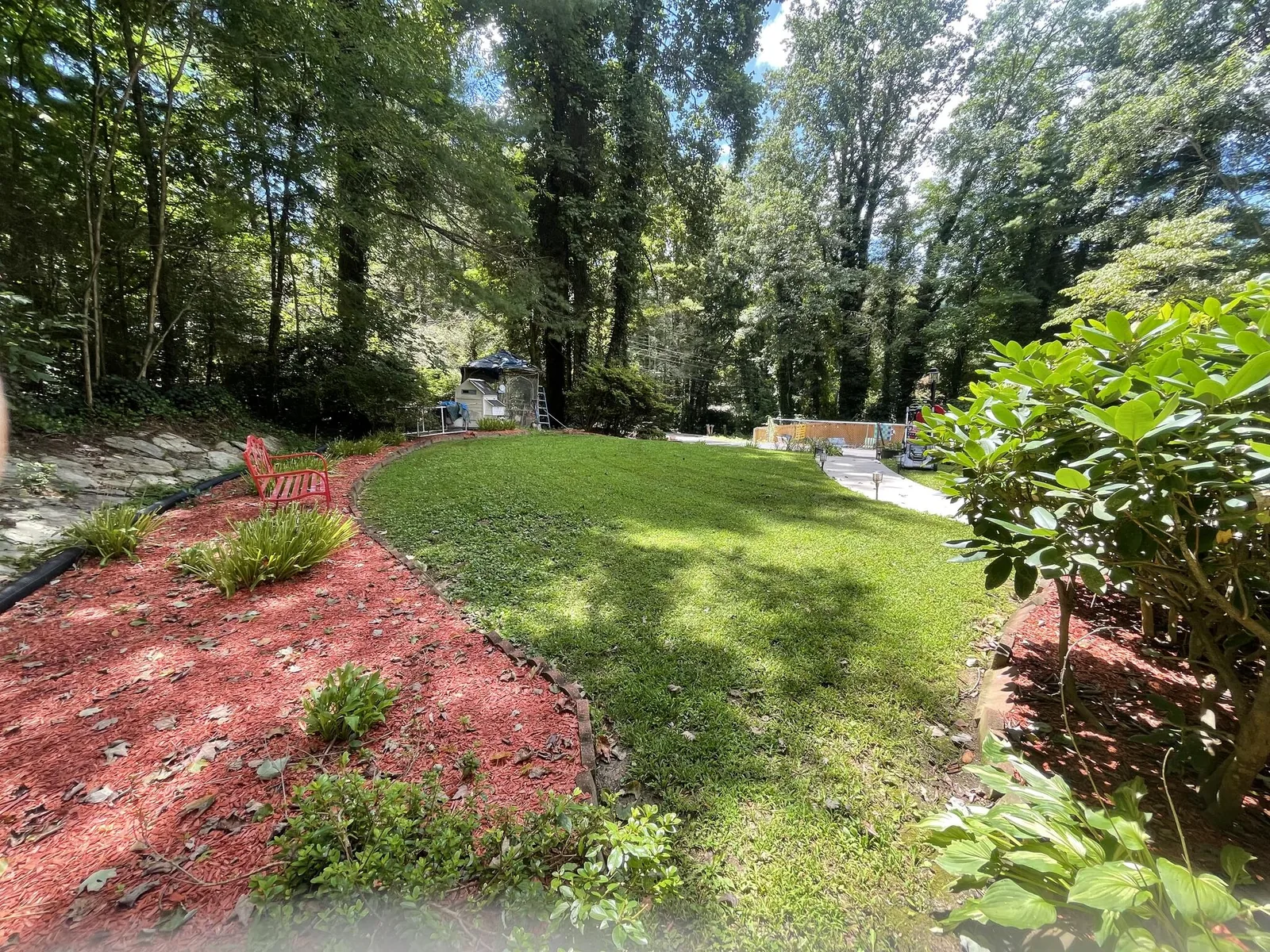
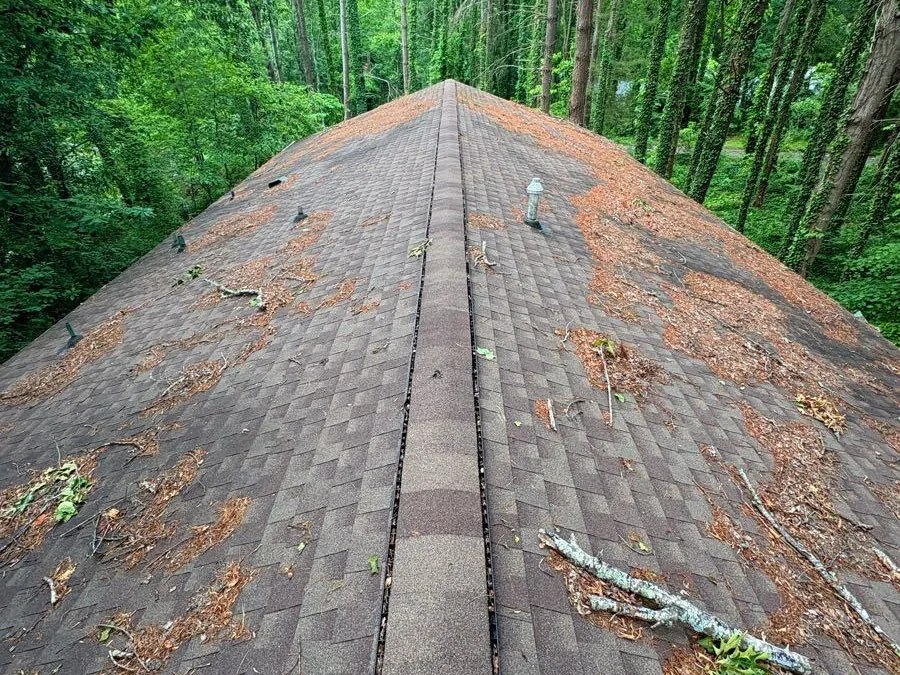
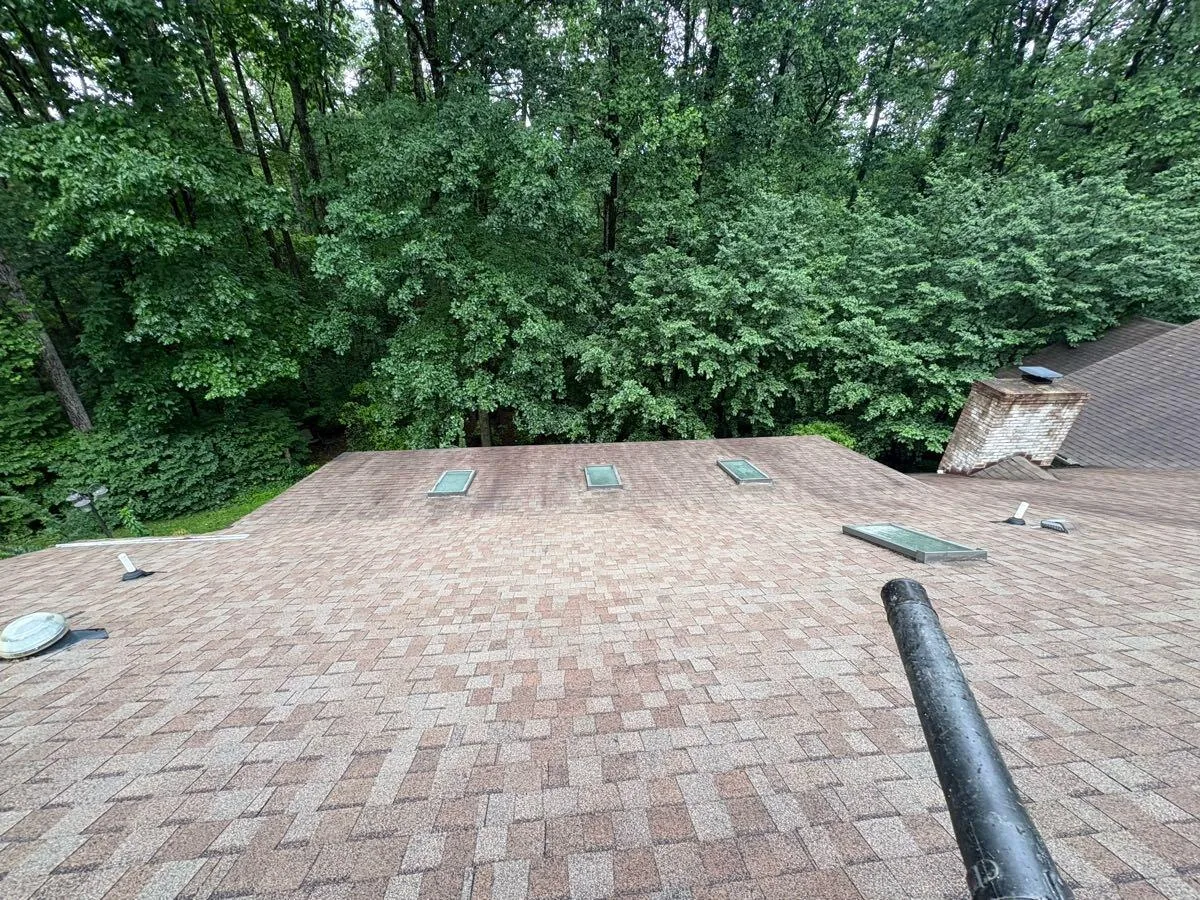
Flat Rock sits in Henderson County's Blue Ridge foothills, and the debris calendar here is set by tree species, not by the calendar on the wall. Late February into March, the pines and cedars that shade so many of the older lots off Greenville Highway and Rutledge Drive shed pollen and needle bundles that mat into a felt-like layer. April brings oak catkins and maple seed helicopters. May drops the poplar tassels. Then the canopy closes and gutters go quiet for the summer, which is exactly why homeowners forget them until October, when the real weight arrives.
Fall in Flat Rock is a two-wave event. Tulip poplar and black walnut drop early, usually the back half of September into early October. The oaks, which dominate the ridge lots above the village, hold their leaves later and come down hard from late October through Thanksgiving. A gutter that was clear in July can be full and sagging by the first cold snap. Winter adds one more thing this town gets that the Piedmont does not: ice. Water trapped behind a packed leaf dam freezes, expands, and works at the hanger screws and fascia seams all season.
What a cleaning actually costs on a Flat Rock lot
Every house prices a little differently, but the working ranges below cover the vast majority of Flat Rock and greater Henderson County addresses. If you want the full line-item breakdown by home style, the county page walks through it: gutter cleaning costs in Henderson County.
| Scope | Typical price range | What drives it |
|---|---|---|
| Single story, standard run, one cleaning | $150 – $200 | Footage, ladder count, ground-level access |
| Single story, long run or heavy pine litter | $200 – $250 | Needle matting, downspout blockages, roof pitch |
| Two story, standard roof | $225 – $325 | Height, number of valleys, walkable pitch |
| Two story, steep or cut-up roof | $325 – $400 | Fall protection, multiple roof planes, access |
| Add-on: downspout flush and flow test | Quoted with job | Length of run, buried drain lines, blockage severity |
| Add-on: gutter guard service or re-seat | Quoted with job | Type of guard, condition of hangers and fascia |
Two cleanings a year is the honest recommendation for most Flat Rock lots under a mature canopy. Some homes on the wooded ridges genuinely need a mid-summer pass for poplar tassels. Homes in the open, closer to the flat ground around the village, can often coast on one fall service plus a spring check.
Why the canopy here makes gutters a drainage problem, not a chore
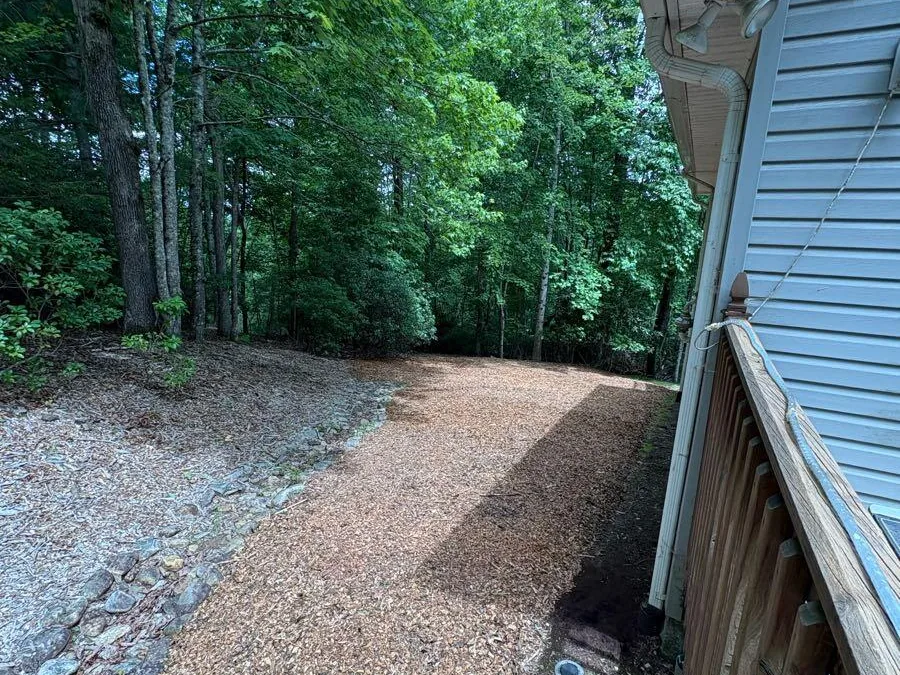
A blocked gutter is not really a gutter problem. It is a water-management problem aimed at your foundation, your siding, and your crawl space. Flat Rock's slopes send surface water downhill fast, and every downspout that backs up simply relocates the storm to the nearest low corner of the house. Over a season or two, that shows up as damp crawl space framing, stained brick, or soil washing out from under a walk.
The National Weather Service keeps the local forecast and any flood or winter-weather advisories current at weather.gov, and it is worth checking before a fall cleaning gets scheduled. The federal disaster record for this county is a useful reality check too: 16 declared events have touched Henderson County across 1978-2026, overwhelmingly in the storm and flood family. Each of those events pushed water hard at gutters and drainage systems that had not been cleared since the previous season.
Good practice for this terrain, grounded in the International Code Council's residential provisions on roof drainage at iccsafe.org: keep gutters and downspouts sized and clear, discharge well away from the foundation, and make sure grading slopes away from the house rather than toward it. Cleaning is the first line of that system. Once the gutters are moving water correctly, the rest of the property work tends to follow — see what full-service landscaping in Flat Rock covers, and the broader gutter cleaning service overview for how visits are structured.
What a proper visit looks like
A real cleaning starts on the ground. The technician walks the perimeter, notes the tree load and roof pitch, and checks whether the downspouts are actually discharging or just backing up. Then the gutters come out by hand — scooping, not blowing, because a leaf blower in a packed pine gutter throws debris into the beds and up onto the roof. After the troughs are clear, every downspout gets flushed and flow-tested. Any standing water or staining along the fascia gets flagged, because a gutter that drains slowly usually means a pitch or slope problem worth knowing about.
What it should not look like: a crew that cleans the front of the house and leaves the back, or one that hoses the gutters from the ground and calls it done. Pine needle mats do not rinse out. Ask before the visit how the crew handles the second-story back run and whether the downspouts get flushed as part of the standard price.
Scheduling around the Flat Rock season
The two windows worth booking first are late spring, after pollen and tassels finish, and mid-to-late fall, before the oak drop completes and the first freeze arrives. Fall slots in particular fill fast on the wooded ridges, and the difference between a cleaning in early October and one in late November can be the difference between a routine service and a repair job on sagging hangers.
If you have noticed any of the signs that the system is already behind — water sheeting over the gutter edge in a rain, a downspout that trickles instead of flows, or staining down the side of the house — book sooner rather than later. Water always finds the weak point, and in this county it has had plenty of practice.