What actually separates a real clean from a blow-and-go in Polk County
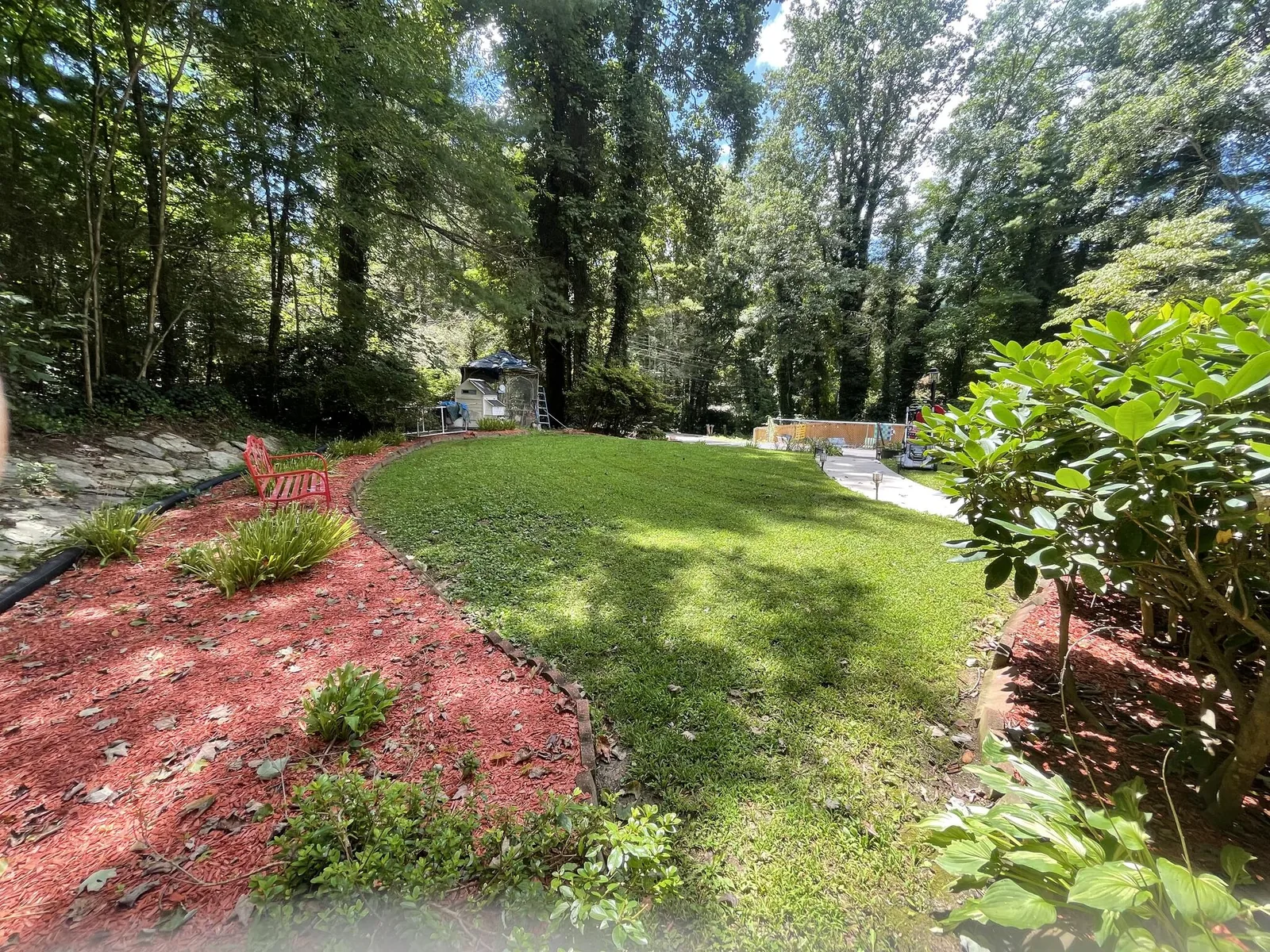
Drive any road between Tryon and Columbus in July and you can spot the blow-and-go lawns from the street. The grass is shorter, sure, but the edges along the drive are ragged, clippings are piled against the foundation, and the walk behind the house was clearly never touched. That last detail matters here because Polk County sits in the escarpment country between the Blue Ridge foothills and the South Carolina line, where lots are graded, wooded, and rarely flat. A mower that goes in a straight line and leaves is not maintaining a lawn in this county. It is mowing a rectangle and billing for it.
A proper visit on a Polk County property means string-trimming around the foundation where fescue meets brick, edging the drive and walk edges with a blade (not a trimmer flipped sideways), blowing clippings off the porch, steps, and gutter splash zones, and actually walking the property line. On the horse-acreage properties out toward Mill Spring, that walk takes real time. That is the difference between a $45 visit and a $75 visit — not the grass, the detail work.
Consider what a blow-and-go actually leaves behind on a lot off Highway 108 between Columbus and Tryon. The mower deck scalps the high side of a slope and leaves a strip of uncut grass on the low side where the deck floated. The string trimmer operator never gets behind the HVAC pad or the well house, so fescue grows six inches tall against the siding within two weeks. The blower runs across the driveway but not the porch or the gutter splash blocks, so clippings wash into the French drain and clog it by August. None of that is visible from the road. All of it costs the homeowner money later in drainage repairs, siding cleaning, and pest pressure from tall grass against the foundation.
The honest price ranges for Polk County yards
The table below reflects what regular maintenance actually costs on the lot types that dominate this county. These are working ranges, not quotes — a landscape company that gives you a firm per-visit number over the phone without seeing the slope and the obstacles is guessing.
| Scope of work | Typical Polk County range | What drives it |
|---|---|---|
| Standard biweekly mow, trim, edge, blow | $45 – $60 per visit | lot size, slope, gate access, tree density |
| Steep or heavily landscaped lot | $60 – $75 per visit | hillside grade, bed edging, walk-behind mower time |
| Monthly plan (two visits) | $120 – $260 per month | visit count, season length, add-on services |
| First-cut cleanup (overgrown) | $75 – $150 one time | height, debris, whether grass was bagged or mulched |
| Leaf removal, fall | $150 – $450 per cleanup | tree canopy, lot size, haul-off versus on-site mulch |
The monthly figure is the one most homeowners actually budget against, and it stays inside that $120 to $260 band because most Polk County accounts get two visits a month. Weekly service during the spring flush pushes toward the top; dormant winter months pull the average down.
Where you sit in that band is largely geographic. A flat quarter-acre in Columbus or the lower end of Tryon near the old depot district tends toward the bottom: a rider handles the whole lot in twenty minutes, edging along a short drive takes five more, and the blower finishes the job quickly. Cross over into Saluda, where the town sits at the base of the Green River Gorge and many lots climb at a grade that makes a rider unsafe, and the same square footage takes twice as long with a walk-behind. Add terraced beds, retaining walls, and a driveway that switches back, and you are at the top of the per-visit range before the first blade turns.
Why Polk County lawns cost more to maintain than flatland tracts
Polk County gets more rain than almost anywhere in the state, and the terrain sends it downhill fast. The federal record backs that up: 20 federally declared disaster events have touched this county across 1978-2026, most of them storm, flood, and hurricane-family events. That history is not abstract to a lawn care operator. It means saturated soil, washouts along driveways, and grass that grows in bursts after every system rolls through the Blue Ridge escarpment.
Practical effect on price: hillside lots require walk-behind or push mowing on grades a rider cannot safely hold, which doubles labor time. Properties with mature hardwood canopy need more trimming and more leaf work. And the wet climate means lawns here respond faster to rain than Piedmont lawns do, so biweekly service is genuinely the minimum to keep a Polk County yard looking maintained — weekly is common from April through June. The National Weather Service tracks the rainfall that drives that growth cycle, and it is not subtle.
There is a second cost driver that has nothing to do with rain: the soil itself. Much of Polk County sits on clay and micaceous schist with a thin topsoil layer, especially on the hillsides above the Tryon watershed and along the North Pacolet River corridor. That soil holds water, drains poorly in flat spots, and dries to a hard crust on south-facing slopes by mid-July. Lawns in those conditions thin out faster than lawns on deeper Piedmont soil, which means more overseeding in fall, more spot treatment for weeds in bare patches, and a homeowner who is paying closer attention to the lawn than they expected when they bought the place. A maintenance plan that ignores soil condition is a plan that produces a mediocre lawn no matter how sharp the mower blade is.
Add-on services that change the monthly number
Mowing is the base. Most Polk County homeowners add at least one of these over the course of a year, and each one moves the monthly cost:
- Gutter cleaning. With this tree canopy, gutters clog twice a year. Overflowing gutters dump water at the foundation and stain the siding. Our gutter cleaning service is usually bundled with fall and spring cleanups on accounts that have mature oaks and hickories overhead.
- Bed edging and mulch refresh. Once or twice a year, priced by bed linear footage, not by the hour.
- Hedge and shrub trimming. Often priced separately because growth rates vary wildly between sun and shade sides.
- Leaf removal. The single biggest variable add-on in this county. See the range in the table above.
If you want the full regional picture on pricing and what a standard plan includes, our lawn care cost guide breaks it down service by service, and the lawn care overview covers what routine maintenance actually includes on an average property.
Two add-ons deserve a closer look for Polk County specifically. First, driveway and parking area blowing: gravel drives are common on the rural tracts between Mill Spring and Green Creek, and blowing clippings off gravel is slower and more careful work than sweeping a paved surface, so some companies quote it as a line item. Second, seasonal color bed maintenance around foundation plantings: many homes in the Tryon and Saluda historic districts have mature boxwood and hydrangea beds that need deadheading and shaping on a schedule tied to the bloom cycle, not to the mowing schedule. Neither is exotic. Both are common enough here that a realistic annual budget should anticipate them.
What to check before you sign a lawn care contract here
North Carolina does not license lawn maintenance contractors the way it licenses general contractors, but any outfit applying pesticides or fertilizers commercially falls under state and federal rules. The EPA sets the framework for pesticide applicator certification, and a legitimate operator can show you credentials on request. For anything that crosses into landscape construction, retaining walls, or significant grading, the state's contractor licensing thresholds apply through the NC Licensing Board for General Contractors.
Beyond paperwork, three things protect you on a Polk County property:
- Walk the property with the estimator. Point out the slope behind the house, the septic field, the fence line. A bidder who never leaves the truck cannot price the job honestly.
- Confirm what "mow, trim, edge, blow" means in the contract. Edge means a blade, not a string trimmer held sideways. Blow means the porch, steps, and drive apron, not just the grass surface.
- Ask about the first cut. If the lawn has not been maintained in a month, the first visit is a cleanup, not a regular mow, and it should be priced as one.
One more question worth asking in this county: what happens after a heavy rain event? Saturated ground means mowers leave ruts and tear turf on slopes, and a company that does not adjust its schedule or its approach after a storm will do more damage than a week of growth is worth. The same storm history that shows up in the federal disaster record is a working condition here, not a rare event, and a crew that knows the terrain will tell you how they handle it. That answer tells you more about the outfit than any printed price list.