What actually fills Horse Shoe gutters, and when it lands
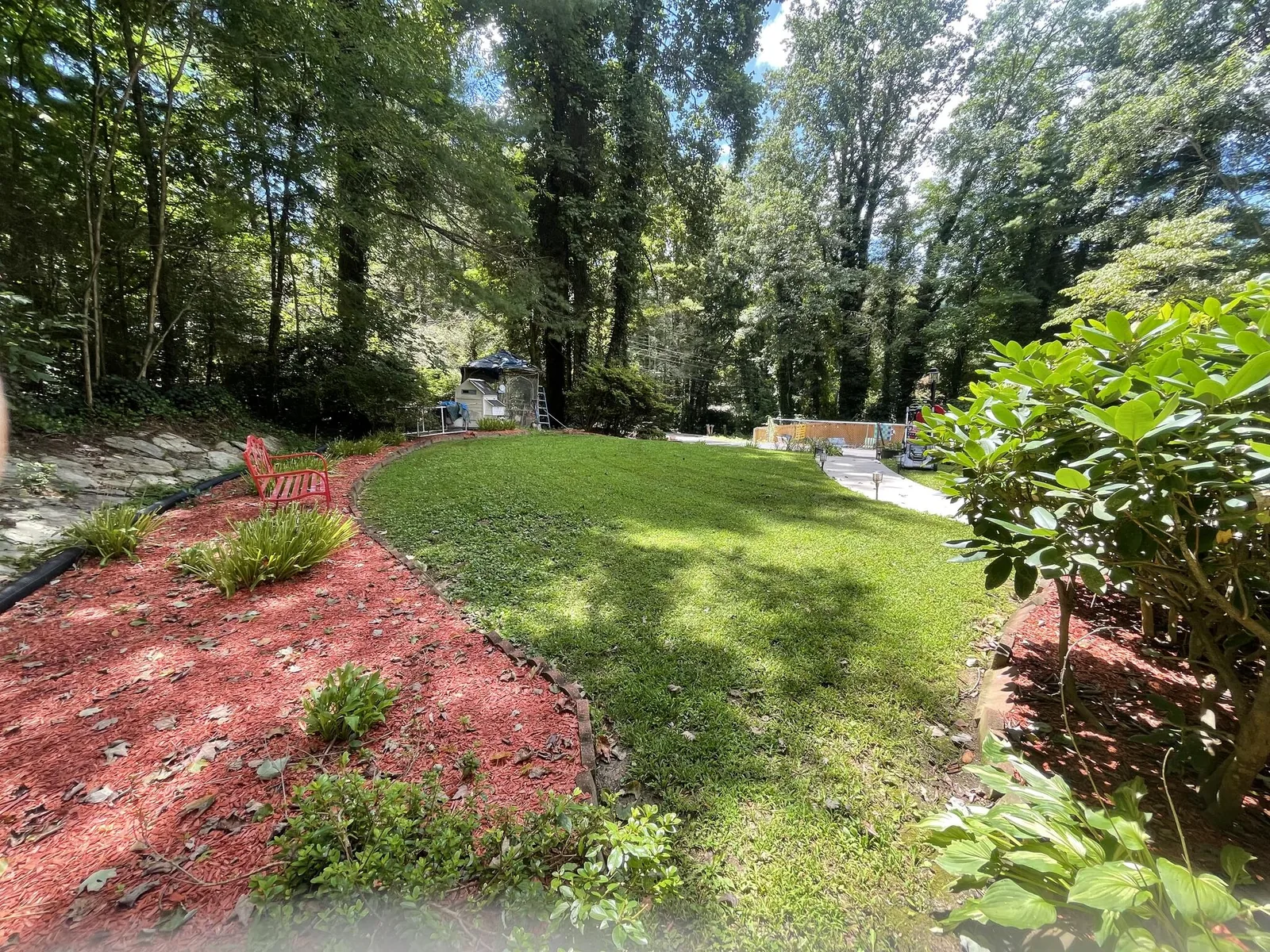
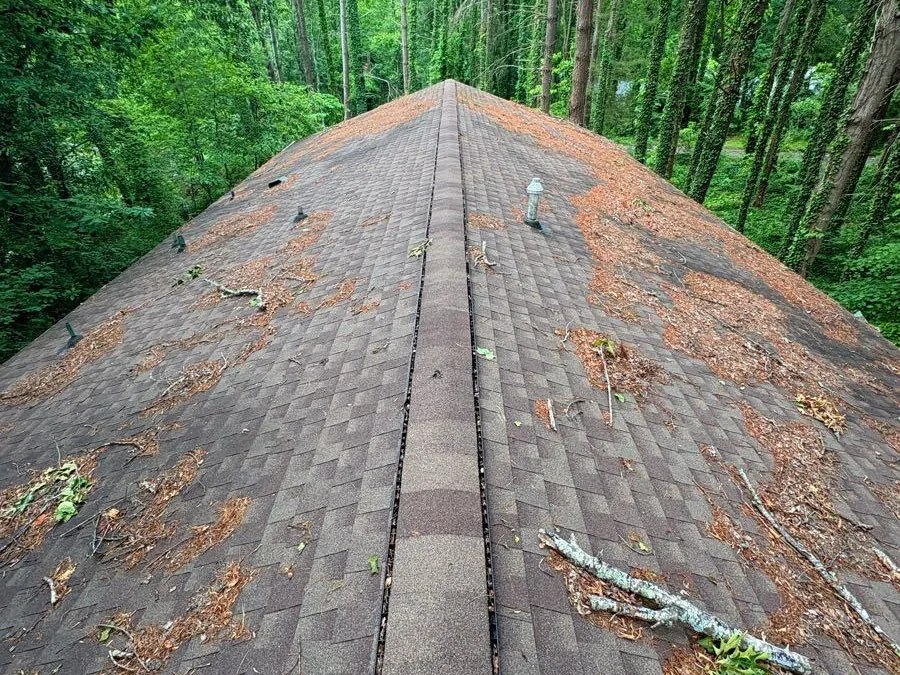
Horse Shoe sits in Henderson County's French Broad valley, where lots are bigger than in town and the tree cover is heavier. That combination writes the debris calendar. From late October through December, white pines shed needles that mat flat in a trough and hold water like felt. A single mature white pine can load a hundred feet of gutter in a season, and the needles knit together into a layer that resists a garden hose completely. In March and April, poplar catkins and maple seeds drop a second load, often just as the fall debris has finished rotting into a dark sludge that stains the trough interior. Add a summer pollen film that binds stray leaves into a plug at the downspout outlet, and most homes here need two clearings a year, not one. A house on a wooded slope above the French Broad, or one tucked into a cove with oaks and hickories mixed in, may need three.
The practical tell is simple: if a hard rain sends water over the gutter lip instead of through the downspout, the trough is already carrying weight. Long before that, sagging hangers and stains on the fascia are the honest signal. Ignore them and the next job is fascia and soffit repair, which costs multiples of a cleaning. On the long single-story ranches common along the valley floor, a clogged run can send water straight down onto a foundation planting bed, and the soil there stays soggy for days after the rain stops — a slow problem that only shows up as peeling paint or a damp crawlspace months later.
Horse Shoe pricing at a glance
County-wide numbers live in the Henderson County gutter cleaning cost table; the working ranges here are the same shape, adjusted for the rooflines this town actually has. Steep pitches and long single-story runs common on these lots push some jobs toward the top of the band.
| Scope | Typical range |
|---|---|
| Single-story, standard pitch, modest run | $150–$200 |
| Single-story, steep pitch or long run | $200–$250 |
| Two-story, standard pitch | $225–$325 |
| Two-story, steep or heavily treed | $325–$400 |
| Downspout flush add-on | Quoted per run |
What moves a quote past a flat price: pine-needle matting that requires hand scooping before flushing, rooflines above two stories, and any section hidden behind a chimney or dormer. None of those are surprises a good crew should miss on arrival — the pine matting in particular is visible from the ground once you know what a full trough looks like, and a crew that has worked this valley will spot it before climbing.
Why water damage is the real cost of skipping a season
This county's federal disaster record is long: 16 declared events touch Henderson County across 1978-2026, and the pattern is storm and flood family, not foundation failure. A cleared gutter is a small piece of that picture, but it is the piece that decides where roof runoff lands. Clogged troughs push water under shingles at the fascia, down siding, and onto soil that was graded to carry it away. The National Weather Service flood and heavy-rain outlooks are worth a look before any forecasted multi-inch event. When drainage design matters at the ground level, the NC Office of State Fire Marshal code resources cover the grading and discharge side. The point is the same: get the water off the roof and away from the house.
In the hills above Horse Shoe, the consequences show up faster than on flat ground. A downspout that empties onto a slope sends water sheeting across a driveway and into a retaining wall, and the saturation can undermine the wall footer within a season or two. On the valley floor, where the water table sits higher after a wet spring, a clogged run that dumps at the foundation keeps the crawlspace damp long after the rain ends. Neither problem announces itself. Both are found later by someone with a moisture meter.
What a proper Horse Shoe cleaning actually includes
The gutter cleaning service guide describes the standard visit, but on Horse Shoe lots the checklist has local weight: hand-removal of matted pine needles rather than a power flush that drives them into the downspout, downspout testing with a hose or blower, a check of hanger alignment and slope over long runs, and a photo of the cleared trough so you can see the result without climbing a ladder. Debris goes into the truck, not the flower beds — a pile of wet needles at the base of a shrub will kill it, and that is a call nobody wants.
Safety on steep pitches and two-story fascia is the other half of the job. Ladder placement, roof-walking rules, and fall protection are covered in national codes and standards from the International Code Council, and a crew that talks about them is a crew that has thought about your roof. If your property also needs seasonal grounds work, our Horse Shoe landscaping page covers that side of the property — the same crews often overlap on spring and fall visits, which keeps the driveway wear down.
Booking around the debris calendar
The two windows that matter are the weeks after leaf drop and the weeks before spring pollen. Slots in late October and early November fill first across the whole county. If your house holds pines on the south or west side, book ahead of the drop, not after it. Otherwise you are paying for a plugged downspout rescue instead of a scheduled cleaning — and the rescue always costs more, because by then the trough is full and the downspout is packed solid.
A word on timing for second homes and rentals: if the house sits empty through winter, fall is the only cleaning that matters, because no one is there to notice an overflow in January. If you are on the property year-round, the spring visit can wait until after the poplar catkins finish, usually by mid-April. Either way, the visit is cheaper booked as a routine cleaning than as an emergency after the fascia is already wet.