The fall window that decides this for you
In Henderson County, the ground tells you when to mulch. By late October the hardwood canopy on the ridgelines above Hendersonville is dropping, the first soaking rains have started, and any bare soil on a slope is about to move. That stretch from leaf-fall through the end of November is when mulch and pine needles are both cheapest to source and easiest to spread, before the ground freezes and before winter storms test whether your beds hold.
Wait until spring and you're buying the same material at spring retail, spreading it on soil that's already been rained on all winter. The difference on a typical half-acre of beds is real money.
Where each material actually belongs here
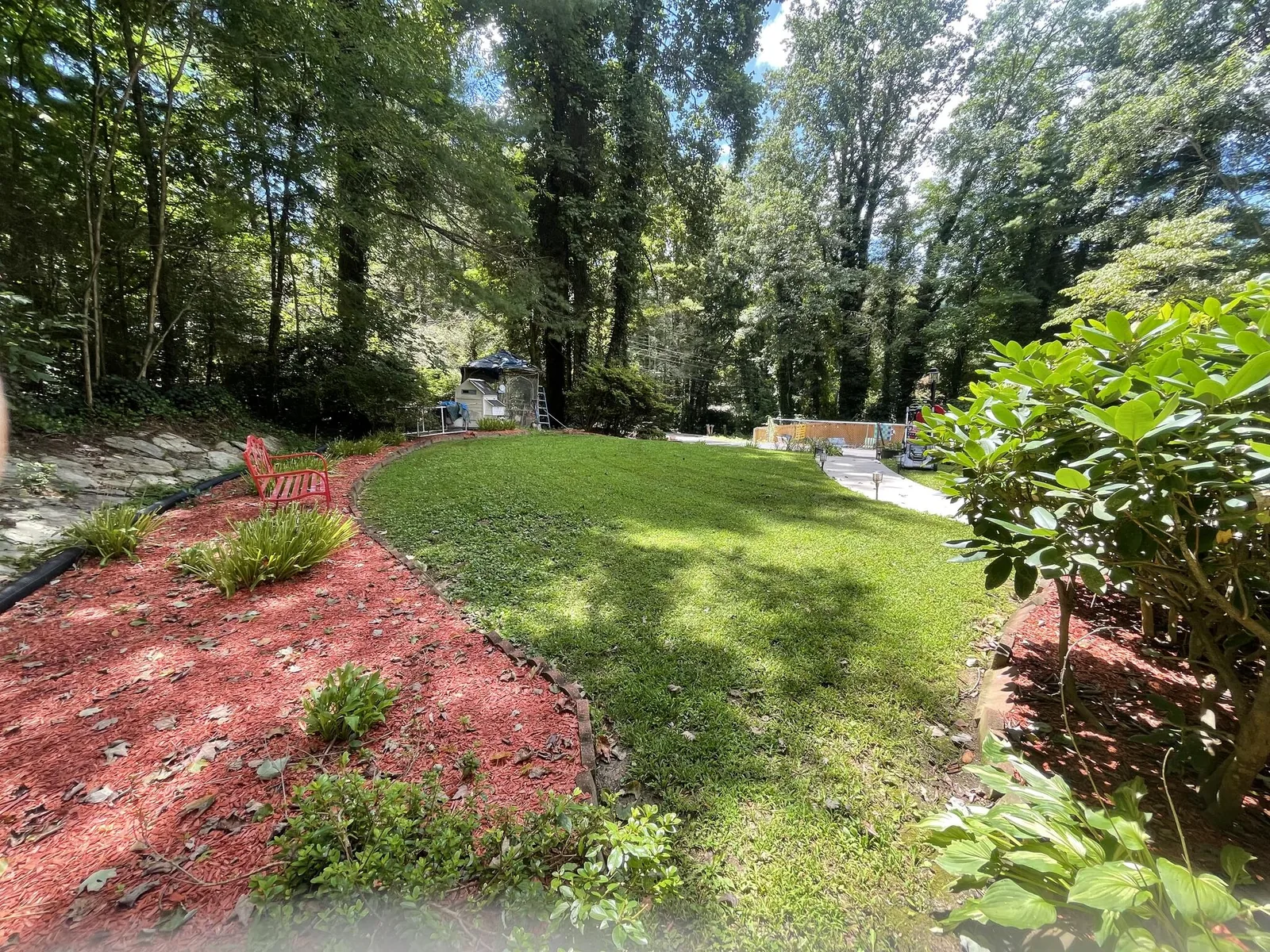
Henderson County is not flat. From the apple orchards around Edneyville to the steep wooded lots off Kanuga Road, most yards have at least one grade that will shed a lightweight bark mulch in the first hard rain. Pine needles interlock and stay put on those slopes. Mulch, especially the shredded hardwood sold locally, knits together better than chunk bark but still creeps on anything steeper than about a 4:12 pitch.
The other split is soil chemistry. The rhododendron, mountain laurel, azalea, and blueberry plantings that define a lot of WNC landscapes want acidic soil. Pine needles break down slowly and stay acidic as they do, which is why the old-timers here spread them under exactly those plants and save the mulch for vegetables and annuals that want something closer to neutral.
If you want a crew to handle it rather than a truckload in your driveway, our mulch installation service covers both materials and the grading conversation that goes with them.
What each option costs in this market
Prices in Henderson County track the same bands as the rest of the Asheville metro. Pine needles come in bales and are sold by the yard; hardwood mulch comes by the scoop from the same yards off Spartanburg Highway and Upward Road. Here's the working table for a typical bed refresh, material plus labor:
| Scope | Typical range |
|---|---|
| Pine needles, 3-inch depth, per cubic yard installed | $45-$75 |
| Hardwood mulch, 3-inch depth, per cubic yard installed | $35-$60 |
| Half-acre of beds, pine needles | $900-$1,800 |
| Half-acre of beds, hardwood mulch | $700-$1,400 |
| Slope work over 4:12 (either material) | Add 15-30% |
| Annual refresh, one material, established beds | $300-$900 |
Those are ranges, not flat rates, and the slope line is the one that surprises people. A crew spreading on a 30-degree bank is doing different work than one on a flat front yard. See the full mulch installation cost breakdown for line-item detail.
The water question behind both choices
Whatever you spread, its real job is slowing rain. Henderson County sits in the French Broad and Green River watersheds, and the federal disaster record here reflects that: 16 declared events touch this county across 1978-2026, dominated by storm and flood family events. Every one of those pushed water at yards built on ground that drains fast or not at all.
Mulch and pine needles both reduce runoff, but neither fixes a grading problem. If water is pooling against your foundation or carving a channel through a bed every storm, the answer is regrading and drainage, not another three inches of anything. The NC Department of Environmental Quality publishes guidance on stormwater and erosion that's worth a look before you spend money on cover material alone.
Where mulch or needles genuinely help is on established beds and around trees, holding moisture through the dry weeks of July and August and keeping soil temperature down. That interacts directly with your lawn care schedule, since a well-mulched bed reduces how much water your turf and plantings compete for.
Rules and safety worth knowing
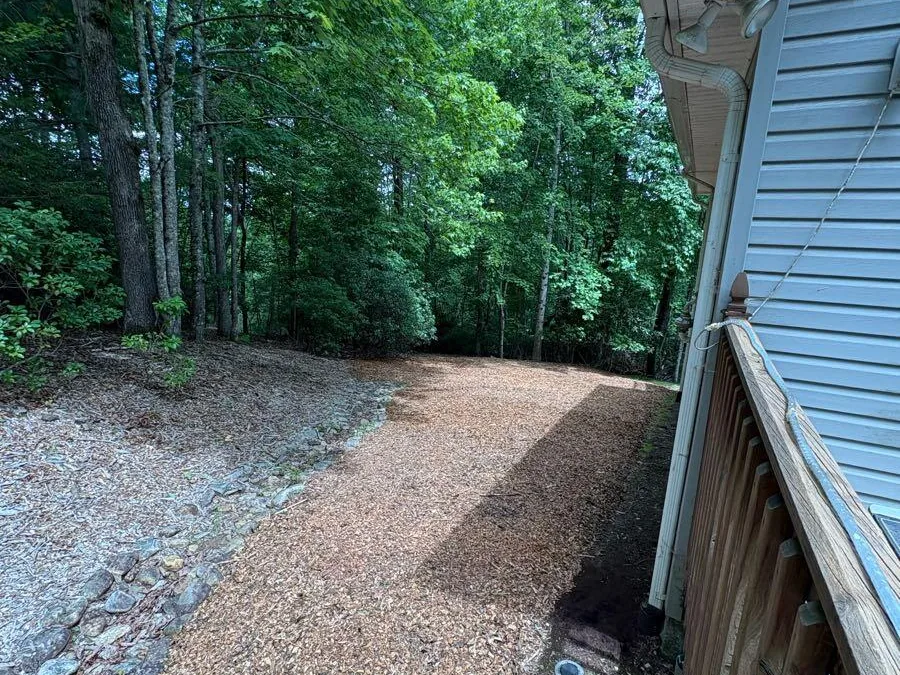
A few practical constraints. The NC Department of Insurance and the state building code set requirements for how close combustible material can sit to a structure, which matters if you're mulching up against a wood-sided house or a deck. Keep mulch and needles back from the foundation line and don't pile them against siding or vents.
On the materials themselves, the EPA has published guidance on diverted green waste and composting, which is where most of the mulch sold in this region originates. Sourcing from a local yard that composts cleanly is worth the small premium over the cheapest load, especially for beds around edibles. Pine needles from a known stand are lower risk than mixed yard waste you can't trace.
And if your property touches a stream or creek, check with the county before any grading work, not the mulch itself. The National Weather Service tracks the flood and storm patterns that drive most local drainage calls, and their outlook for the region is a useful reality check when a contractor promises a fix will end water problems forever.