Where the water actually goes on a Laurel Park lot
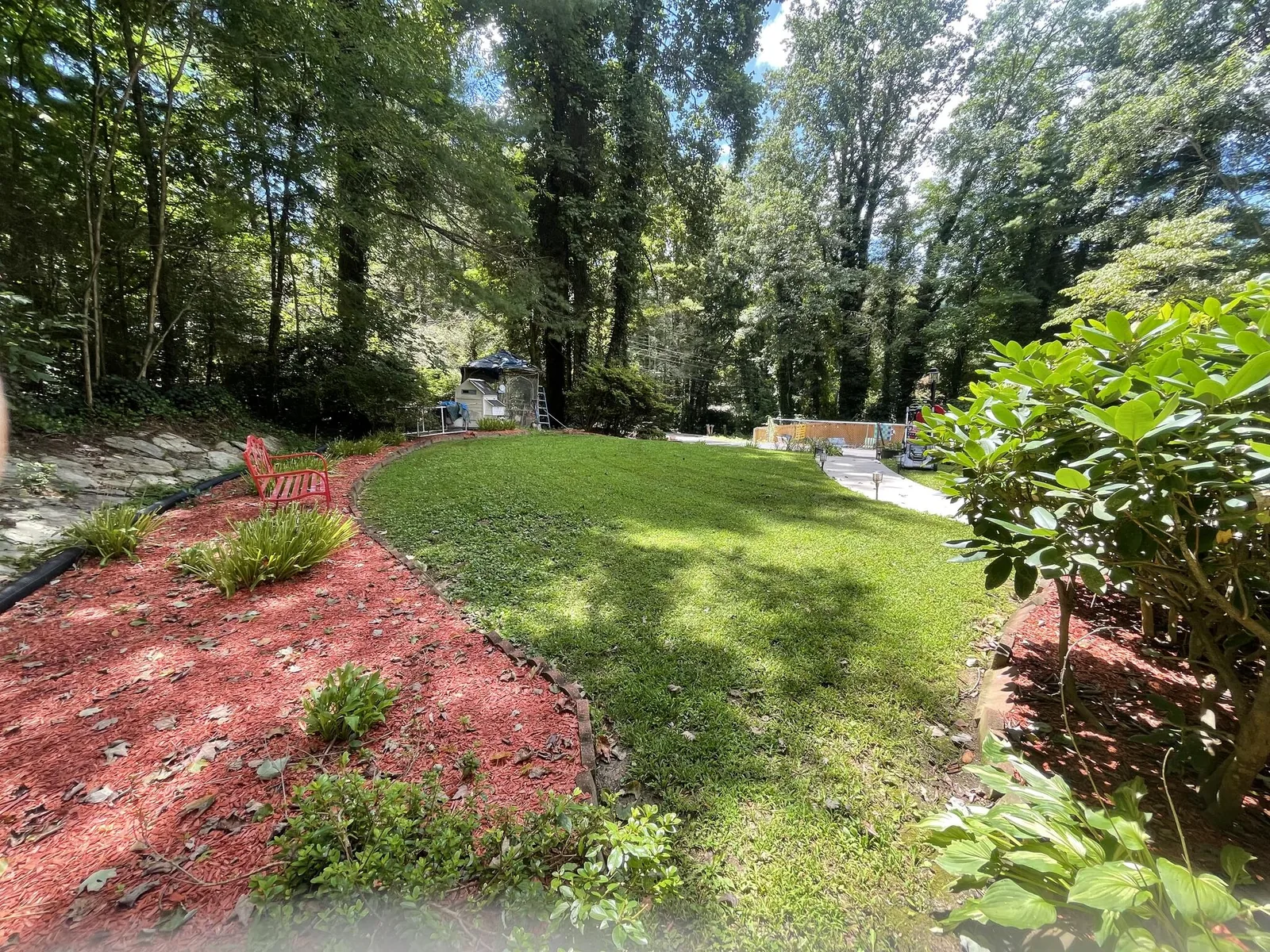
Laurel Park is built on slopes. Most of the town's streets climb or descend between the Asheville side and Hendersonville's southern edge, and nearly every house sits on a lot that was graded to shed water downhill — often toward the road, sometimes toward the neighbor below. That grading is why a clogged gutter here is a bigger deal than a clogged gutter on flat ground. A loaded trough sends rain over the front lip, straight down the foundation wall, and across the yard. The chain is simple: roof, gutter, downspout, splash block, grade, storm flow. Break any link and the water finds the shortest path — usually under a slab or into a crawl space.
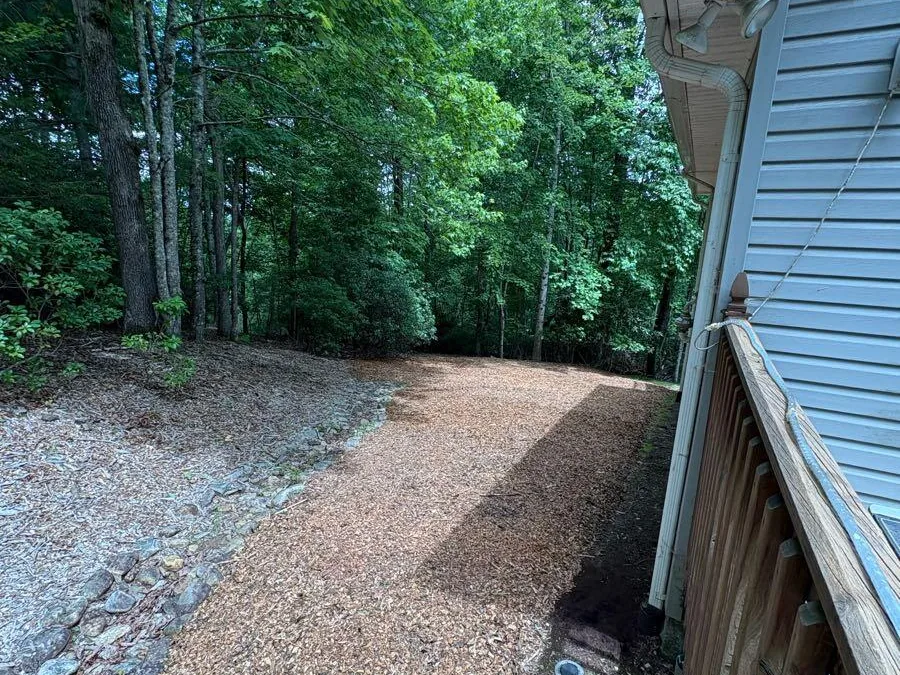
What makes Laurel Park different from a flatland subdivision is how little margin the lots have. The houses on the higher side of a street often sit on shallow cut pads, with a retaining wall or a steep planted bank holding the uphill grade back. When a downspout dumps two feet from the foundation on that side, the water does not just pool — it pushes into the seam between the wall and the hillside. On the lower side, water that escapes the property line runs toward a neighbor's driveway or basement. Either way, the problem shows up somewhere other than where the clog is.
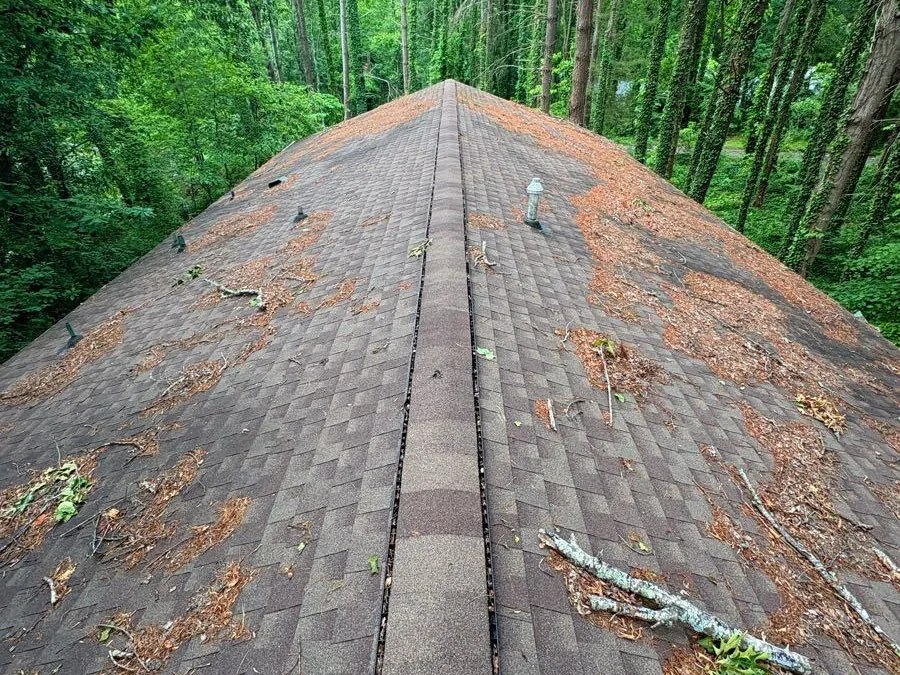
Laurel Park's tree canopy is the other half of the story. Mature hardwoods and scattered pines drop debris through the fall and again in spring, plus pine straw year-round. This is why a single annual cleaning often is not enough on wooded lots here; timing matters as much as frequency. A gutter that is clean in July can be full again by the first week of December.
What we find when we get on the roof
Typical issues on Laurel Park properties: hangers that have pulled loose on older fascia, seams that have opened on long aluminum runs, downspouts discharging two feet from the foundation because the extension pipe was never added or was buried by mulch, and splash blocks that have shifted so all the water pools against the uphill side of the crawl space. We check pitch on every run — a gutter that slopes the wrong way holds water even when it looks clean from the ground, and standing water plus leaves equals rust and eventually a sag.
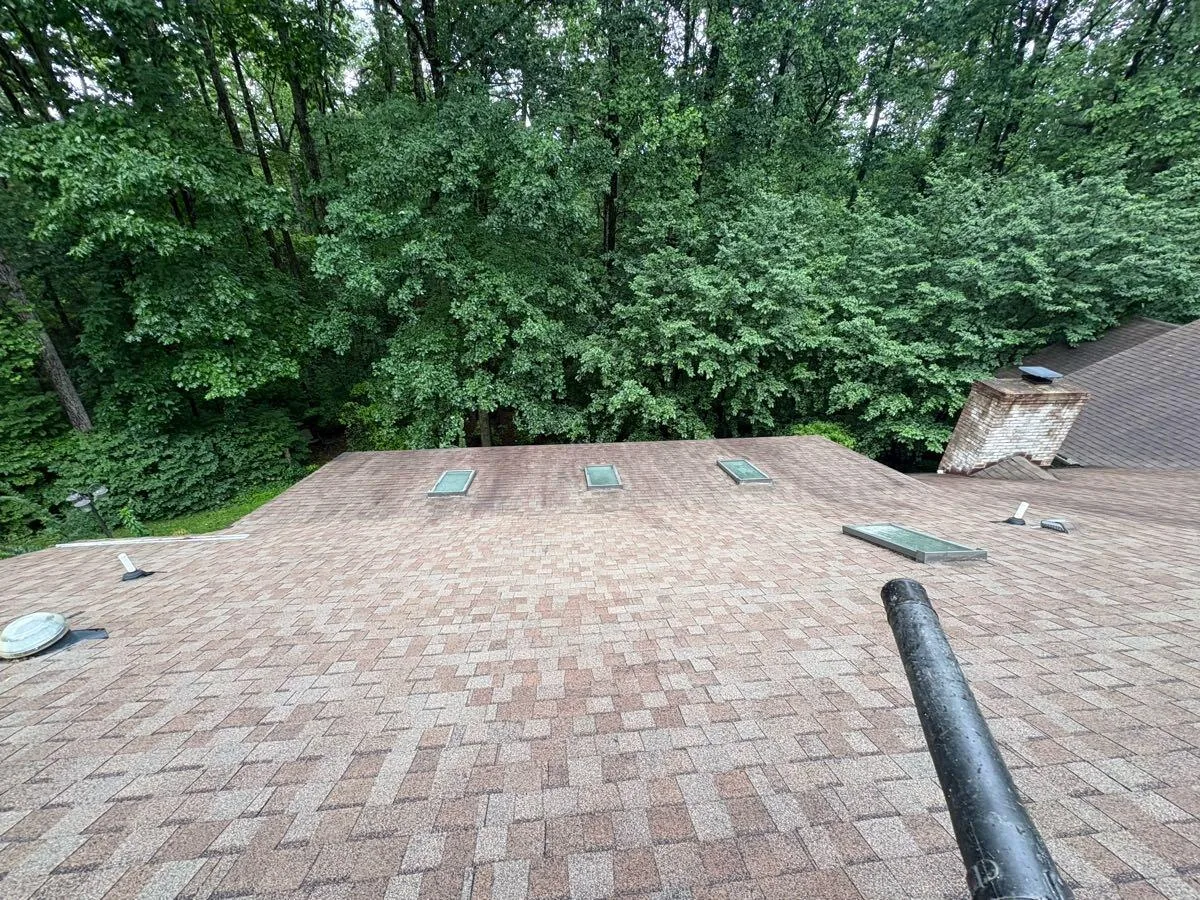
Uneven roof lines are common on the split-levels and additions built in this area over the decades. Each section drains differently, so we treat every run separately rather than assuming one clear-out covers the whole house. A common pattern here is a main gable roof that sheds into a lower porch or garage roof, which then sheds into its own short gutter. That lower run carries a surprising volume and is the first to clog because it catches everything the upper roof sends down.
We also look at the fascia board behind the gutter. On older homes around Laurel Park, the fascia is sometimes original wood that has been repainted many times, and once water sits against it the paint fails and the wood starts to soften. That is a repair, not a cleaning — but it is worth knowing before it turns into a roof-edge problem. If the gutter has been overflowing for more than a season, the damage is usually visible from the ladder.
Price by scope, not by guess
The ranges below reflect the Hendersonville-area market and Laurel Park's slope-and-canopy conditions. Use them to sanity-check any quote you get. For a fuller town-by-town breakdown see our dedicated Henderson County gutter cleaning cost guide.
| Scope | Typical price | Notes |
|---|---|---|
| Single-story, standard pitch | $150–$200 | One story up, moderate tree cover |
| Single-story, wooded lot / pine debris | $200–$250 | Extra debris load, more frequent service needed |
| Two-story, standard pitch | $225–$325 | Ladder work or roof access above first floor |
| Two-story, steep pitch / long runs | $325–$400 | Safety gear, longer travel on the roof, heavy volume |
Anything quoted well above these bands usually means the crew is pricing in a repair. Ask what they found before you agree. Anything well below it usually means the quote covers only the front gutter, or only the visible sections — worth clarifying before the work starts.
Why we treat drainage as part of the job
Clearing a trough is the visible part. Making sure the water actually leaves the property is the part that protects your foundation and the slope itself. On graded Laurel Park lots, a downspout that terminates too close to the house sends roof water into the soils that are already holding the hillside together. Over time that shows up as settlement, wall cracks, and soggy crawl spaces. The National Weather Service tracks the storm systems that drive most of the region's heavy-rain events, and those events are exactly when a badly drained lot shows its weakness. If you want to fix the cause rather than the symptom, our landscaping and property care in Laurel Park covers grading, drainage corrections, and downspout extensions alongside routine maintenance.
We also keep an eye on exterior wood and the roof edge itself. Standing water in a clogged gutter backs up under the shingles and into fascia board; the International Code Council publishes the roofing and building provisions inspectors reference, and most of those failures trace straight back to water that never should have been sitting there.
For homeowners in the steeper pockets of town, the practical fix is often simple: extend the downspout, add a splash block that actually points downhill, and make sure the grade near the foundation slopes away rather than toward it. None of that is expensive compared to foundation work. It is also the kind of thing that is easiest to handle while a crew is already on the ladder, which is why we fold it into the same visit.
How often Laurel Park homes actually need this
Two cleanings per year is the honest baseline for most houses here, and three on the heavily wooded ridgelines — one in late spring after the pollen and tassel drop, one in late fall after leaf-fall, and an extra pass in winter on pine-heavy lots. If you have seen water spilling over the edge during a storm, you are already overdue; the trough is full even though it may look fine from the driveway. If you have not had it checked since buying the house, the gutter cleaning service overview explains what a proper visit includes.
Small habit worth building: after a big leaf dump, walk the perimeter and look for a downspout that has stopped running. Ten seconds of listening tells you whether water is moving or backing up. On a sloped lot, that one check often catches a problem weeks before it reaches the foundation.
One more seasonal note specific to this area: the spring pollen drop here can be heavy enough to mat in a gutter like a felt pad, especially on roofs with low pitch where it does not wash out on its own. That mat holds moisture and adds weight, and it is the reason a spring cleaning matters even on lots that were cleared in the fall. It is not the same debris load as leaf fall, but it is the one most often skipped.