Where the water actually goes on East Flat Rock lots
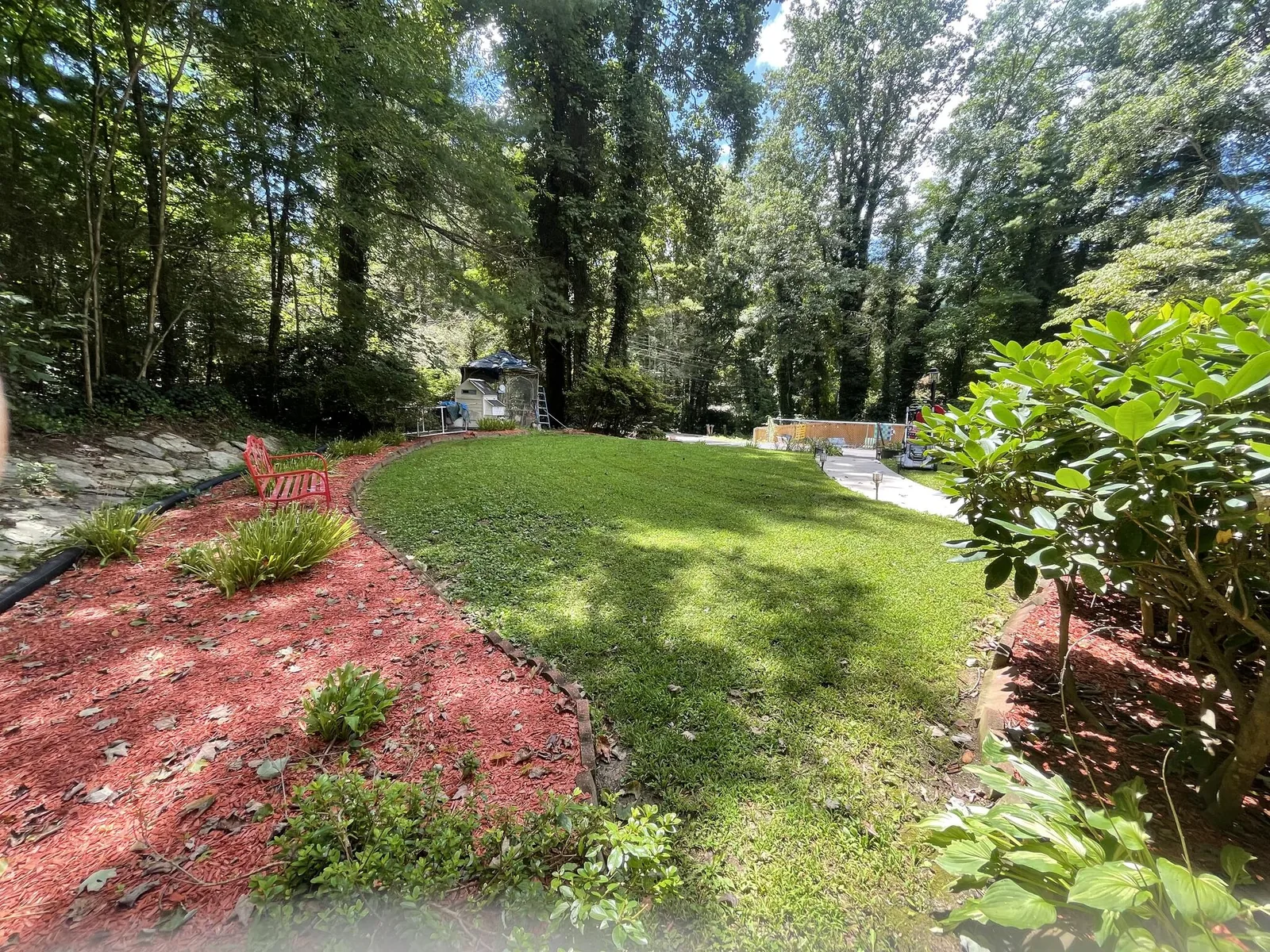
Stand at the bottom of a driveway off Spartanburg Highway after a summer storm and you can read the whole problem. Water leaves the roof, drops through a downspout, hits a splash block that has been kicked sideways, and then does whatever the grade tells it to. On the gentler lots near the middle of town, that water usually soaks in before it reaches the foundation. On the lots climbing toward the ridge, it cuts a channel under the mulch, exposes roots, and pools against the crawl space wall. Mulch that is installed without reading that path first just floats away in the next system that comes through.
Henderson County sits directly in the crosshairs of both Appalachian storm tracks and leftover tropical moisture, and the federal record reflects it: 16 declared events touch this county across 1978-2026, overwhelmingly storm and flood family. That history is why we treat a mulch quote as a drainage conversation with a price attached, not a product drop.
The terrain around East Flat Rock rewards this approach. The town sits at the base of the Blue Ridge escarpment, where the ground rises fast behind US 25 and the grade through older neighborhoods off Highland Lake Road can change several feet across a single front yard. Roof runoff from a one-story house upslope can cross three property lines before it finds a storm drain, and every one of those beds is part of the same water path. When we walk a lot, we trace that path from ridge to curb before we ever measure a bed.
Gutter to downspout to grade: the chain nobody checks
Three links have to work in sequence. If the gutter is packed, water sheets over the fascia and lands in the bed at full force. If the downspout dumps at the foundation instead of two feet past the bed edge, the mulch becomes a sponge against the wall. If the grade behind the bed slopes back toward the house, no amount of fresh material fixes it.
The middle link is the one homeowners underestimate. Cleaning gutters is a separate job with its own pricing, covered in the Henderson County gutter cleaning cost page, and it is almost always cheaper than replacing the soil a failed downspout washed out. When we quote mulch, we note where each downspout currently discharges and flag the ones that need an extension or a buried line. That note is free. Ignoring it is not.
On the slopes above East Flat Rock, the downspout problem compounds. A hundred feet of drainage pipe running downhill from a ridge lot carries more energy than the same pipe on flat ground, and when it exits at a bed edge instead of a daylighted outlet it scours a trench through fresh mulch in one storm. The National Weather Service flash flood guidance for the southern Blue Ridge is a useful reminder that our rainfall arrives in bursts, not gentle soaks. Beds on these lots need outlets that shed water away from the house and toward a swale, not toward the neighbor's foundation.
What the work costs, line by line
Material is priced by volume, not by bag, and installation is priced by how much prep the bed needs. Here is how a typical East Flat Rock job breaks down.
| Scope | What it covers | Typical range |
|---|---|---|
| Bed refresh, small | 100–200 sq ft, 2 in depth, edged and weeded | $450–$650 |
| Bed refresh, standard | 200–400 sq ft, 2–3 in depth, edging, downspout check | $650–$1,000 |
| Full front-yard reset | 400–600 sq ft, 3 in depth, old material removed, grade touch-up | $1,000–$1,200 |
| Slope or access-limited lot | Same scope, carried by hand or staged above grade | Top of band |
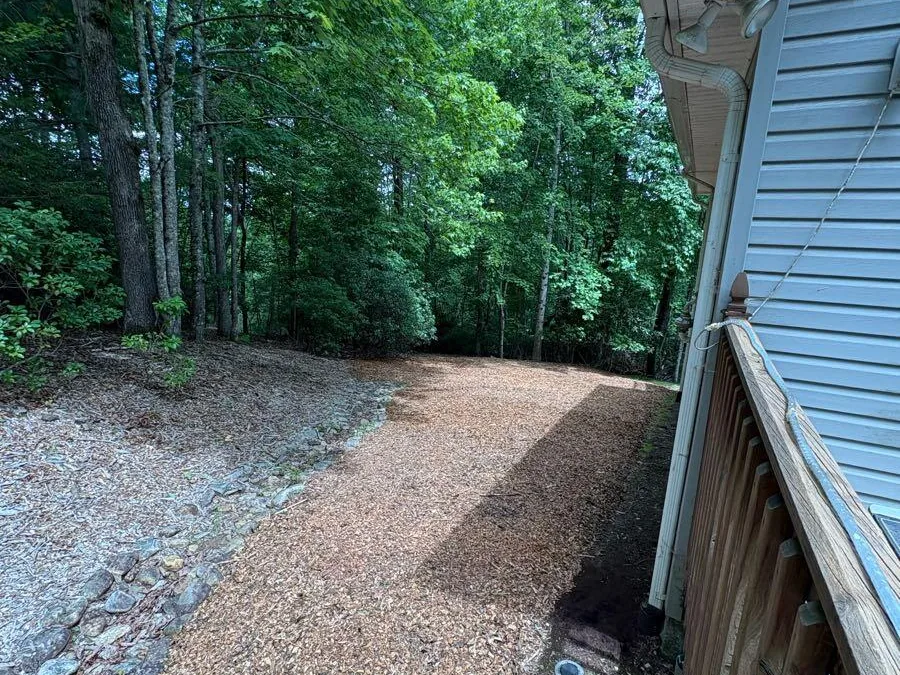
Wood chips from local tree work can run lower than dyed bark, but they break down faster and are a poor choice directly against a foundation. Installed mulch and wood chips typically run $85 to $130 per cubic yard, and that figure is what every row above is built from. If a bid comes in well under $450 for a job of real size, ask what is being skipped: edging, weed pull, or depth.
Access drives the spread between the low and high end more than anything else. A flat quarter-acre lot off Spartanburg Highway with a driveway turnaround lets a wheelbarrow roll straight to the bed. A terraced yard on the ridge side of town, where a wheelbarrow has to be carried up steps or through a gate too narrow for a hand truck, adds labor hours that show up at the top of the band. The U.S. Department of Housing and Urban Development guidance on residential site work is helpful background if you are comparing bids and wondering why two contractors quote very different numbers for what looks like the same bed.
Depth, weeds, and the mistakes that cost twice
The most common failure we correct is mulch piled against the siding and the trunk of a tree. Two inches is the target, three is the ceiling, and zero against any wood surface. Volcanos around tree trunks hold moisture where bark cannot handle it, and the same pile against a band board invites termites and rot. The International Code Council standards behind most NC residential inspections treat clearance between soil-line material and siding as a real requirement, not a preference.
The second failure is skipping the weed pull. Fresh mulch over established chickweed and nutsedge looks fine for three weeks and then loses. We hand-pull, then lay material thick enough that new seed has a hard time reaching soil. If a bed has been neglected for years, that prep is most of the labor and most of the price.
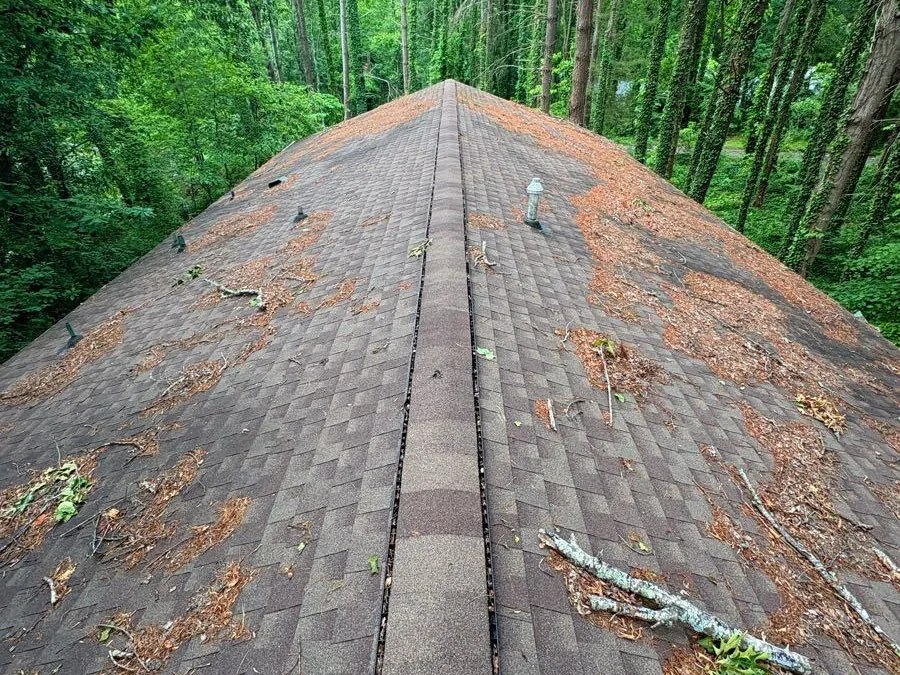
East Flat Rock beds also collect a specific problem: the fine leaf litter from the mixed hardwood canopy overhead. Oaks and hickories drop small debris that works its way into old mulch and matts it into a water-blocking layer. When that layer sits on top of clay soil, rain runs off the bed instead of soaking in, and the plants underneath stay thirsty even after a soaking week. Breaking up that matted layer is often the difference between a refresh that lasts three seasons and one that looks tired by August.
Why the right material matters beyond looks
Mulch is a soil amendment, a moisture regulator, and a weed barrier at the same time. It keeps root zones cooler through Henderson County's July highs and warmer through the January nights that swing twenty degrees in a day. It also slows the runoff that carries sediment into storm drains and, eventually, into the French Broad watershed. The EPA guidance on yard and landscape runoff is worth a skim if your lot sheds toward a creek or a drainage easement. Choosing a coarse, aged material over fresh green chips is one of the cheapest water-quality decisions a homeowner makes.
If the project needs more than beds (plantings, grading, a full cleanup), the broader landscaping services for East Flat Rock page covers how the pieces fit together, and the mulch installation service page has the scheduling details. Mulch alone is often the highest-return job on the list because it protects everything already planted.
One more note on timing in this climate: the freeze-thaw cycles that roll through the Blue Ridge foothills in late winter push bare soil around, heaving small plants and exposing roots. A two-inch layer of aged material cushions that cycle, and beds that carry mulch through February come out of dormancy in better shape than beds left bare.