What Flat Rock's tree cover does to a service calendar
Flat Rock sits higher and shadier than most of Henderson County, and the difference shows up in how often properties here actually need work. A lot under mature oaks and hickories drops debris nearly year-round, so gutters that a homeowner in a cleared subdivision can leave twice a year fill here in a season. If you own under canopy, the honest interval is three to four gutter services a year, a leaf cleanup in late fall rather than one in December, and mulch refreshed annually because shade slows grass but not weeds.
The elevation matters too. Cold air settles into the hollows around town, which means a later spring green-up and an earlier leaf drop than the county floor. That shifts every task by roughly two to three weeks. A crew that schedules this town like lower-elevation Henderson County will always be late.
The types of trees make a difference, too. Flat Rock's canopy is a mix of hardwoods and hemlock, with white pine scattered through the older stands. Hemlock needles are short and slip through standard gutter guards; pine straw mats down and holds moisture against the roof edge. Oak leaves are the heaviest single load and they drop late, often after the first hard freeze. A property under oaks needs a different cleanup timing than one under pine, and both need more attention than a lot that backs up to open pasture. That's why the service interval here is a range, not a number.
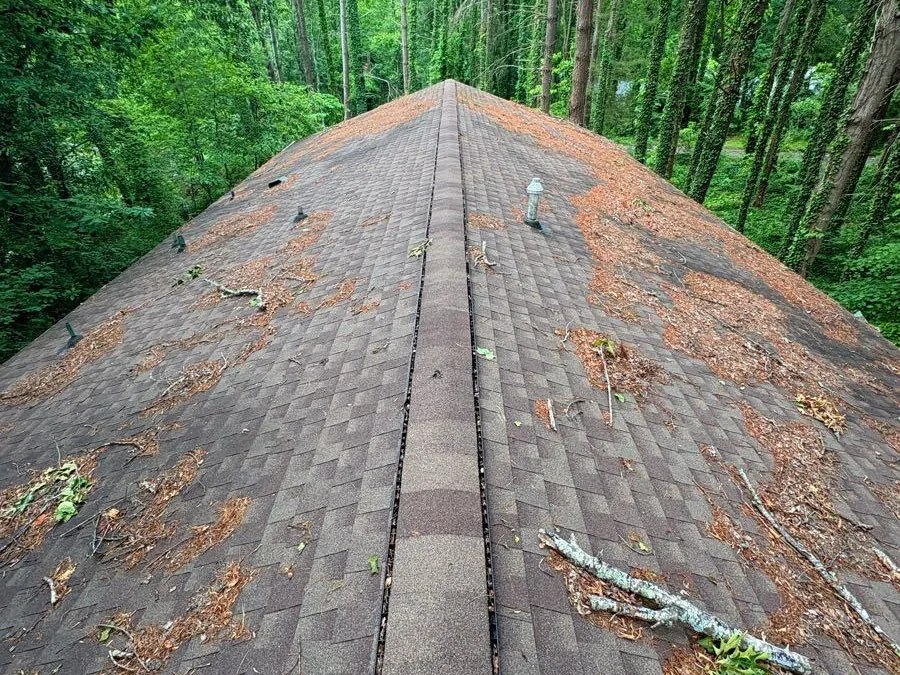
The terrain pushes the schedule harder than most people expect. Lots on the ridge above town drain fast and dry out between rains, but the wooded hollows hold moisture and stay shaded through the afternoon. Those damp spots grow moss on roofs, algae on siding, and thin turf in the lawn long before the sunny side of the property shows a problem. If you only treat what you can see from the driveway, you'll miss the side of the house that actually needs work.
The price picture for this town
Tree density is the cost mover here, not acreage. A shaded half-acre with three gutter runs takes longer than a sunny acre with one. The table below shows what most Flat Rock jobs actually run.
| Scope | Typical range | What drives it |
|---|---|---|
| Gutter clean, single-story run | $150–$250 | Number of runs, screen condition, debris load |
| Full gutter cleanout, downspout flush | $250–$450 | Two stories, clogged drops, roof pitch |
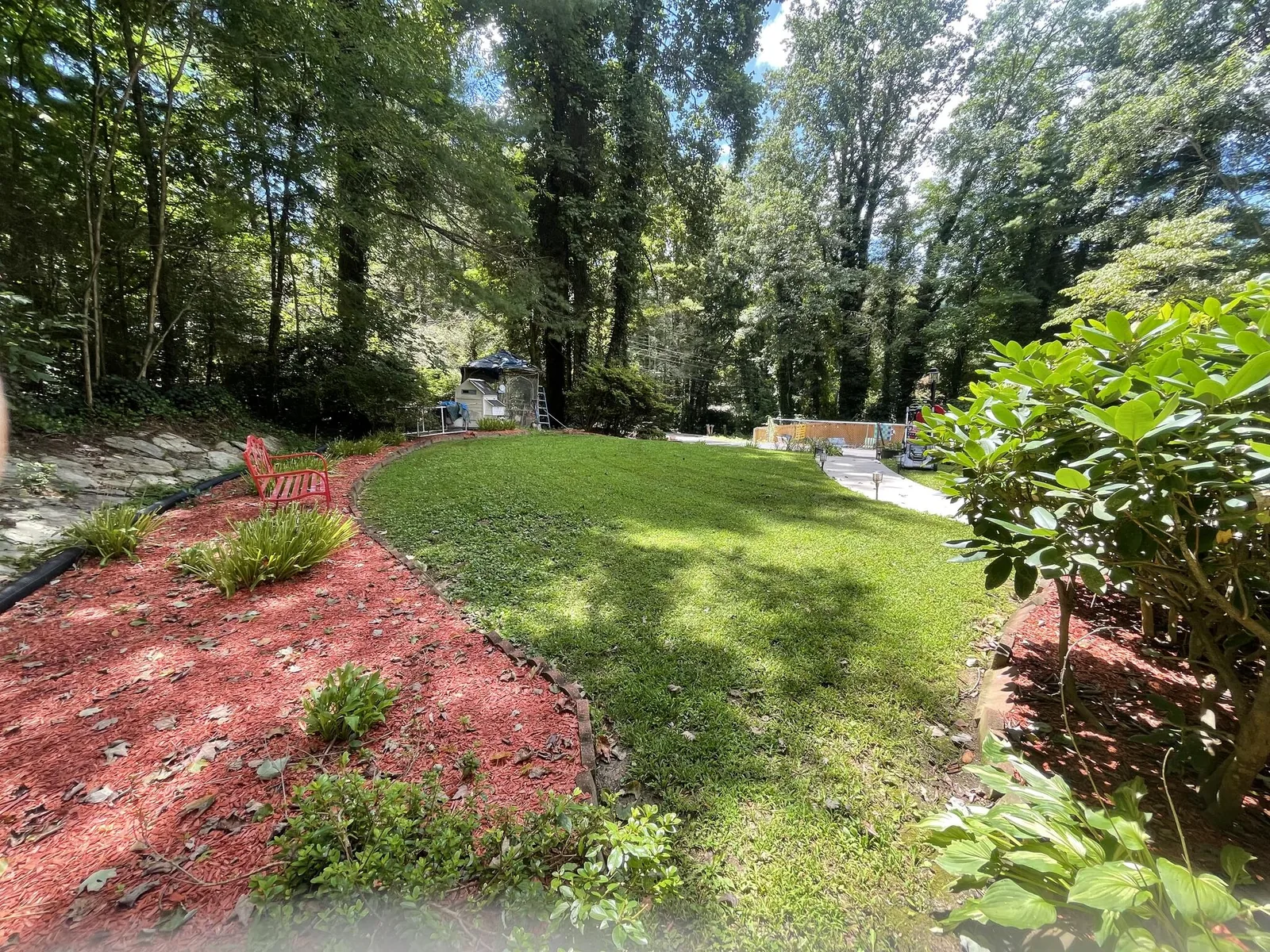
| Mulch bed refresh | $400–$900 | Bed square footage, edging, haul-away |
| Fall or seasonal cleanup | $350–$800 | Canopy density, leaf volume, disposal |
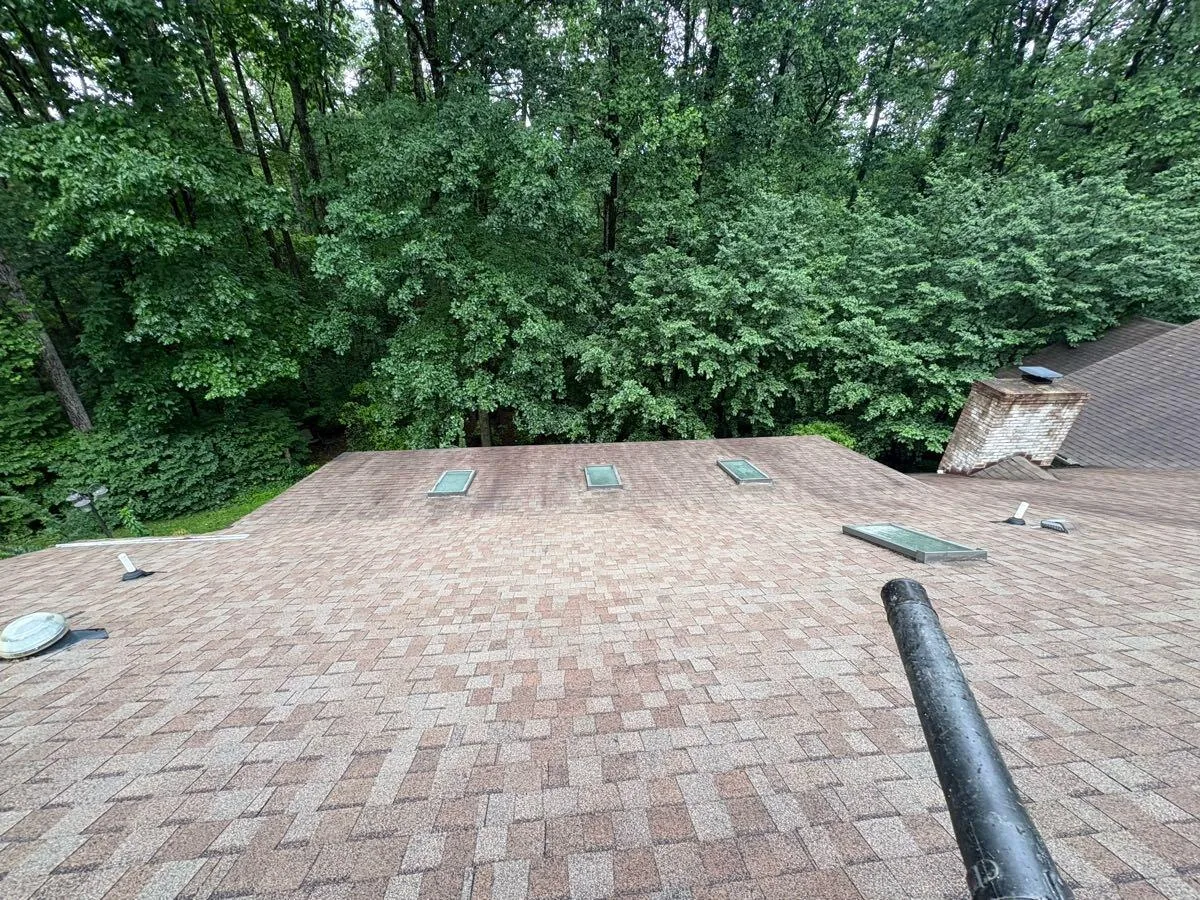
| Roof cleaning, soft wash | $500–$1,500 | Roof size, pitch, organic growth |
Shade moves a job toward the top of its range rather than past it. Two things worth knowing before you compare bids: we work to the same exterior water-management logic the EPA lays out for runoff, and disposal is a real line item here — leaf volume off mature hardwoods is heavy, and hauling it isn't free.
Pricing quietly depends on a few things a phone estimate can't see. How many gutter runs wrap the roofline. Whether downspouts discharge underground or dump at the foundation. Whether the beds have fabric under the mulch (which slows the refresh but keeps weeds down between visits) or bare soil that needs edging every time. Whether a steep driveway means the truck can't get close to the beds. None of these are upsells; they just change how long a job honestly takes, and we'd rather quote the real number than surprise you on the invoice.
Two trips per year across a few categories is still cheaper than one emergency repair. A foundation that takes on water because a downspout was clogged costs more than a season's worth of gutter service, and a rotted fascia usually means the gutter was overflowing silently for years before anyone noticed. The maintenance floor here is cheap compared to the ceiling.
Lawn care under shade is its own discipline
Grass does not grow the way it does in full sun, and pretending otherwise wastes money. Under a heavy canopy you're managing moss, thin turf, and root competition, not feeding a lawn into lushness it can't reach. The practical approach is shade-tolerant seed, lighter and less frequent fertilization, and accepting that some beds should be beds. Our lawn care service is built around that reality rather than a sun-lawn calendar.
This is also where the trunk-and-bed work pays off. Mulch rings keep mowers and string trimmers off bark, which prevents the long-term trunk damage that shortens a mature tree's life. Protecting the canopy you already have is cheaper than replacing the shade it provides.
Fall is the honest reset point under canopy. Leaves blanket beds in a way they don't in open yards, and if they sit through winter they mat down and smother the perennials and shrubs beneath. A cleanup after the canopy finishes dropping — not halfway through — clears the beds and lets the mulch do its job. Homeowners who rake once in October and again in December often spend more time than one well-timed cleanup would have taken.
Fine fescue and shade-tolerant blends are the right call for the thin patches that never fill in. Overseeding in early fall, when soil is still warm and nights are cool, gives the seed the best shot before the canopy closes over it in spring. Spring seeding under heavy shade here usually fails, and it's worth saying so up front rather than selling a job that won't take.
Water, slopes, and where it goes
Flat Rock's ground rolls, and a lot of properties shed water toward a foundation or a driveway rather than away from it. The National Weather Service keeps the local outlook at weather.gov, and the pattern that matters here is repeated heavy rain on ground that's already saturated. That's when clogged gutters and missing downspout extensions stop being a nuisance and start moving water into places it shouldn't go.
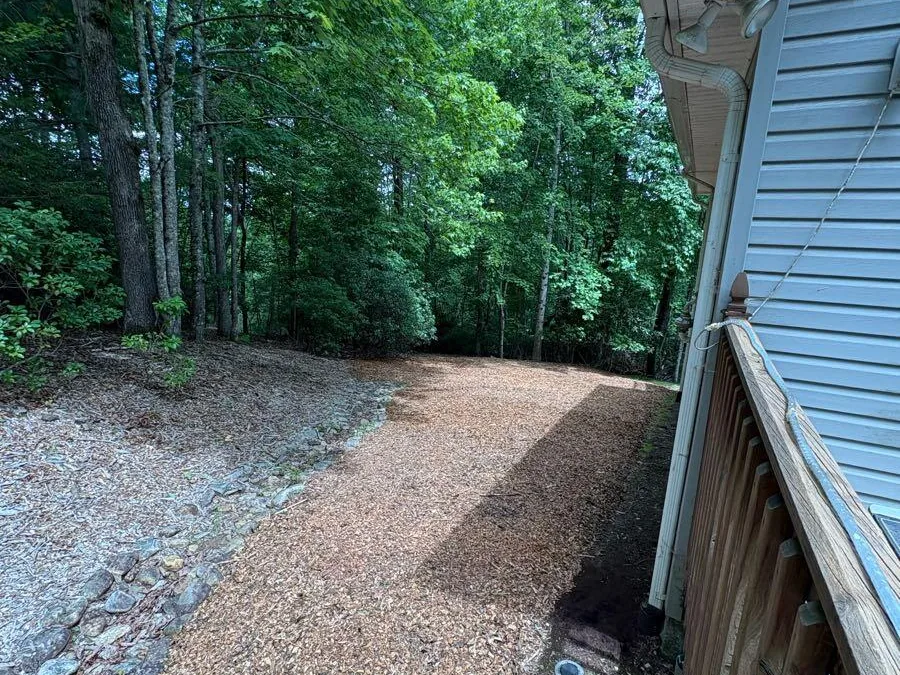
The fix is usually cheap: clear the runs, extend the discharges, and grade beds so they slope away from the structure. On a wooded slope lot, that combination does more for the property than any single decorative upgrade. If you want the full pricing detail, see the Henderson County gutter cost breakdown and the town page for gutter cleaning in Flat Rock.
Where the water goes after it leaves the roof matters as much as clearing the roof itself. A downspout that dumps six inches from the foundation, on a slope that tilts back toward the house, sends water under the slab no matter how clean the gutters are. Extending the discharge downhill and away, then directing bed grading to follow, is the one fix that decides whether the rest of the work matters. It also keeps footing drains from taking the load they weren't sized for.
Winter adds a wrinkle. Freeze-thaw cycles here crack shallow foundations and heave mulch beds, and standing water that pools in a low spot before it freezes does more damage than the freeze itself. A drainage fix in the fall is cheaper than a foundation repair in the spring, and less disruptive than digging up a bed once the plants are established.
Scheduling around this town's seasons
Because the canopy runs the calendar, the smart sequence here is gutter service in late spring after pollen and seed fall, a mid-summer pass if the trees are heavy, a leaf cleanup after the canopy drops, and gutter clearing again going into winter. Mulch goes down in spring once the ground has warmed. Roof cleaning belongs in the milder months so the treatment can work without baking off.
Storm-season scheduling deserves its own note. Henderson County has seen 16 federal disaster declarations across 1978-2026, and the pattern is wind and water rather than anything you can plan around. The realistic move is to clear gutters and downspouts before the heavy-rain months so the system can carry what it's given. If a storm has already dropped limbs or clogged everything, flag it when you book and we'll prioritize it.
Spring pollen is its own event here. The yellow-green film coats everything for a couple of weeks, and after it comes the seed tassels that clump in gutters and dams them. A late-spring pass catches both at once. By midsummer, if the property is under heavy hardwood, dropping leaves and small twigs start accumulating again before fall even begins — which is why a mid-summer check is worth scheduling rather than waiting for the true leaf drop. The plumbing and grading work tie into the same exterior logic the International Code Council references in its residential property maintenance standards, and keeping the water moving is the cheapest way to stay on the right side of that.