Why Horse Shoe beds cost what they do
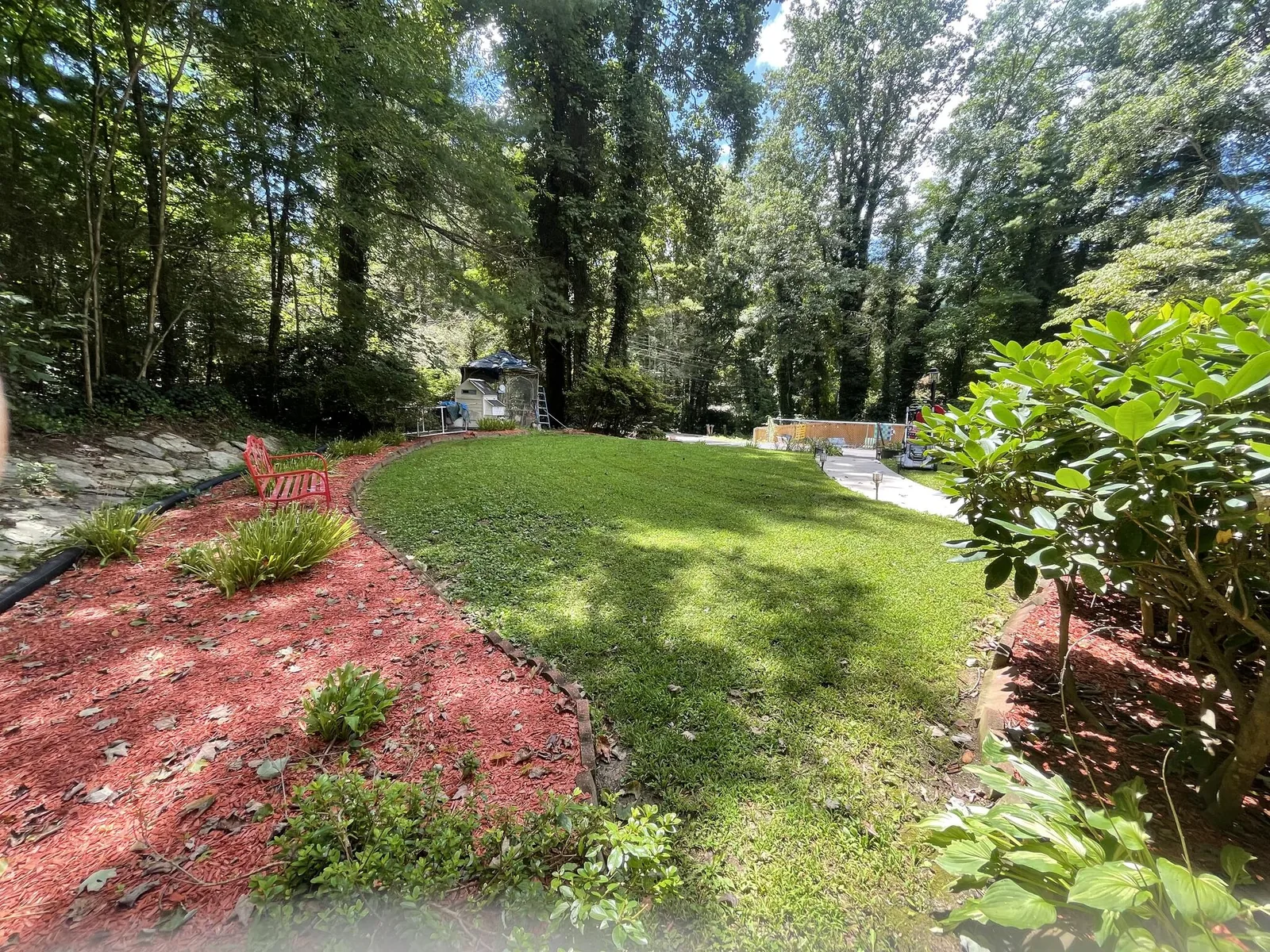
Drive the Horse Shoe river corridor and the pattern is obvious: houses tucked off curving two-lane roads, roofs pitched steep for the rain that comes off the Blue Ridge, and loblolly, white pine, and oak canopy leaning right over the front beds. That combination decides your mulch quote before anyone measures a square foot. Heavy canopy means more fall leaf load, faster decomposition, and a bed that eats a fresh layer every year instead of every two. A steep driveway means the truck has to park where it can, so the crew wheels or carries cubic yards uphill instead of dumping beside the bed. And a lot of these homes sit far enough back that the hose reach — or the wheelbarrow line — crosses the entire backyard before a single yard gets spread.
Know the terrain, then the price makes sense. Flat-lot intuition doesn't survive a half-acre of trees on a slope.
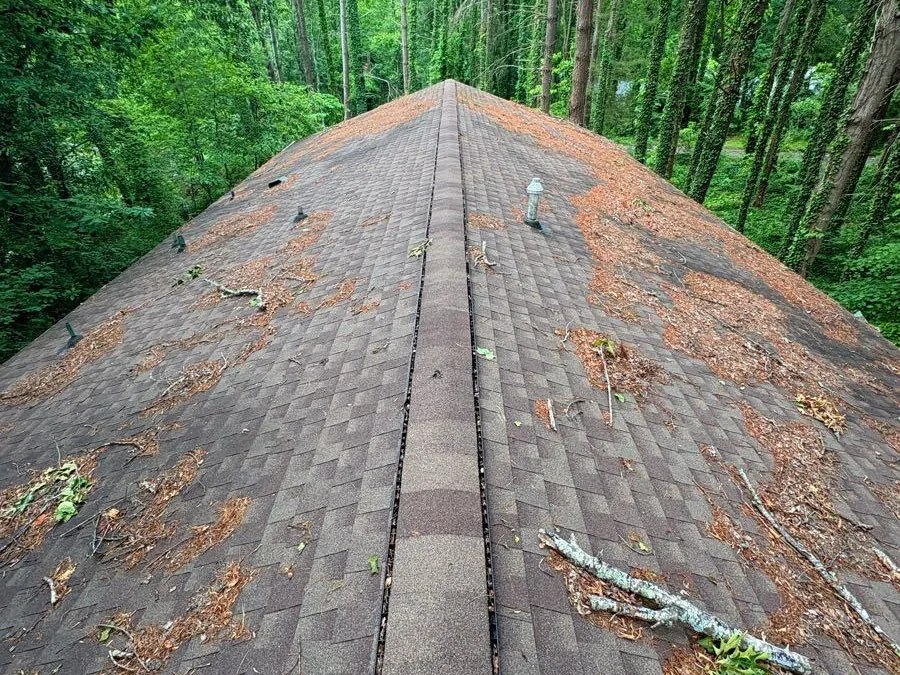
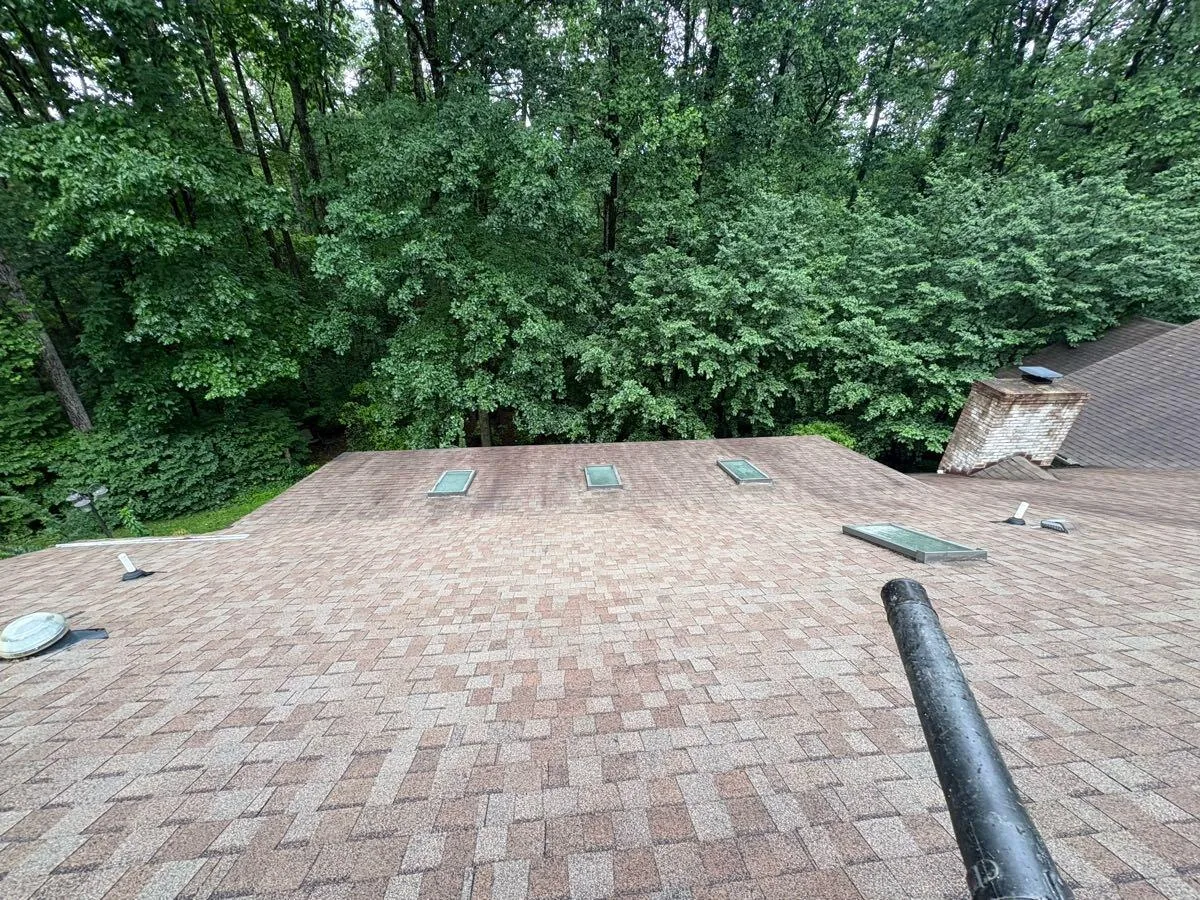
Access around here is its own trade. When a steep roof sheds into a narrow side yard, the ladder has to land somewhere solid, and a mulch crew staging a pallet of bags on a hillside is thinking about the same footing the gutter and roof trades think about. If the beds wrap behind a screened porch or a detached garage, the wheelbarrow route can double the labor time before the first yard is even opened. Sibling jobs in other towns may quote faster because the truck can back straight up to the bed edge; in Horse Shoe that is the exception, not the rule.
The other local wrinkle is how the neighborhoods are laid out. Along the French Broad corridor and off the Boylston Highway, lots tend to be wooded and irregular rather than gridded. Beds follow the house footprint and the tree line, not a straight property marker, so a 'simple front bed refresh' can mean five separate planting islands connected by a mulched path.
Ground the spread before the delivery
Mulch either works for the beds under it or it hurts them, and the difference is mostly depth and drainage. Three inches is the working standard: enough to shade out weeds and hold moisture and soil temperature, shallow enough that roots below stay aerated. Four or more inches piled against trunks and siding breeds decay and by Wendell and Etowah standards that means real moisture trouble — and the EPA keeps straightforward guidance on keeping soil biology and moisture balanced around plantings.
Horse Shoe drainage season makes this local. Henderson County gets the mountain rain — the federal record here shows 16 declared disaster events across 1978-2026, overwhelmingly flood and storm family — and runoff off a steep lot runs toward the lowest bed. If mulch is mounded against the foundation, that water sits where the ICC building codes expect it to shed away. Refresh the beds, but keep an inch or two of bare foundation showing and let the water keep moving.
Slope changes the math again. On a flat lot, a three-inch layer stays roughly where you put it. On a Horse Shoe hillside, a heavy afternoon storm can float pine bark downhill and stack it against the first shrub in the row. The honest fix is to feather the edge of the bed, use a shallow trench or a stone border at the bottom of the slope, and keep the deepest part of the layer on the uphill side where gravity works with you instead of against you. That is a small detail that separates a bed that looks right in October from one that looks right the following spring.
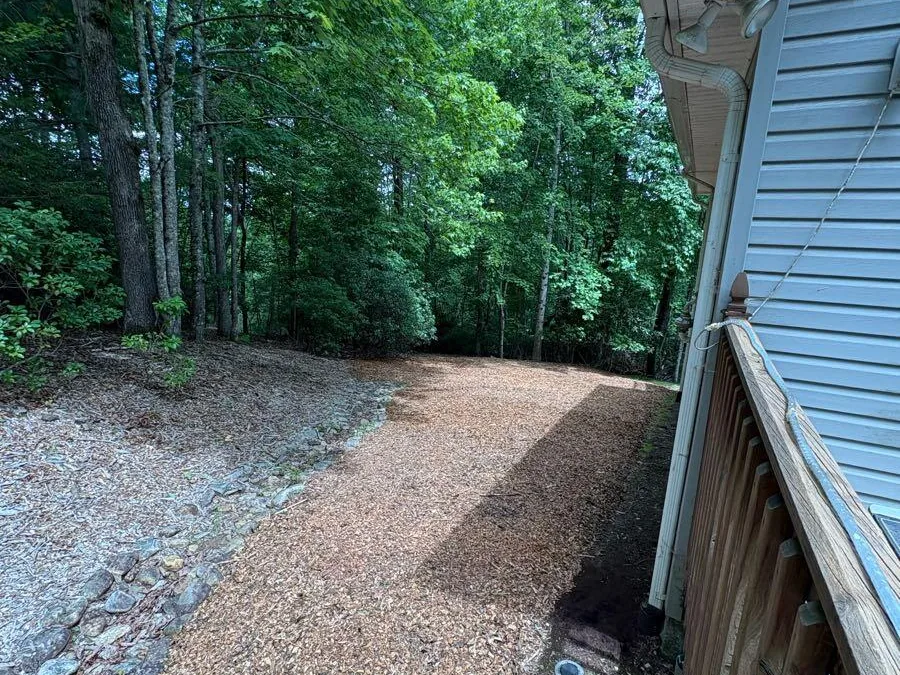
Raw wood chips are a different conversation than finished bark. Chips straight from a tree service break down fast and can temporarily tie up nitrogen at the soil surface, so they work best as a top layer over an already-fed bed or around mature trees and paths rather than bedded tight against young perennials. Finished bark has already gone through part of that cycle and behaves more predictably around the shrubs and groundcovers common on these wooded lots.
The Horse Shoe price picture
Scope drives the number more than bed size alone. A routine refresh of established mulch beds costs far less per yard than clearing out years of matted leaf litter, pulling weeds, edging, and installing fresh bark or chips. The table below shows the working ranges for this town. Every line stays inside the site-wide anchor: $85 to $130 per cubic yard installed, so the typical refresh lands around $450 to $1,200.
| Scope | Typical installed range |
|---|---|
| Single small bed refresh (front, under one tree line) | $450–$650 |
| Standard single-family bed package, existing mulch intact, some clearing | $650–$950 |
| Full wrap — front, sides, and back beds, with weeding, edging, or existing mulch cleanup | $950–$1,200 |
| Sloped or long-reach lots where the truck can't pull beside the beds | Top of the band, $85–$130 per cubic yard installed |
Want to compare against the wider playing field before you commit? The mulch installation service page has the full scope breakdown, and the Horse Shoe landscaping page covers how beds fit into a whole-yard plan.
One more honest note on reading a quote: the yard price and the job price are two different things. If a bid lists only a per-yard rate, ask how many yards the crew expects to spread and whether cleanup, weeding, and edging are inside that number. Two quotes can look far apart and turn out identical once those line items are separated.
Chips, bark, and which shade belongs in Horse Shoe
Consider the whole bed, not just the top layer. Hardwood and pine bark both perform around the canopy here, but they behave differently: bark holds color longer under strong sun and looks tidy against a stone or brick face, while wood chips break down faster and feed the soil as they go — a fair trade when you're bedding around established shrubs and perennials. Dyed mulch is common and honest if the color sells you; it's just not the reason a bed thrives. On the tree-heavy lots out toward the river, expect to top-dress a little more often because moisture and leaf fall speed the breakdown. The right answer is the one matched to sun, soil, and how often you're willing to re-invest, not the cheapest bag on the pallet.
Color also reads differently under mountain light. A dark brown or near-black bark can look sharp on a sunny south-facing bed near Etowah, but under the heavy shade of a white pine it can flatten the whole planting and hide the texture of the shrubs. A lighter or medium brown often holds definition longer under canopy. That is a design call rather than a rule, but it is the difference between mulch that frames the house and mulch that disappears into it.
Groundcover matters too. Around pachysandra, ivy, or liriope that already knits the bed together, mulch is mostly a topcoat, and going thin is fine. Around bare soil and young shrubs, the layer is doing the real work of holding moisture and blocking weeds, and coming up short on depth just means paying for the same job again next year.
Booking the work in this valley
Horse Shoe schedules differently from an open, flat subdivision. Established tree cover means the leaf drop hits in waves, and a wet spring or a summer storm can push every bed job a week. That makes late summer and fall the reliable window for a refresh, with spring second. Ask about timing, access, and how the crew will reach the back beds before cost alone decides who gets the job. If your gutters are pulling water off that steep roof and dumping it into a bed, deal with them together — the Henderson County gutter cleaning cost guide lines that up. And for any long-reach or slope-heavy property, get the access question answered in writing. A crew that has actually hauled a wheelbarrow up a Horse Shoe hillside will quote the reality, not the brochure.
When you request a quote, walk the property the way the crew will. Point out the gate the wheelbarrow has to clear, the step-down from the driveway to the side bed, and any spot where water pools after a hard rain. Those details take two minutes to mention and can save a surprise on install day. A straightforward refresh on a level half-acre is a genuinely different job from the same square footage on a lot where every yard has to be carried uphill, and honest quotes reflect that rather than hide it.