What Moises checks before a Horse Shoe number gets written
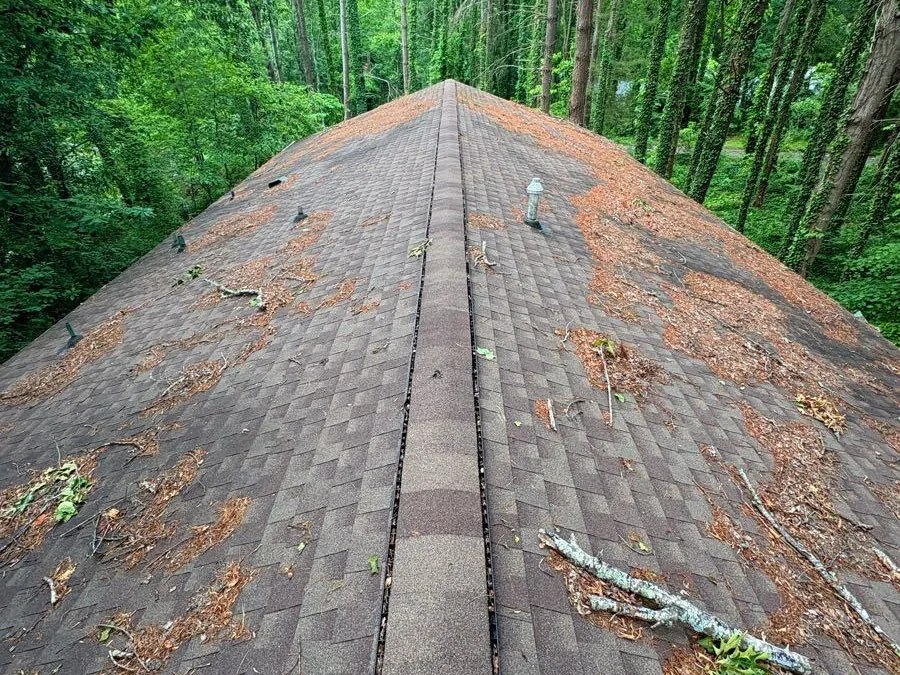
Horse Shoe roofs don't fail the way flatland roofs do. Drive the ridge between the French Broad and the Blue Ridge escarpment and you'll pass shingle roofs under white pine and hemlock canopy, metal roofs on horse-property barns, and a run of 1970s–1990s ranches along Route 64 whose north slopes have been green since the Clinton administration. The single biggest price variable here isn't square footage, it's what's growing on the shingles and how long it's been there.
So the walk-through starts at the driveway: roof pitch read from the ground, tree species overhead, gutter condition at the fascia, and where shade lands in winter versus summer. White pine needles are the local signature — they mat in valleys and behind chimneys, hold moisture against the shingle, and turn a $450 job into a $1,000 job in two growing seasons. A north-facing slope under hemlock, oak and pine in this part of Henderson County grows moss faster than a south-facing one under a single maple. That's a real, quotable difference, and it's the first thing on the clipboard.
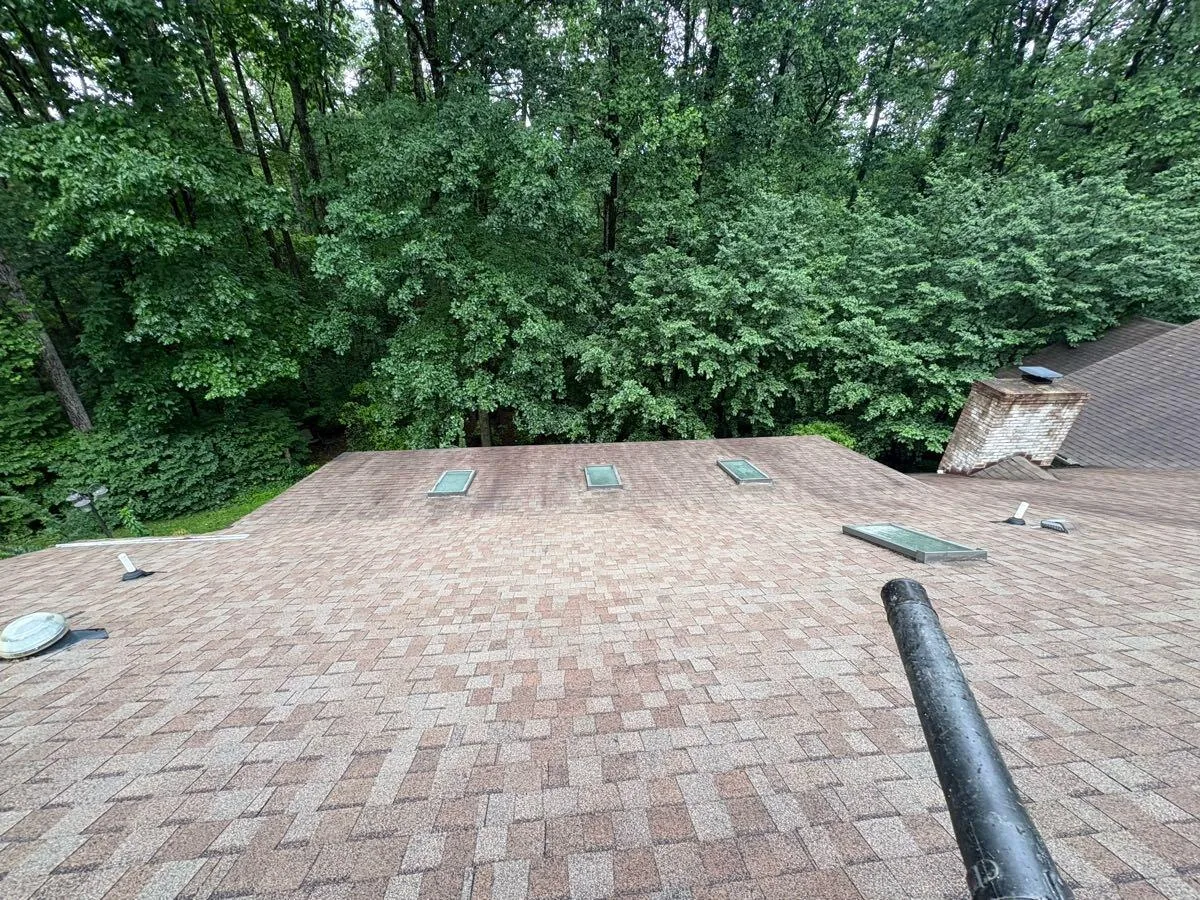
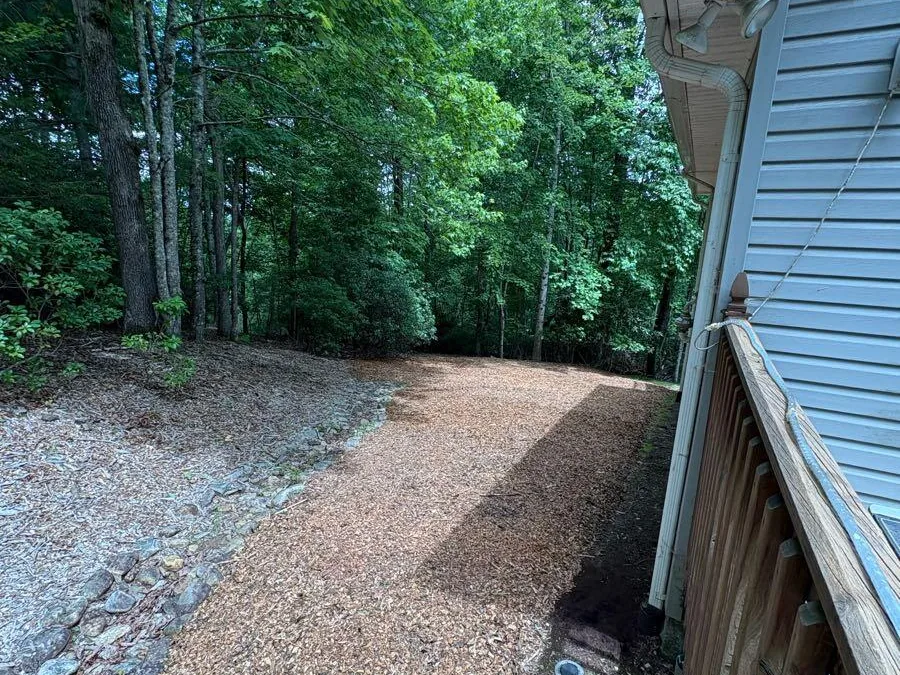
Moises also walks the perimeter to check how the roof drains. Horse Shoe sits on clay-heavy soil in pockets, and a roof that sheds fine can still be dumping water against a foundation because a gutter run is pitched the wrong way. That's not a roof cleaning line item, but it changes the conversation about what the property actually needs. He looks at the chimney flashing, any pipe boots, and the condition of the ridge cap, because moss and needle pack hide the early signs of the failures that cost real money later. None of this is guesswork — it's the same sequence on every property, whether it's a $450 clearing or a $1,200 heavy-moss job.
The Horse Shoe price picture
One site-wide band applies: $450–$1,200 for an average house, driven by pitch, square footage and the moss/needle load. The table below shows how that band actually splits by scope. Anything that proposes cutting or walking a roof, or that quotes paste-and-wait “moss killer” with no removal, is a different job than the one this page prices — say so out loud before signing.
| Scope on a Horse Shoe roof | Typical range | What moves the number |
|---|---|---|
| Light algae staining + surface debris, simple pitch, single story | $450–$650 | Roof area, tap-water access, gutter included or not |
| Moderate moss on one or two slopes, needle pack in valleys | $650–$900 | Slope count, pitch above 6:12, how much moss has rooted |
| Heavy moss across multiple slopes + matted needle dams, steep or two-story | $900–$1,200 | Pitch and story count, valley severity, gutter volume |
| Gutter clearing bundled with a roof wash | Adds to roof line item | Run length, screen condition, downspout count |
The gutter side of the visit prices separately — see the Henderson County gutter cost breakdown for those line items, and the general roof cleaning service overview for what a standard visit includes.
Two things consistently surprise Horse Shoe homeowners on the quote. First, two-story homes with a steep front gable often need a different approach than a walkable ranch, and that shows up as time on the ladder and staging, not just square footage. Second, an outbuilding or detached garage under the same tree canopy is usually worth adding to the same visit — the marginal cost is far lower than booking it separately, and the needle load is often worse because nobody thinks about the barn roof until it leaks.
Why Horse Shoe roofs grow moss here and not two towns over
The escarpment side of Henderson County sits in a different moisture regime than the county seat. Cloud intercept, upslope fog, and shade from mature hardwood and hemlock canopy all keep north-facing shingle courses damp for hours after a rain that has already dried in Hendersonville proper. Add pine needles that mat and hold that moisture against the surface, and moss gets a nursery it wouldn't have on an exposed ridge in Etowah. This is also why pressure washing is the wrong first move on a Horse Shoe roof: blasting moss off steep asphalt shingles can lift granules and take years off the roof. Soft-wash chemistry plus hand removal in the valleys is the honest sequence, and the EPA watershed guidance is worth a look before anyone lets runoff from a chemical wash head toward the French Broad.
Elevation matters too. Properties up toward the Blue Ridge escarpment sit cooler and wetter than the valley floor, and that shows up as thicker moss and more lichen on shaded planes. A roof that would only have light staining in Mills River can be fully green two ridges over. The local housing stock reinforces it: many Horse Shoe homes were built to face a view, which often means a long north or east-facing roof plane that never dries fully. When Moises reads a roof from the driveway, that orientation is as important as the shingle count.
There's also the matter of what's under the moss. On older ranches along Route 64, moss has sometimes been left long enough to lift shingle tabs and trap debris at the eave. That's not something a surface wash fixes. It's a repair conversation, and it's better to hear it during a walk-through than after a leak shows up on a ceiling. Honest roofs get honest quotes.
After a big storm season, the roof and the gutters are one job
Henderson County has been through 16 federally declared events over a 1978-2026 record, and the pattern is familiar: a wind or ice event dumps canopy debris on roofs and gutters across the county, homeowners see the mess from the ground, and by spring the needle pack has already stained the shingles and backed water under the fascia. The National Weather Service is the right source for the local watch history if you want to reconstruct what hit your specific ridge.
Practical takeaway: if a storm just stripped a pine or hemlock over your roof, get the debris off before it mats. A clearing visit at $450–$650 costs a fraction of a shingle repair, and it keeps the moss from getting a foothold while the tree litter is still fresh.
The other post-storm issue on Horse Shoe properties is gutters that were already marginal. The North Carolina Office of State Fire Marshal maintains code and safety resources relevant to how homes are built and maintained here, and one common finding after a heavy season is a gutter run that has pulled loose at a bracket or lost pitch entirely. That's not a cleaning problem; it's a fastening and slope problem. Catching it during the roof visit saves a call later when water is staining the siding.
Roof work inside a whole-property care plan
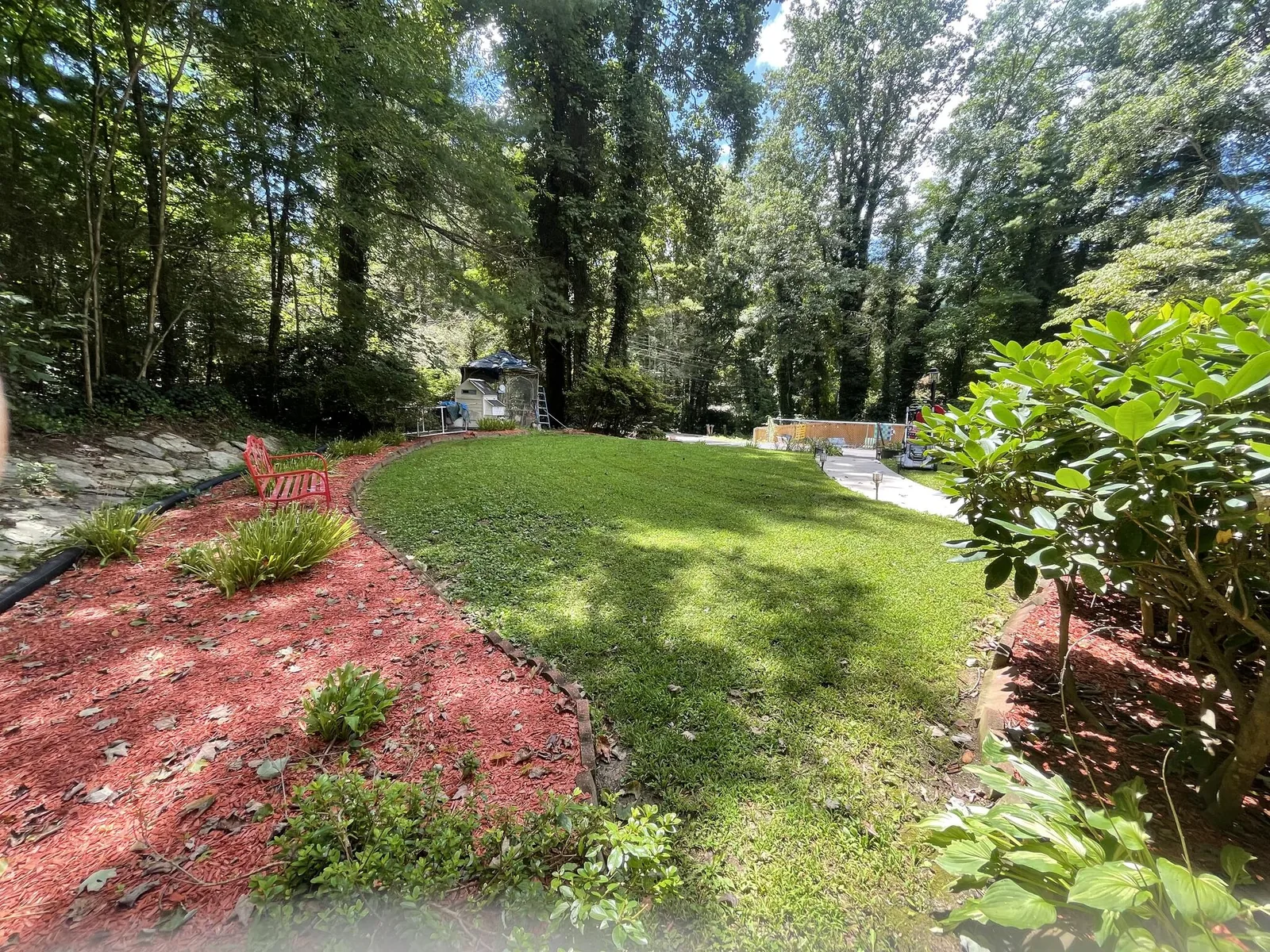
Most Horse Shoe properties are not just a roof. There's a driveway, a run of fence, pasture or wooded edge, sometimes a barn and a guest structure, and the same canopy that feeds the moss on your shingles is what makes the property beautiful. That's the angle on the landscaping and property care we do in Horse Shoe — same visit, same eye, one schedule for the whole place. If the roof visit turns up a drainage issue at the foundation, or a gutter that needs to be re-pitched, that goes in the same conversation rather than six months later.
For horse properties in particular, the outbuildings matter. A run-in shed or barn roof under white pines collects needles the same way a house roof does, and because those roofs are often lower-slope metal, the debris sits differently. Moises will look at those while he's on site, since a barn leak is a bigger problem for the animals than a slow drip on a house ceiling. The same visit can flag fence lines that need attention before winter, or a driveway culvert that's starting to clog with the same needle litter coming off the roof.
It comes back to one idea: a Horse Shoe property is one system. Roof, gutters, drainage, landscape, and the trees that tie it all together. Quoting the roof without seeing the rest of the place would be leaving information on the table, and that's not how this work gets done here.