What a Henderson County mulch bill is actually made of
Two properties on the same Henderson County road can get quotes $400 apart for what sounds like the same job, because mulch pricing is not one number. It is four: material, delivery, labor, and disposal. Hendersonville sits in a bowl between mountain ridges, and the terrain around it means a flat lot off a county road and a switchback driveway above a valley can share a ZIP code and share almost nothing else about how a truck and wheelbarrow reach the beds.
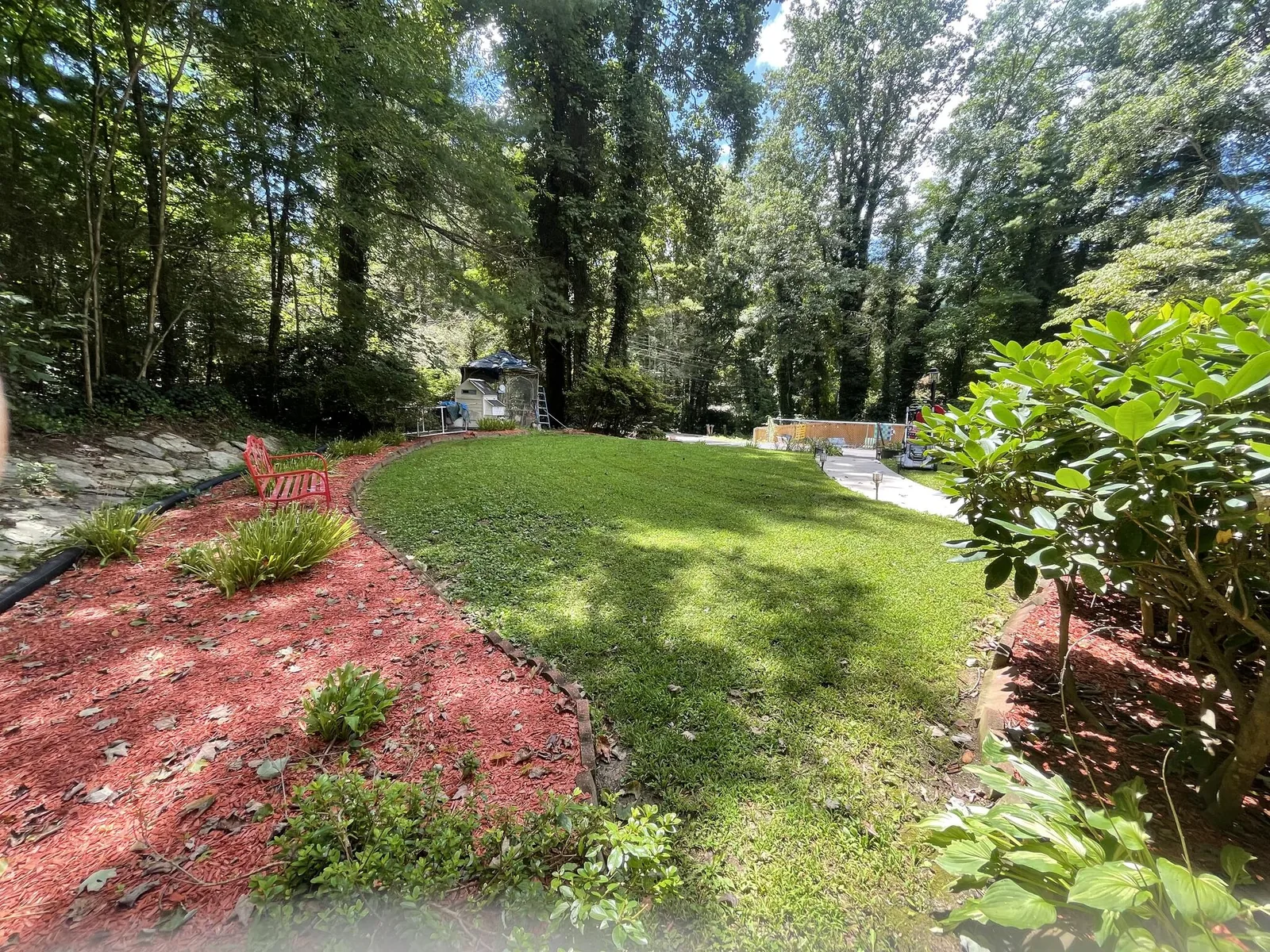
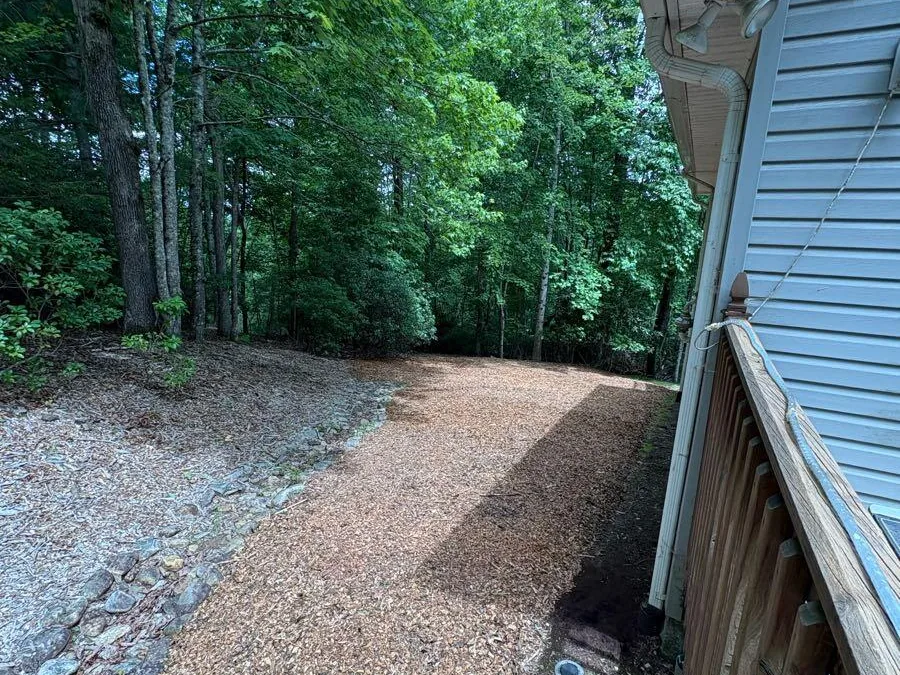
That split shows up in the first five minutes of a walkthrough. A ranch house off a flat stretch near Fletcher, with beds running straight along the foundation and a driveway that puts a dump trailer within twenty feet, is a different job than a cabin above Saluda where the last stretch is gravel, steep, and too narrow for anything wider than a wheelbarrow. The material cost is identical. The labor line is not, and labor is the line that decides whether a quote sits near the bottom of the band or climbs toward the top.
The table below shows how each scope of work prices out locally. Ranges sit inside the site-wide installed band of $85 to $130 per cubic yard, narrowed by what actually happens on Henderson County properties.
| Scope of work | Typical Henderson County range | What drives it |
|---|---|---|
| Single bed refresh, 3–5 yd³, easy access | $300 – $900 | bed square footage, depth, driveway proximity |
| Standard refresh, 5–10 yd³, walkable slope | $450 – $1,200 | wheelbarrow distance, edging, existing weed pressure |
| Full-property mulch, 10–20 yd³, mixed terrain | $900 – $2,400 | truck access, staging, number of beds |
| Steep or terraced beds, hand-carry only | $130+ per yd³, top of band | labor hours, safety, smaller loads per trip |
| Old mulch removal and disposal | add $75 – $200 per yd³ equivalent | volume, haul distance, whether it can be composted |
A few other line items get folded in depending on the property. Re-edging a bed that has lost its line over a few winters takes hand work and adds time. Cutting back shrubs that have grown over the bed so the mulch can actually be spread adds more. Pulling ivy, vinca, or the aggressive ground covers common in older Hendersonville yards is a separate task from mulching, and it is better priced honestly up front than discovered mid-job. Those are working ranges, not quotes. The only way a crew gives you a firm number before walking the property is by guessing, and guesses get corrected in change orders.
Why the western terrain pushes labor to the top of the band
Henderson County receives a lot of rain compared with the rest of the state, and the National Weather Service forecast office in Greenville-Spartanburg tracks those systems as they ride the Blue Ridge (16 federally declared disaster events have touched this county across 1978-2026). That matters for mulch in two ways. First, heavy rain drives erosion on graded beds, so mulch depth and edge containment have to be right the first time. Second, saturated ground means crews cannot always get a truck or a small loader close to the bed, and the last 80 feet get done by hand.
The flooding history here is not abstract. The French Broad River corridor and the low ground around Mud Creek have taken on water repeatedly, and the steep slopes that feed those streams shed rain fast. A bed on a downhill grade with no edge will lose mulch to the first hard storm of the season, which is why proper depth and a clean edge are part of the job rather than extras. The National Weather Service keeps outlook and flood products current at weather.gov, and timing a mulch install around active systems saves both material and money.
Terrain is the second half of the story. Homes tucked into the ridges above Flat Rock and along the Green River corridor often have beds cut into slopes, retained by walls, or terraced in ways that were charming when built and inconvenient when a pallet of bagged mulch needs to reach them. Every one of those conditions adds labor hours without adding square footage. A terraced bed behind a retaining wall on a hillside in Flat Rock can take three times the labor of a comparable square footage bed on level ground in Hendersonville proper, and the quote should reflect that rather than hide it.
Bed size, depth, and the math homeowners usually miss
The single most common reason a homeowner is surprised by a mulch quote is that they estimated by eye. A three-inch depth over 1,000 square feet takes about 9 cubic yards of material. The same 1,000 square feet at two inches takes about 6. That 3-yard gap is roughly $250 to $390 in installed cost, and it is invisible until the pile arrives short or long.
The reverse mistake happens too. A homeowner wants to stretch the budget, orders less than the beds need, and ends up with thin patches that show soil by midsummer. In a county with this much rain and this much weed pressure, thin mulch does not hold. Two inches is the practical floor for established beds, and it has to be two inches everywhere, not two inches where the pile was easy to reach and a dusting where it was not.
Use our mulch calculator guide to measure beds and convert square footage to cubic yards at the depth you actually want. Two inches is right for most established beds. Three inches helps new plantings and bare ground. Anything over four inches can smother roots and hold too much moisture, which is a real risk in a county that gets this much rain. Walk the beds with a tape measure and a notepad before you call anyone, and you will get a firmer quote and a more honest conversation.
Mulch is also one line in a bigger property budget. If beds, mowing, and seasonal cleanup happen in the same season, our lawn care cost breakdown shows how the numbers stack. Homeowners who bundle a mulch refresh with fall cleanup or a spring mowing contract often find the scheduling easier and the per-visit cost lower than booking each service separately.
Material choices and what they cost locally
Henderson County has access to hardwood bark, pine bark, pine straw, and dyed mulch from regional suppliers. Pine straw is priced and sold differently from cubic-yard mulch and does not fit neatly into this page's per-yard band. For shredded and bark mulches, installed pricing stays inside the $85 to $130 range, with the material itself usually $25 to $45 per yard before delivery and labor.
What grows here should inform the choice. Henderson County sits in a landscape where rhododendron, mountain laurel, azalea, and other acid-loving shrubs are common, and pine bark fines suit them better than a heavy hardwood mulch that can mat down. Dyed mulch holds color longer and is popular on the commercial and rental properties around Hendersonville, but some homeowners prefer undyed hardwood for vegetable beds where they do not want dye near the soil. Double-shredded hardwood is the general-purpose choice and the one most local crews keep on hand.
Bagged versus bulk is another fork in the road. Bulk mulch by the cubic yard is almost always cheaper per yard and is the norm on jobs of five yards or more. Bagged material makes sense for a single small bed or a touch-up, but priced by the yard it rarely beats bulk once delivery is spread across a real volume.
Environmentally, what happens to old mulch matters too. The EPA maintains guidance on composting and yard waste diversion that local crews and county solid waste programs draw on when deciding whether old mulch can be composted rather than landfilled. North Carolina's environmental agency publishes related guidance on yard waste and land application at deq.nc.gov. Ask your contractor where removed material goes, and be skeptical of a shrug.
Rules, licensing, and what to ask before you sign
Mulch installation is generally not permitted work in North Carolina, but it does sit near trades that are. Contractors who also install irrigation or landscape lighting touch plumbing and electrical scope, and the North Carolina State Board of Examiners of Plumbing, Heating & Fire Sprinkler Contractors licenses those specialties. Larger landscape projects that cross the state's monetary threshold for general contracting fall under the NC Department of Insurance and the state building code. If a project involves retaining walls over a certain height, structural review can enter the picture.
Four questions weed out the quotes that will not survive contact with the job:
- Is the price per cubic yard or per job? Per-yard pricing keeps change orders honest when bed depth or volume shifts.
- Who measures? The best contractors measure beds with you and write the depth down.
- What is included in delivery? Some quotes assume you will move the pile; others include spreading in the beds.
- What happens to old mulch? Removal is a separate cost, usually $75 to $200 per cubic yard equivalent.
A written scope beats a verbal promise. It should name the material, the depth, the square footage or yardage, whether edging and cleanup are included, and where old material goes. If a quote is one number on a text message with no breakdown, expect the final invoice to be a different conversation.
Ready to see the service itself? Our mulch installation service page covers prep, edging, and seasonal timing.
Seasonal timing and how it changes what you pay
Spring is the busy season from Saluda to Fletcher, and crews book out. Prices do not usually go up in spring, but scheduling windows get tighter and less-ideal access times are harder to work around. Late fall is a practical second window: the ground is still workable, weeds are less aggressive, and mulch put down in October or November helps insulate roots through winter temperature swings, which can be sharp at this elevation.
Mulching right before or right after a heavy rain is wasteful. Wet beds compact under foot traffic, and mulch spread on saturated soil tends to float or migrate. The same storm pattern that makes this county lush also makes proper timing matter, so a good contractor will watch the forecast and may move your date by a day or two. That flexibility is usually a sign of experience rather than disorganization.
There is a cost argument for fall as well. A crew with open fall dates can sometimes get to a job faster and stage material more flexibly than in the April crush, and a bed mulched before winter enters spring with fewer weeds already established. For homeowners who care more about the beds looking clean through the holidays than about a spring refresh, the fall window is often the better buy. For everything else on the property, from mowing to leaf removal, the same seasonal logic applies.