The difference between mulching and dumping
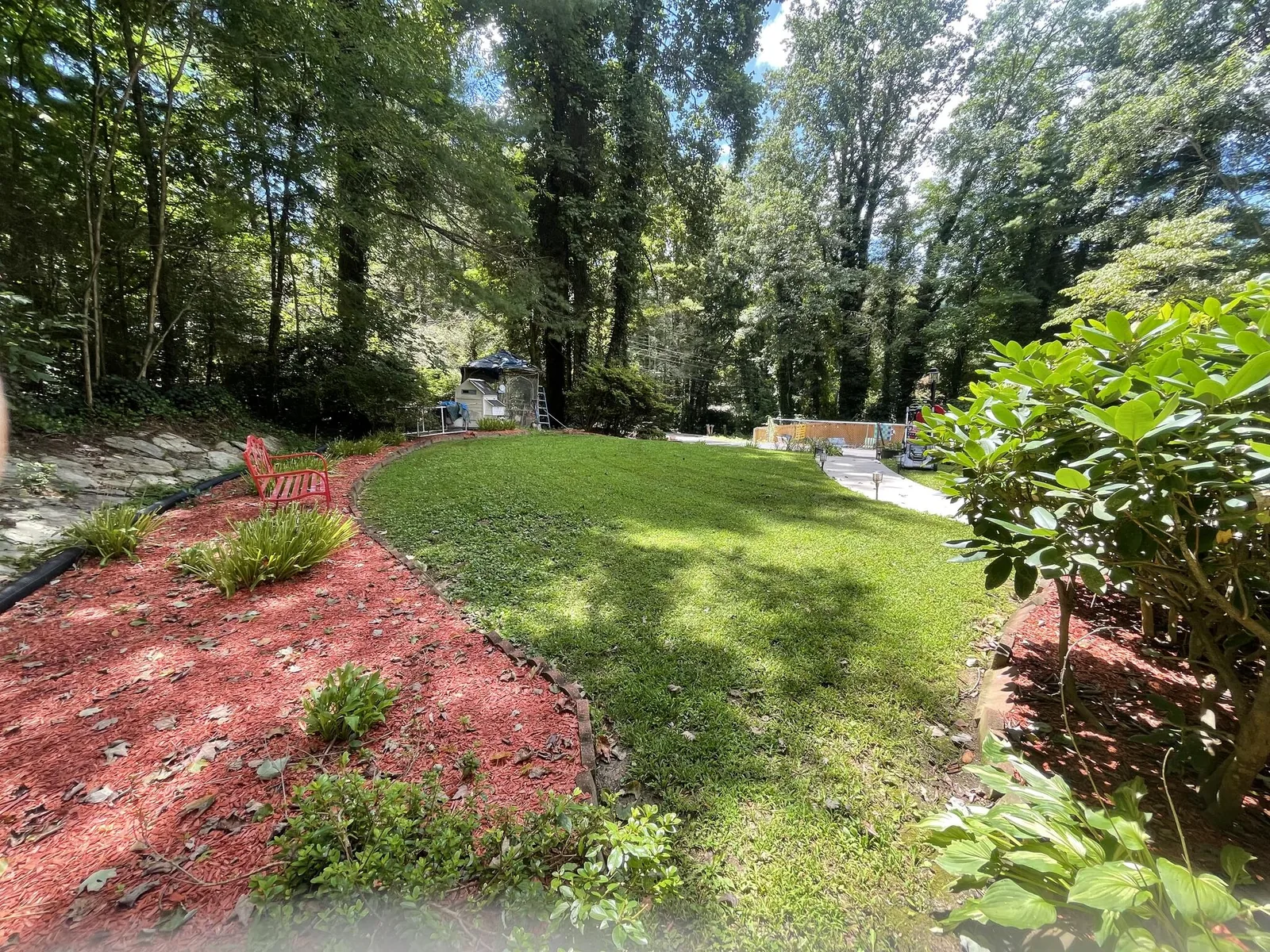
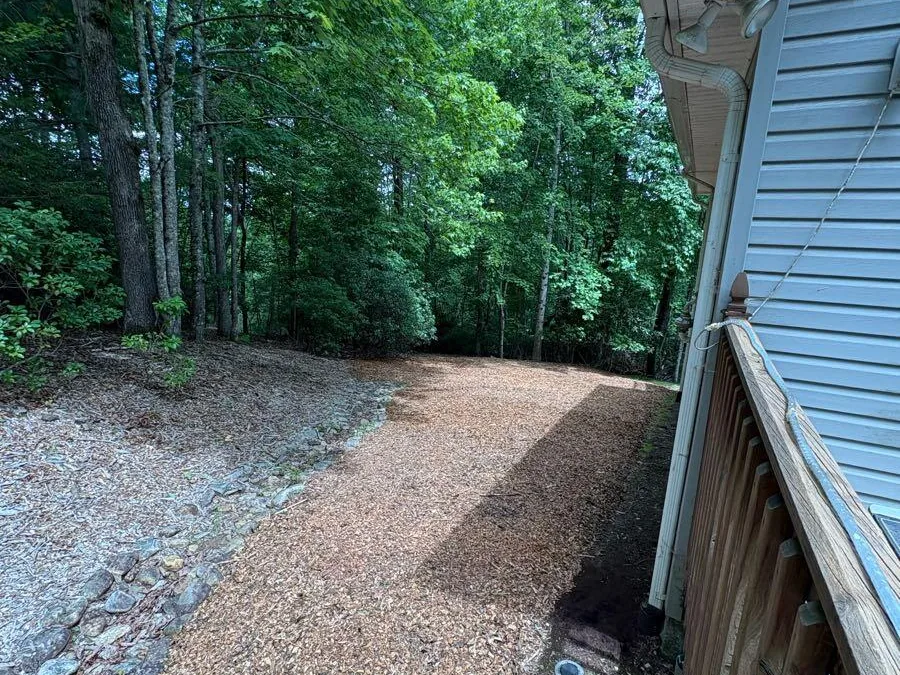
The tell is depth, not product. A real mulch install in Henderson County means two to three inches of material graded flat off the crown of the bed, pulled back a hand's width from stems and siding, and feathered at the lawn edge so the mower doesn't scalp. A blow-and-go leaves three-inch piles against the trunks and bare ground at the back of the bed — it photographs fine from the street and does almost nothing for the soil underneath.
This matters because Henderson County sits at 2,200 feet in the Blue Ridge foothills, where beds dry out fast on south-facing slopes and stay wet far too long on the north side of a ridge. Getting the depth right once, twice a year, beats re-mulching every three months to hide the thinning. The full process lives on the mulch installation page, but the short version is: measure, choose a depth by bed type, then buy to that number.
Running the numbers for your own beds
Mulch is sold by the cubic yard, and a cubic yard is 27 cubic feet. Three inches of depth means one cubic yard covers almost exactly 100 square feet. Two inches pushes that to roughly 160 square feet; four inches drops it to about 80. So the formula is:
(length × width) ÷ 100 = cubic yards at 3 inches deep.
Break each bed into rectangles and add them up. A 40-foot front bed three feet deep off the foundation is 120 square feet, about 1.2 yards. A foundation wrap, a mailbox bed, three island beds around trees, and a 60-foot roadside strip on a Hendersonville lot commonly totals 8 to 14 yards. If you're pricing the job out rather than hauling it yourself, the mulch installation cost breakdown walks the same number through material and labor separately.
One local wrinkle: the clay-loam ground common east of town toward Flat Rock and the steeper graded lots off Kanuga Road both settle after heavy spring rain, so a bed that measured 10 yards in March can drink an extra yard by May. Buy the last yard later rather than piling it on at the start.
What mulch actually costs here
Price bands below reflect Henderson County delivery ranges. Bark and dyed hardwood run higher; arborist chips, sometimes free from local tree crews, run lower but decompose in a single season. Ask for the source before you buy — a load of fresh-ground hardwood with leaves still in it will heat up and mat, which is the one thing you never want against a shrub.
Depth by bed, not by habit
Three inches is the default, but the correct number depends on what's growing. Annuals and shallow-rooted perennials want two. Shrub beds and tree rings want three. A bed over heavy clay — which is most of the county's older in-town lots — wants three, because that extra inch shades the soil surface and holds moisture where the roots can reach it. Beds already carrying two inches of last year's mulch need a half-inch refresh at most; more than that and you suffocate roots.
Keep mulch clear of the root flare on trees and off the crown of shrubs. Wet mulch piled against a trunk is an invitation to crown rot, and the plant is expensive to replace. It's also the reason trimming and mulch should happen in the same visit: fresh-cut shrubs leave clippings that work as a mulch base if you're careful, and the shrub trimming service handles that sequencing so nothing gets buried or burned.
Buying and spreading without the second trip
Two things sink a DIY mulch weekend in Henderson County. First, buying bulk mulch by the bag. A 2-cubic-foot bag covers 8 square feet at three inches, so a 12-yard job is roughly 160 bags — cheaper to buy in bulk and have it tipped at the driveway. Second, spreading it too thick to finish the pile. If you're short at the end, resist the urge to stretch by going deeper. Better to leave one bed at two inches and finish it next season.
Spreading is hard on the back and harder on the schedule. Wheelbarrow-and-fork crews move about a yard an hour over established beds, which means a 12-yard job is a full day even for two people. That's the real line on whether to call someone; see professional mulch installation for what the labor actually covers.
Water, weather and the storm record
Henderson County has seen serious flooding and storm damage in its recorded history — 16 federally declared events touch this area across 1978-2026 — and each one taught the same lesson about mulch: it floats. Beds on grades steeper than about 15 percent lose mulch in a hard rain, and the eroded material ends up in storm drains and neighbors' yards, which is a code issue, not just a nuisance. The NC Department of Environmental Quality tracks stormwater and erosion requirements at deq.nc.gov, and the practical fix is the same everywhere: pine bark or a heavier dyed mulch on slopes, a light topcoat of pine straw on the steepest, and a shallow trench or edge to hold the material in place.
Watering matters after installation too. Fresh mulch on dry soil wicks moisture away from roots, so soak the bed before you cover it and again after. On Henderson County's many late-summer dry spells, a deep watering two or three days apart beats a daily sprinkle. The National Weather Service forecast at weather.gov is the right place to check before you schedule a big job in the middle of an incoming dry stretch.