What separates a real property clean from a blow-and-go
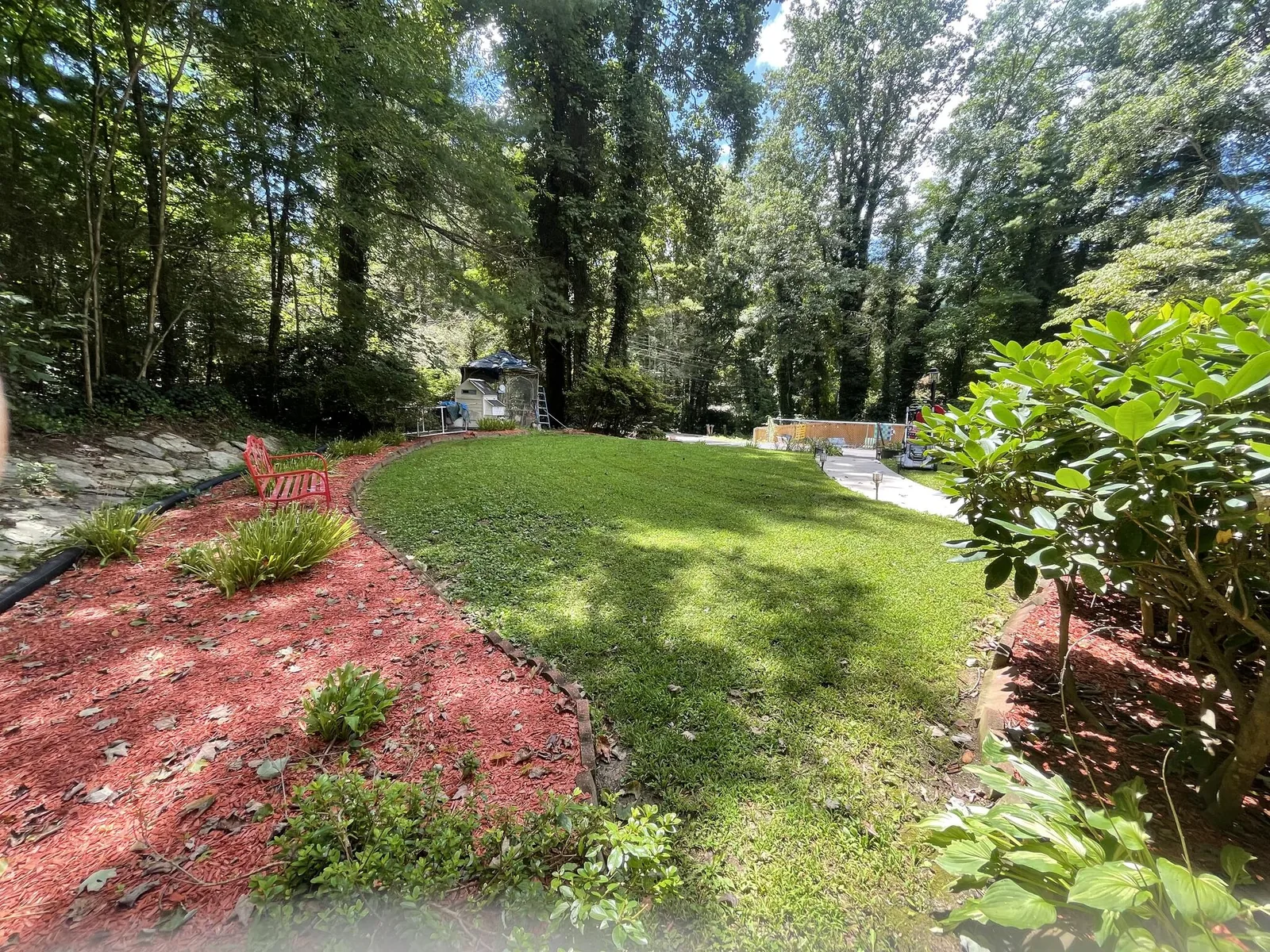
East Flat Rock sits just south of Hendersonville in the Blue Ridge foothills, and the ground here does not forgive lazy work. A blow-and-go crew runs a backpack blower across the lawn, pushes leaves into the tree line, and leaves. Two weeks later the same leaves are back on the sidewalk because they never left the property — they just moved. A real clean starts at the top: roof, gutters, then beds, then turf, then hard surfaces. Debris has to be bagged, hauled, or composted off the lot, not relocated six feet into the shrub border.
The tell is what happens at the downspouts. On these wooded half-acre lots off Spartanburg Highway and up toward the Green River ridge, gutters collect pine straw, oak tassels, and shingle grit all season. If a crew cleans the lawn but never touches the gutters, the next hard rain dumps that load right back onto the foundation beds. Doing it once properly means working the whole vertical stack, not just the visible ground layer.
There is a second tell most homeowners here learn to spot: the driveway and walk edges. In East Flat Rock the winter freeze-thaw lifts grit and leaf stain into the aggregate, and a blower will not lift it. A real clean edges the hard surfaces, sweeps or rinses the fines off, and checks that the gutter downspout extensions still carry water away from the slab. Leave that step out and the same mud line reappears after the next rain, which is why so many of these properties look tired even when somebody has been paid to visit them.
The third tell is timing. A crew that shows up once in October and disappears until the following fall is not maintaining anything, it is harvesting a single event. The wooded lots between the old mill village and the ridge need the work split across the calendar so no single visit is overwhelmed by a season's worth of drop. When the visits are correctly spaced, each one stays small, the debris never compounds, and the property never reaches the point where it needs a rescue cleanout priced at the top of the band.
The East Flat Rock price picture
Henderson County pricing tracks the terrain. The full working numbers live on the Henderson County cost breakdown, but the short version is this: small recurring tasks sit at the bottom of the band, mid-size refreshes cluster in the middle, and the top of the band is reserved for whole-property jobs. Anything quoted outside $150–$1,500 usually means either a tiny touch-up or a scope that should be split across visits.
| Scope | Typical range |
|---|---|
| Gutter clean, single-story, standard run | $150–$275 |
| Gutter clean with downspout flush, two-story | $275–$450 |
| Mulch bed refresh, 1–2 yards, front beds | $350–$700 |
| Seasonal cleanup, leaves and debris, half acre | $450–$900 |
| Roof cleaning, low-pressure, single-story | $400–$800 |
| Full property cleanout, gutters + beds + turf + haul-away | $900–$1,500 |
Slope is the local multiplier. Lots that run downhill toward Mud Creek drain fast but shed debris into the lowest corner, and lots cut into the hillside above the old mill village hold moisture longer in the beds. Both change the labor, not the goal.
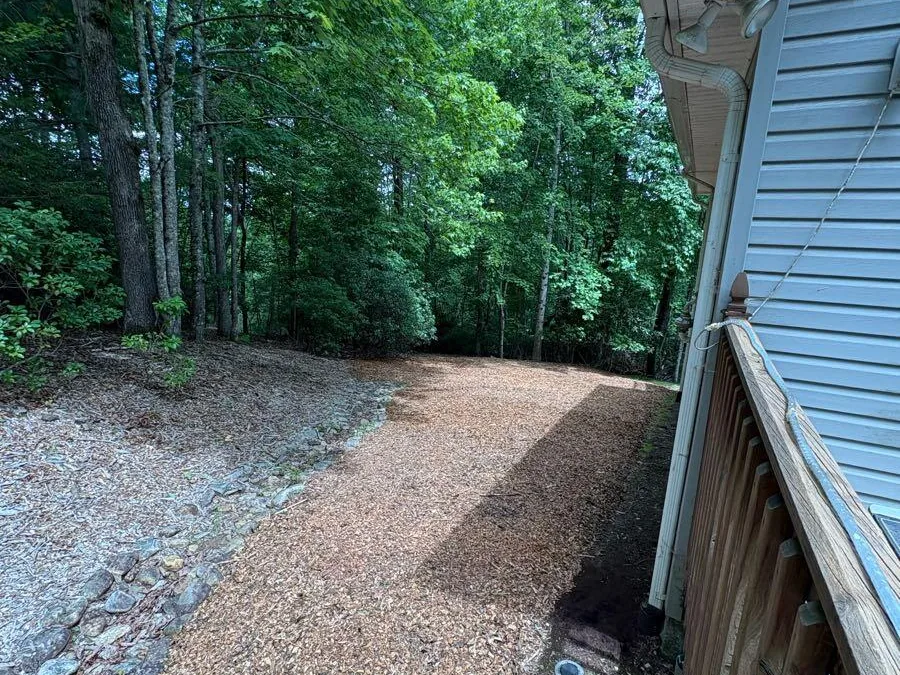
Bed square footage is the quieter multiplier. A front bed wrapping a ranch house on a flat in-town lot is a different afternoon than a terraced bed climbing a ridge lot with railroad-tie retaining walls and mature rhododendron. The terraced version takes longer to edge, longer to weed, and more mulch to reach the same depth, so it lands higher in the mid-band even though the visible result looks similar. That is why two neighbors on the same road can get quotes that differ by a few hundred dollars without either one being wrong.
Haul-away is the third variable worth naming. Pine straw and dry oak leaves compact down, but green debris, storm limbs, and bagged material add weight and trips. A property that can compost on site stays cheaper than one where every bag has to leave the lot, and that difference is honest and predictable once somebody walks the ground instead of guessing from a satellite image.
Reading the season before you book
Western North Carolina gets four working seasons, not two. Late winter is bed prep and pre-emergent timing. Spring is mulch, edge, and the first gutter pull after the oaks drop tassels. Summer is turf care and the lawn care program that keeps fescue alive through the dry stretch. Fall is the heavy lift: leaves, needles, and the second gutter pass before the first hard freeze. Skip a season and you pay for it in the next one — compacted beds, matted turf, and gutters that overflow onto the foundation.
Storm timing matters too. Henderson County's federal disaster record is dominated by rain and flood events: 16 declared events span 1978-2026 here, and most of them pushed water at properties built for drier assumptions. The National Weather Service outlook at weather.gov is worth a check before scheduling anything in the wet months, because a clean done the day before a two-inch rain is a clean wasted.
The freeze line runs through this county in a way flatland pricing never accounts for. Fescue here goes semi-dormant in the coldest weeks, then comes back hard in March, and a lawn that was never aerated the previous fall shows it immediately as thin, patchy spring growth. Beds that were mulched too thin going into winter heave their crowns with the freeze-thaw cycle, which is why late-winter bed prep is real work and not a formality. Booking the mulch refresh before the spring flush, rather than after, is the difference between holding moisture through July and losing it by June.
Summer thunderstorms arrive fast off the ridge and drop a lot of water in a short window. A gutter system that was marginal in April becomes an overflow event in July, and the first place it shows is the foundation bed and then the crawl space. That pattern is why the seasonal calendar matters more here than in places with gentler rain, and why a summer gutter check on a pine-heavy lot is worth the visit even when the fall pass is already booked.
Working around the house, not just the lawn
Landscaping on a wooded lot is half horticulture and half water management. Gutters that stay clogged send runoff into the beds and then into the crawl space. Beds that stay buried under leaf litter smother the shrubs and hold moisture against the siding. Roofs that grow moss and algae streak stain the fascia and shorten shingle life. Every piece connects, which is why the East Flat Rock gutter cleaning service is booked as part of the property routine, not as a standalone errand.
Safety rules apply on any roof or ladder work, and the EPA guidance on outdoor water and runoff is worth reading if you are reshaping drainage. The International Code Council standards at iccsafe.org back the property maintenance expectations that Henderson County and the town enforce. None of this is exotic — it is just the difference between a yard that looks tidy for a week and a property that stays maintained through the year.
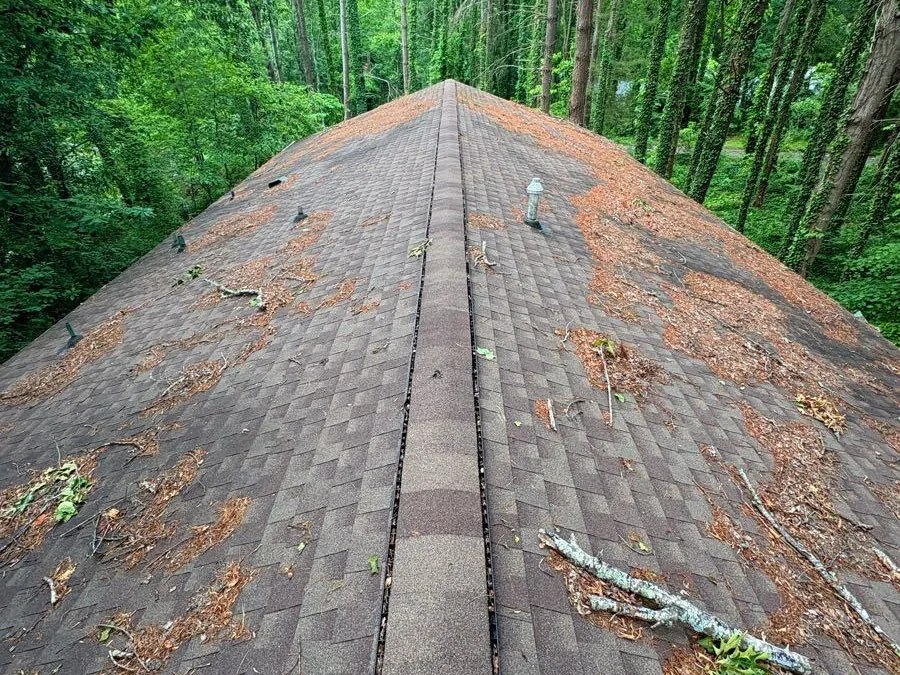
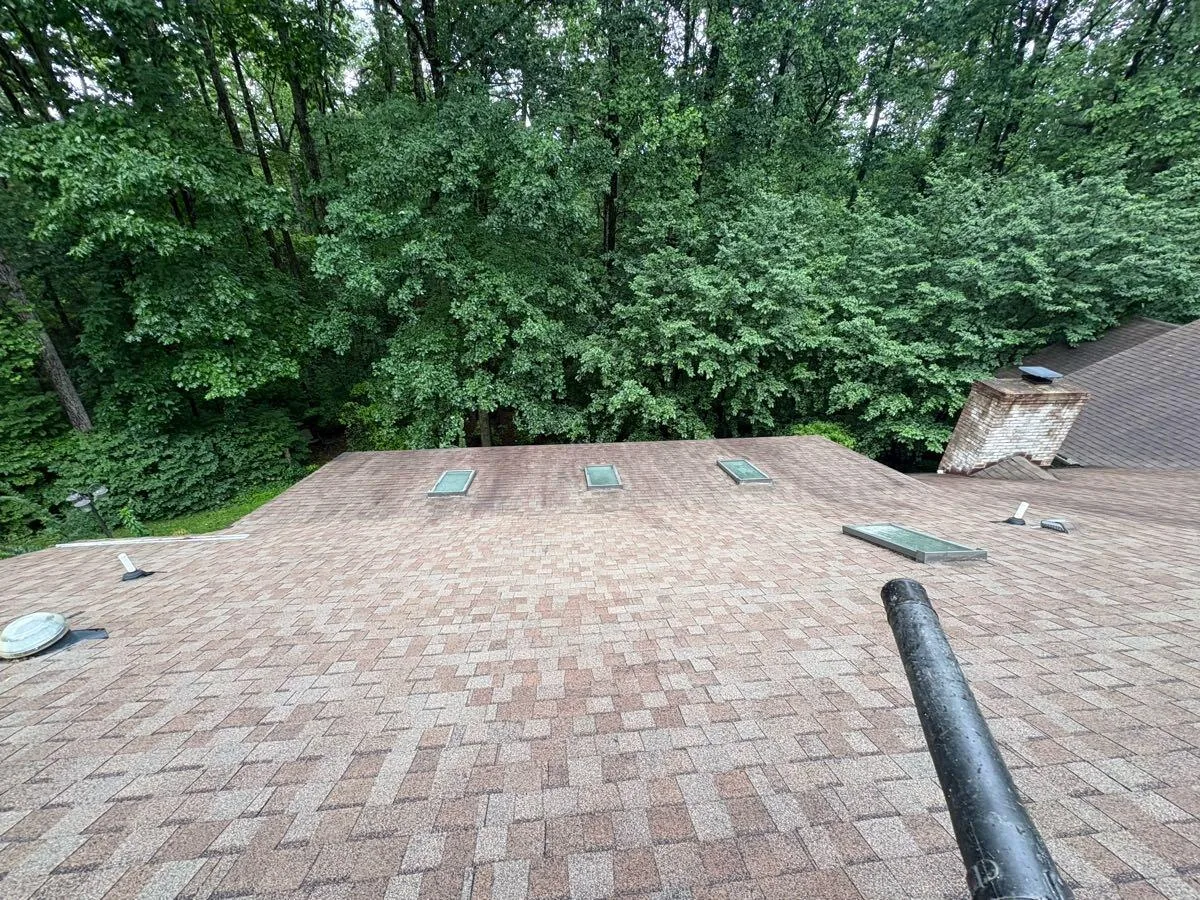
Roof work on these homes deserves its own caution. Moss and algae are a genuine problem on the shaded north-facing planes under the oak canopy, but aggressive pressure washing strips granules and shortens the roof's life. Low-pressure treatment is the correct approach, and it belongs on a schedule, not as a one-time fix after the streaks are already deep. The same logic applies to the siding, where repeated splashback from an overflowing gutter leaves a dirt line that washing alone will not correct if the source is never addressed.
Drainage shaping is the last piece and the one most often skipped. Extending downspouts, clearing the swale at the low corner, and keeping the bed grade pitched away from the foundation are small tasks that determine whether the crawl space stays dry through a wet fall. That is property maintenance in the truest sense, and it is what the whole visit is really protecting.
Deciding what your property actually needs
Not every lot needs the full cleanout. A small in-town parcel with three beds and one gutter run is a mid-band recurring job. A wooded acre with a long driveway, two rooflines, and mature pines is a full-day scope that lands near the top of the band. The honest move is to walk the property, list what is actually due, and price it as one visit rather than three separate trips — which is exactly what the form on this page is for. Book it once, done properly, and the next season starts from a clean baseline instead of a growing backlog.
The practical test is simple. Stand at the street and look up. If the gutter line is dark and heavy, that is the first job. If the beds are buried and the mulch has gone gray and thin, that is the second. If the turf is thin under the canopy and the roof shows green on the shaded plane, that is the third. A property that fails all three is a top-of-band cleanout, and a property that fails one is a small recurring visit. Naming which one you are looking at, honestly, is most of the quote.