Where the water actually goes on a Mills River lot
Stand at a downspout on a typical Mills River lot and watch a rain. Water hits the splash block, spreads, and starts walking — usually toward the house, because the lot was graded gently and the beds were built up against the siding. By the second wet season, that path is a shallow channel worn into the mulch, and it is emptying onto the lowest corner of the foundation. On the flatter parcels along the river bottoms, the water has nowhere to hurry off to, so it sits, soaks, and backs up instead of running away.
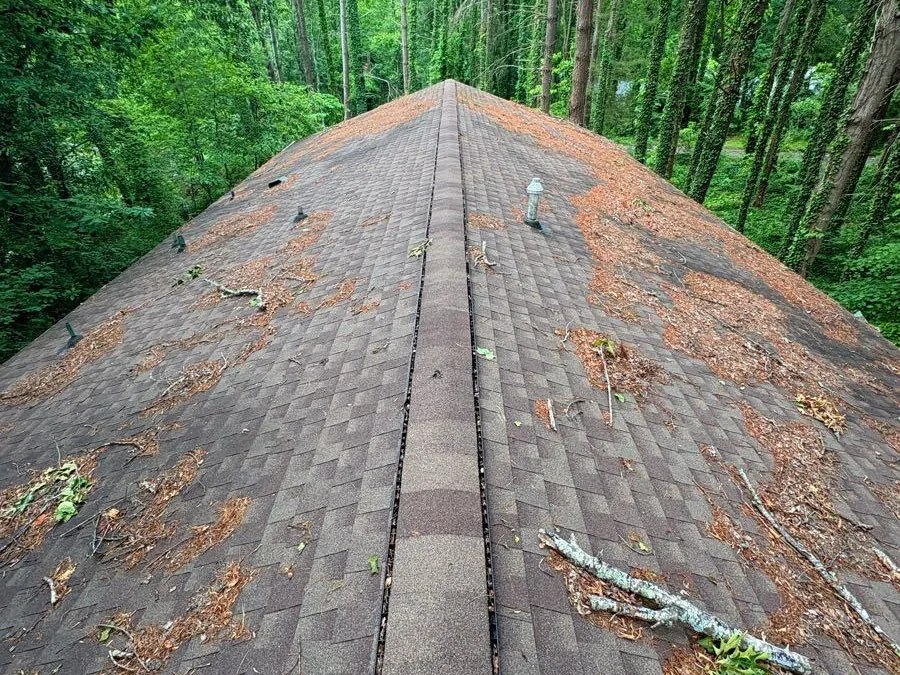
So we start landscaping here with the water path, not the plants: gutters to downspouts, downspouts to grade, grade away from the structure. That is why our first visit often looks less like design and more like maintenance. A gutter cleaning in Mills River with functional downspout extensions is unglamorous and fixes more bed and lawn problems than any fertilizer program.
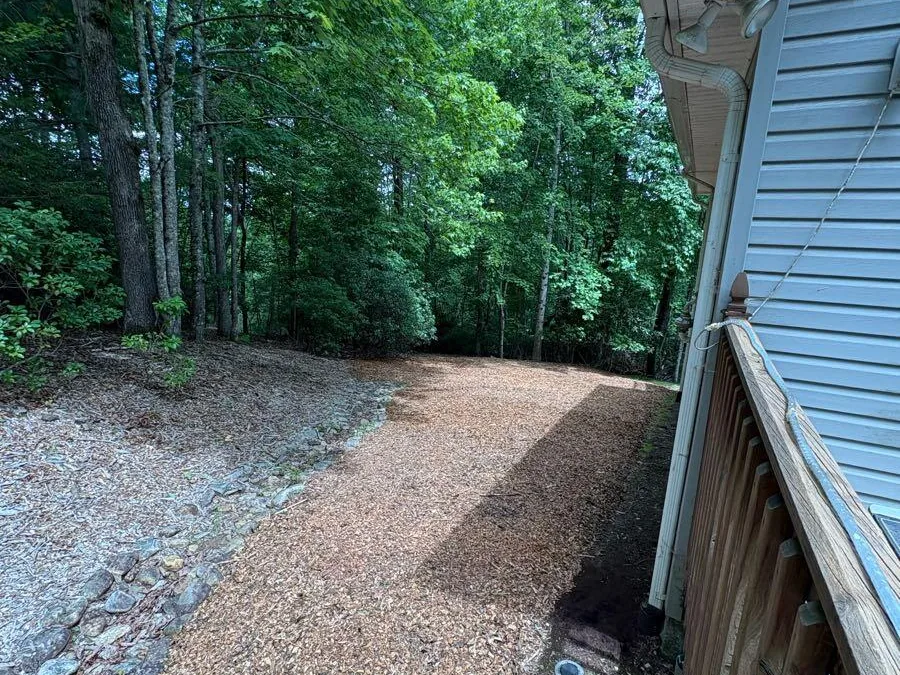
On a lot where the lawn drains toward the foundation instead of away from it, no amount of fresh mulch will stop the washout. The correction is usually a short regrade of the first few feet, a buried downspout line to daylight, or a shallow swale cut across the low side. These are small jobs, but they change how the whole yard behaves in a storm. A homeowner near the river bottoms will notice the difference on the first heavy rain after the work is done: water that used to pool against the slab now leaves the way it was supposed to.
What Mills River yards ask for that Asheville yards don't
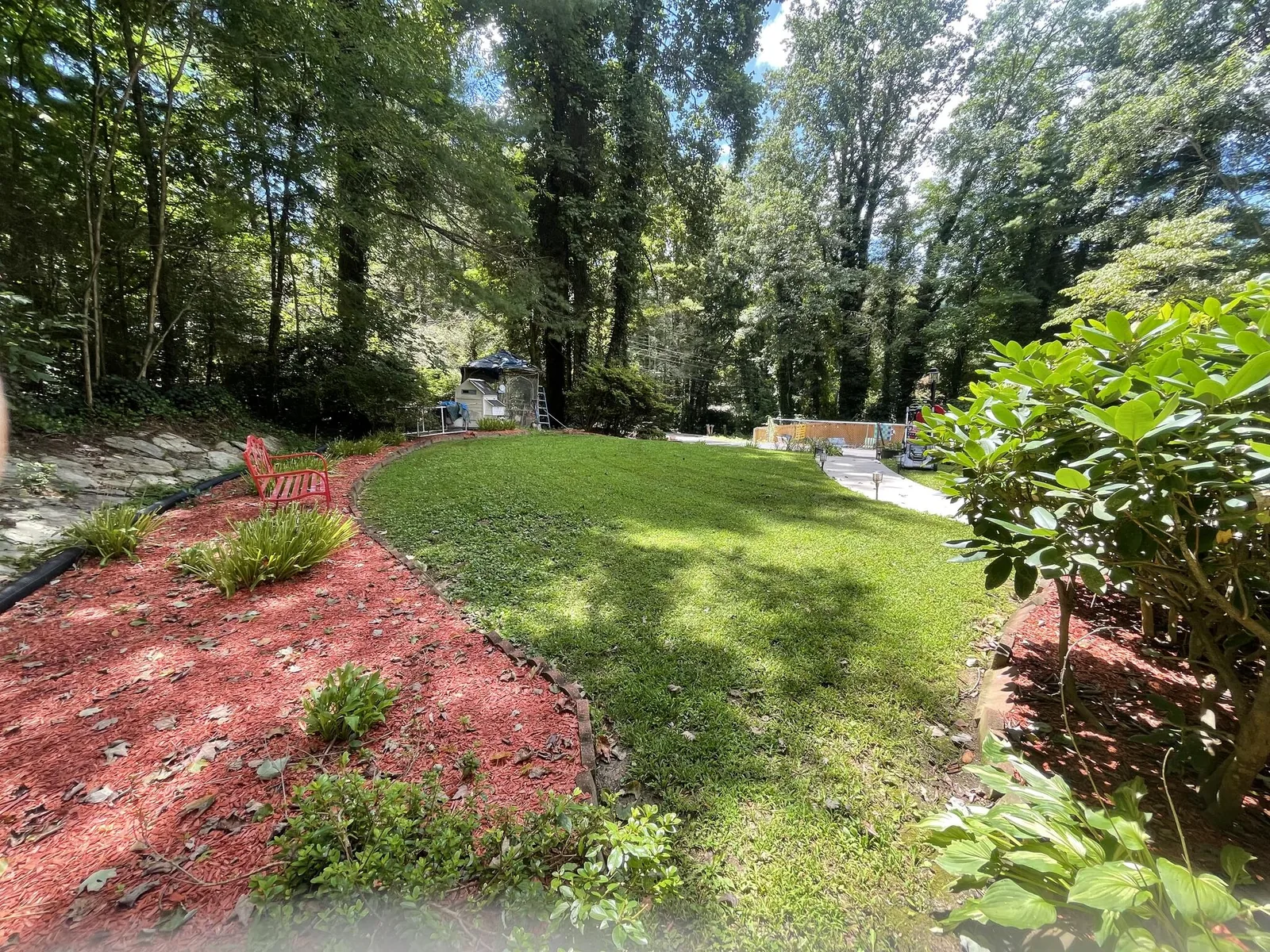
Henderson County's river bottoms and the Blue Ridge foothills meet here, so a lot off Banner Farm Road can be flat, deep-soiled, and slow-draining in a way that an Asheville slope lot never is. That changes the list. Beds want a mulch that holds up through wet winters, not a fine bark that mats. Turf wants drainage and mowing before it wants feeding. Low spots behind a fence line want a French drain or a swale, not another load of topsoil to level it. A slope lot sheds its rain in minutes; a river-bottom lot holds it, and held water is what rots crowns, lifts mulch, and turns a lawn into a mudflat by February.
Meanwhile, the county's mix of older farmsteads and newer subdivisions means you can be working mature boxwoods at one stop and bare builder grade at the next. Both are fine; the mistake is landscaping them the same way. An old farmyard often has compacted ground from decades of foot traffic and equipment, and it needs aeration and organic matter before anything will grow. A new subdivision bed is usually sterile fill dirt with no structure at all, and it needs the opposite: amendment worked in before the first shrub goes down.
There is also a timing difference. In the river valley, the ground stays workable later into the fall and wakes up earlier in spring than the ridge line above town. That gives a homeowner a slightly longer window for planting and mulch work, but it also means weeds and turf growth start sooner than the calendar suggests. Getting beds edged and mulched before that push is worth more than doing it after.
What the work costs, scope by scope
Almost everything we do here is priced per visit, per bed, or per project, and almost all of it lands in the same band. The table is what a Mills River homeowner should expect to see on a written estimate before any crew starts.
| Scope | Typical price range | What drives the number |
|---|---|---|
| Gutter cleaning, single-story walkable roof | $150 – $300 | Roof pitch, gutter guards, tree cover |
| Gutter cleaning with downspout flush and extensions | $250 – $450 | Downspout count, accessibility, debris volume |
| Mulch bed refresh (weeding, edge, 2–3 in. mulch) | $350 – $900 | Square footage, edging, haul-away |
| Seasonal cleanup (leaves, cutbacks, haul-away) | $300 – $800 | Canopy, lot size, dump fees |
| Mowing and lawn maintenance, recurring round | $150 – $400 per visit | Turf area, obstacles, slope |
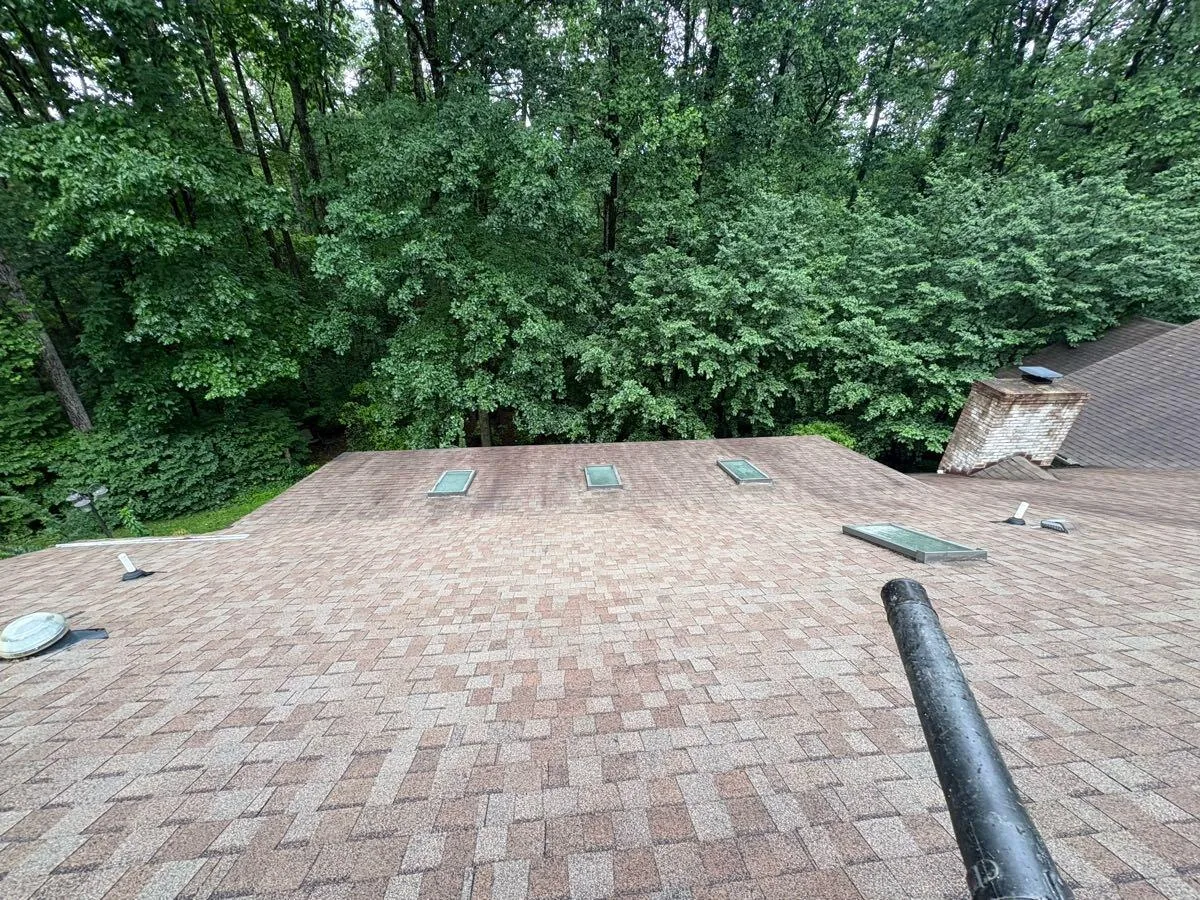
| Roof cleaning (soft wash) and full bed cleanout | $700 – $1,500 | Roof size, growth, plant protection |
Two local factors push a job toward the top of its row: clay that has compacted around a foundation after years of splash-back, and beds that were never edged, so every refresh starts with redefining the line. Neither is unusual in a river-valley neighborhood. See the Henderson County gutter cleaning cost breakdown if water management is the bulk of your list, and our lawn care program if the turf is.
Rain, storms, and why water work keeps coming back
Western North Carolina's disaster record is dominated by rain and flood events, not wind. 16 federally declared events touch this county across 1978-2026, and each one retested every drainage assumption on every lot. The National Weather Service forecast office that covers Mills River is a reasonable weekly read for anyone deciding when to clean gutters or grade a bed: weather.gov.
The practical takeaway is simple. Landscape choices that ignore heavy-rain performance — fine mulches, plants sited in low corners, beds piled against siding — fail first and fail often. Where runoff from a neighbor's field or a gravel driveway enters your yard, that is a conversation worth having before planting season, not after a washed-out bed.
On the flatter lots, one more thing matters: the ground here can stay saturated for days after a big rain, so the window for any digging or grading work is shorter than it looks. A swale cut into wet clay smears instead of shaping cleanly, and a mulch bed laid over saturated soil traps moisture against plant crowns. This is why we watch the forecast before scheduling water-correction work rather than after, and why a job that looks like an afternoon can stretch across a dry spell. Give a wet yard time to drain and the work comes out better.
Smart planting and chemical use on a wet, rural lot
Mills River yards sit near working farmland and waterways, which raises a fair question about what goes on the ground. Fertilizer and pest control are regulated products with real runoff considerations, and the EPA's guidance on household and lawn chemical use is the right starting point: epa.gov. We favor slow-release feeding timed to the growing season, spot treatment over broadcast, and plants suited to the soil in front of you rather than whatever was on sale.
Water-wise planting matters more than it sounds. A bed graded to shed heavy rain grows differently than one that ponds. Get the drainage right and plant selection mostly takes care of itself. In the river bottoms, that means choosing shrubs and perennials that tolerate a wet root zone instead of the drought-loving varieties that sell well but sulk here. A native that expects damp feet will outperform a showy import every season.
Where a bed borders a creek, ditch, or field edge, keeping bare soil covered and avoiding over-application near the water line is both good practice and common sense. Runoff from a sloped bed carries anything loose straight downhill with the first hard storm.
Getting a useful number before anyone shows up
Photograph the gutters, the downspouts, the low spot in the yard, and the beds along the house. Note whether the lawn is fescue, weed-heavy, or mostly dirt. That set of photos answers more questions than a phone call can, and it is how a quote gets accurate on the first pass. If you can, grab a shot of the offending downspout during or right after a rain — the water path shows up clearly then.
Then decide what you actually want solved this season — water away from the house, beds that look maintained, or turf that thickens up. Landscaping quotes go sideways when a laundry list arrives at once. Pick the priority, get a real number for it, and build from there. Most Mills River homeowners end up sequencing it: drainage and gutter work first, beds next, then a mowing and feeding rhythm once the ground is behaving.