How often Fletcher roofs actually need cleaning
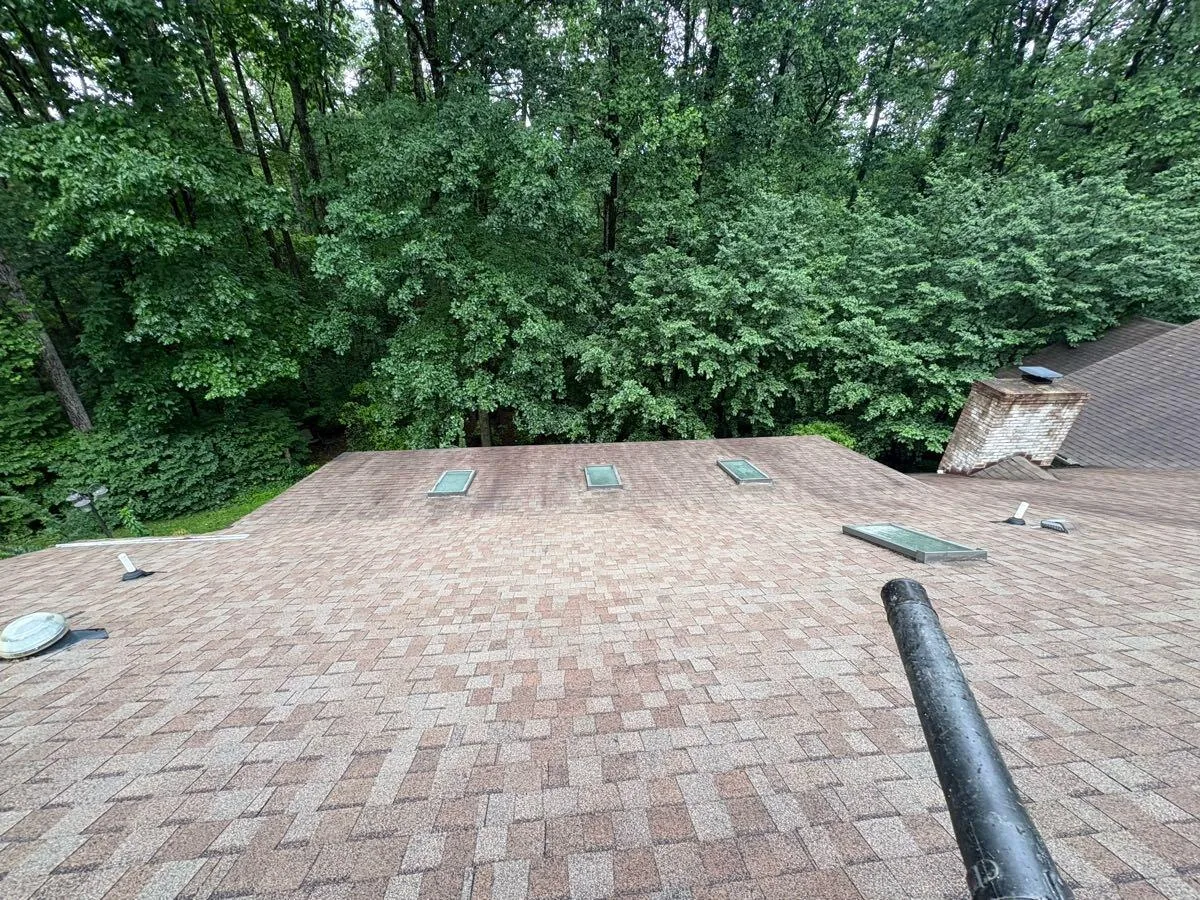
Walk any Fletcher street that backs into mature hardwoods and you can read the service interval off the rooflines: north-facing planes stained dark, south-facing planes dry. The national default of every one to three years assumes mixed sun and moderate leaf drop. Fletcher's oak, tulip poplar and white pine canopy delivers more debris per square foot than that default was written for, and the town's rolling terrain means a lot of roofs sit under shade for most of the day. Realistic intervals here: every 12 to 18 months for heavily shaded roofs under pines, every 18 to 24 months for open, sun-exposed roofs. Ridge-top homes off Howard Gap and similar elevations catch more wind-driven debris but dry faster; the flats near Cane Creek stay damp longer and grow moss sooner.
Elevation matters too. Henderson County grades from about 2,000 to 3,300 feet, and the higher pockets sit in cloud and dew longer than the valley floor. That moisture is what feeds moss, not rain volume. A roof that stays wet past mid-morning grows moss noticeably faster than an identical roof two hundred feet lower.
Moss, needle pack, and why the clock is shorter than it looks
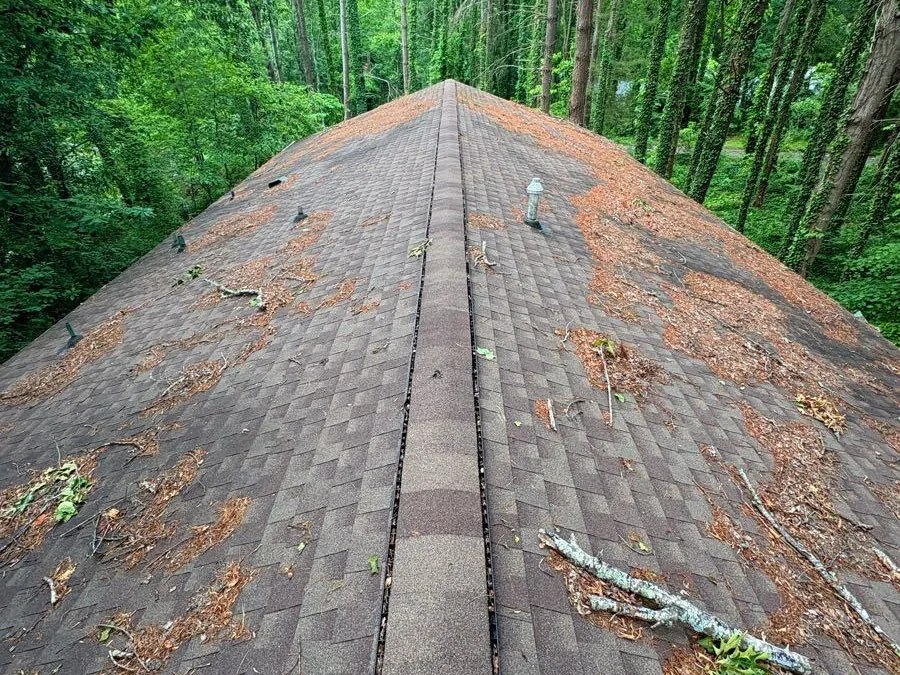
Moss is a symptom, not the whole problem. It holds a sponge of water against the shingle mat, and in Fletcher's humidity that mat never fully dries between rain events. Left long enough, moss rhizomes lift shingle edges, and lifted edges are where the next leak starts. Pine needle pack behaves differently — it dams water at valleys and behind chimneys, and that standing water works under courses that were never meant to sit wet.
What makes the local clock shorter is combination. A shaded roof with needle pack and moss isn't doing one kind of damage; it's doing two, and they compound. The National Weather Service records for this part of the mountains show how much of the year is spent at high humidity, which is the ingredient that turns a cosmetic moss patch into a shingle problem. Treating early is cheaper than treating late, every time.
What cleaning costs in Fletcher, and what moves the number
Scope decides price more than square footage does. A light soft wash on a clean-ish ranch is a different job from a steep two-story with a decade of moss and a needle dam at the valley. The table below is a working guide, not a bid:
| Scope | Typical range | What's included |
|---|---|---|
| Light soft wash, single story, minimal growth | $450–$650 | Low-pressure treatment, gutter-line rinse, no moss removal |
| Standard clean, average two-story, moderate moss | $650–$900 | Soft wash, moss treatment, needle clearing at valleys and behind chimney |
| Heavy moss or steep pitch, two-story or taller | $900–$1,200 | Manual moss removal, multi-pass treatment, full gutter flush |
Pitch is the biggest single mover. A walkable 6/12 lets a crew work efficiently; a 10/12 or steeper adds fall-protection time and slows every pass. Needle volume is second, and shingle condition is third — brittle, aged shingles need a gentler hand and more passes. Any quote that doesn't mention pitch and debris volume is guessing, and you'll feel it in the change order.
Why pressure washing the shingles is the wrong answer
A pressure washer strips granules, and granules are the shingle's UV armor. Once they're gone, the mat ages fast, and you've traded a moss problem for a replacement problem. The correct method is a soft wash: low pressure plus a cleaning solution that kills moss and algae at the root rather than blasting it off the surface.
Chemical handling is where the honest operators separate themselves. Roof-cleaning solutions are pesticides under federal rules, and the EPA sets the labeling and application requirements that govern how they're mixed, applied and contained. In practice that means plants below the roofline get covered or pre-wetted, runoff gets managed, and the applicator knows which product is safe on which shingle type. If a crew can't tell you what they're applying and why, that's the whole conversation.
Gutters, drainage, and the Fletcher property cycle
Roof cleaning and gutter work are the same job on this town's tree cover. Needles that leave the roof land in the gutters, and a full gutter backs water under the fascia and onto the foundation. If your gutters are holding debris, plan the two together — the county cost picture is in the Henderson County gutter cost breakdown, and bundling usually beats two separate visits. The broader service menu, including soft washing and moss programs, lives on the main roof cleaning page.
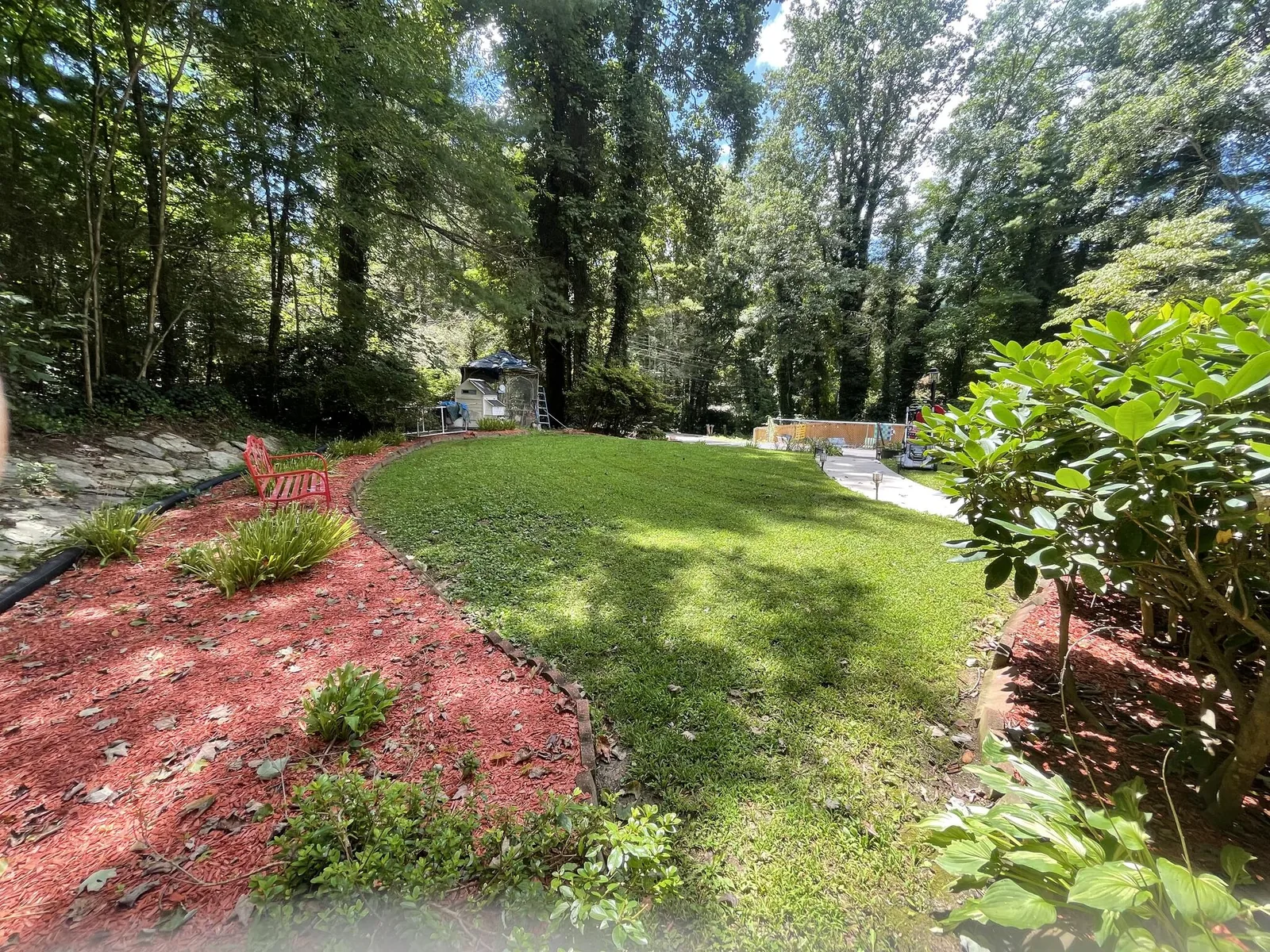
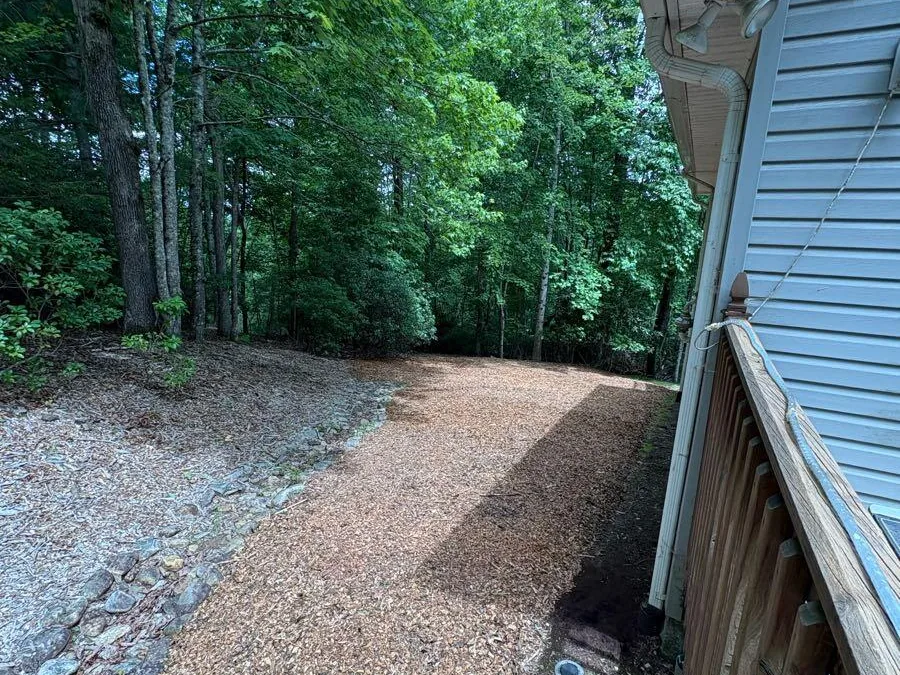
Fall is the obvious season, but late spring matters here too because pollen and seed pods land right after the last frost. Homeowners who clean once in late fall and once in late spring stay ahead of moss without ever needing a heavy-removal job. If your property also needs beds, mulch or grading work after the roof is done, the Fletcher landscaping services page covers that side of the cycle.
Storm seasons and what they leave behind
Henderson County has a documented storm and flood history — 16 federal disaster declarations across 1978-2026 of record, mostly wind and water events. For roofs, the practical effect is that any significant wind event redistributes debris across planes and into valleys, and it does it unevenly. A roof that was two months from its normal cleaning date can need attention a week after a storm.
After a wind event, check the valleys, the area behind the chimney, and the bottom three feet of any plane under a tree. Those are the collection points, and they're where the first leak will show up. If shingles are lifted or missing, that's a repair question before a cleaning one — cleaning a damaged roof just moves the water around.