The November window that decides your price
Henderson County does not lose its leaves all at once, and that matters for your wallet. Around Hendersonville and the lower valley, oaks, maples, and tulip poplars drop through late October into early December, with the heaviest dump usually landing in the first half of November. If you book during that window, a crew clears the bulk in one pass while the leaves are still light and dry. Wait until January and you are paying to scrape a wet, matted layer off beds and turf — same yard, more labor.
The mountain edge of the county complicates this. On the slopes above Saluda and along the Green River corridor, elevation stretches the drop out and rain arrives on top of it, so leaves that sit through a wet week can smother grass and stain hardscape within days. That is why the honest advice here is simple: schedule after peak drop, not after the holidays.
For a typical in-town lot, leaf removal cost in NC sits inside a predictable band:
| Scope of work | Typical Henderson County range | What drives it |
|---|---|---|
| Light cleanup, small open yard | $250 – $350 | turf area, few trees, leaves still dry |
| Standard yard, one full pass | $350 – $500 | tree count, bed edges, bagging vs. hauling |
| Full fall cleanup with beds and gutters | $500 – $650 | bed volume, hardscape, debris haul-off |
| Heavily wooded lot, multiple passes | $700 – $900 | tree density, slope, wet-pack, repeat visits |
Those are working ranges, not quotes. Any crew that names a firm number before walking the lot is guessing, because leaf volume on a wooded Henderson County property can double between October and Thanksgiving.
One more layer of local timing: the county's first hard freeze typically arrives in early to mid-November in the valleys and earlier up high, and it is usually that freeze — not the calendar — that triggers the final heavy drop. A crew working the Hendersonville grid can often clear a yard in one dry pass right after that freeze; wait two rainy weeks and the same yard needs a second visit just to reach the turf. That gap is where the $150 to $250 timing savings on this page actually comes from.
Why wooded lots and hillside yards cost more
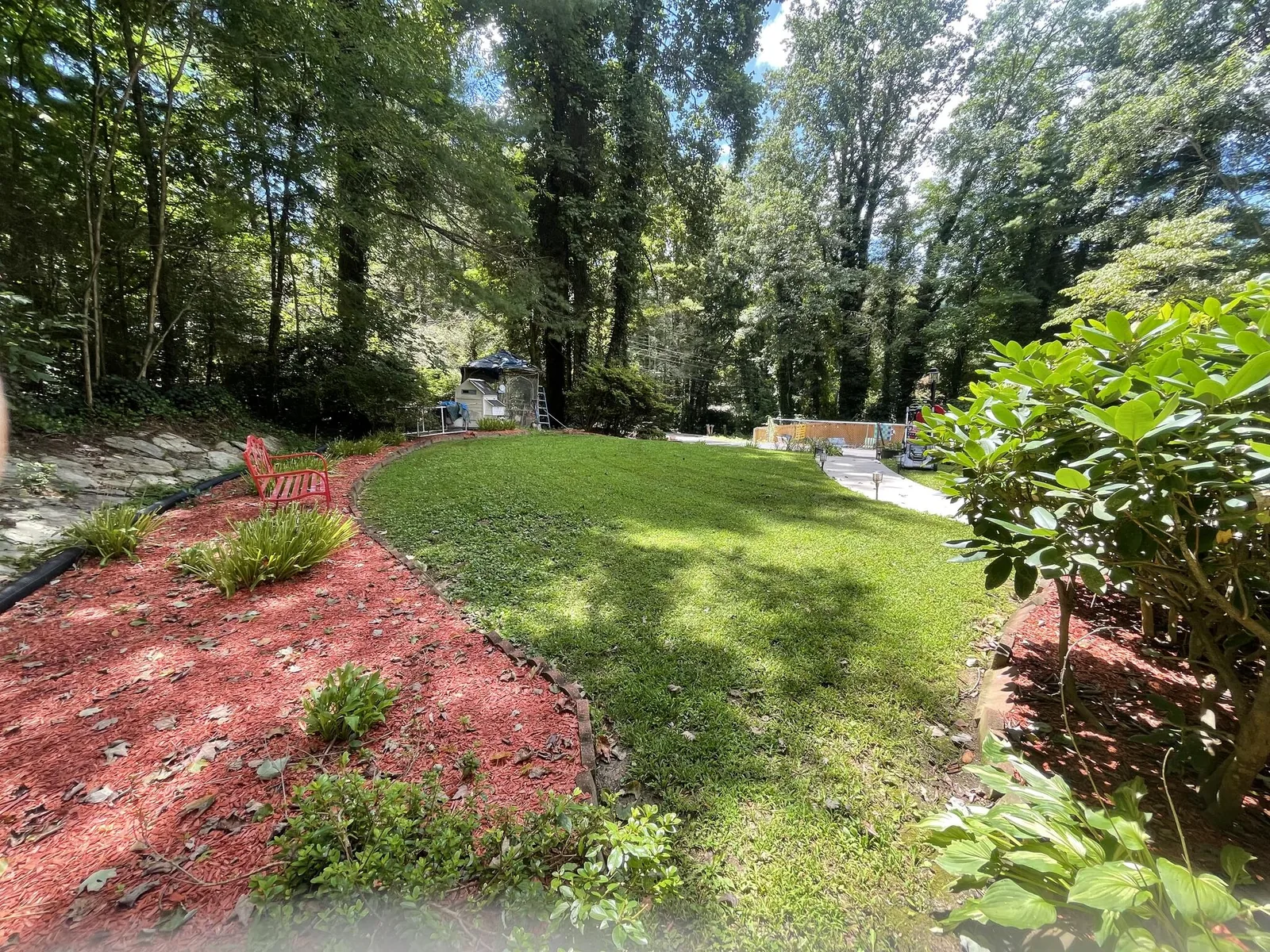
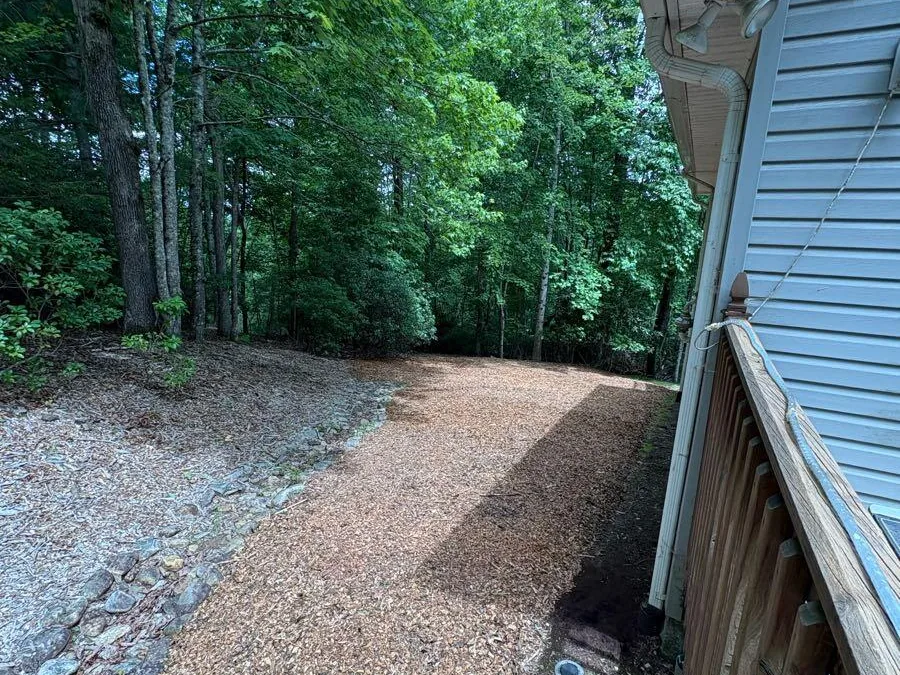
Henderson County sits at the transition between the Blue Ridge escarpment and the French Broad valley, and that terrain shows up in the price. A flat half-acre near downtown Hendersonville with two maples is a different job than a graded lot in a mountain subdivision, where leaves drift against foundations, pile in window wells, and settle into slopes that crews cannot blow clean without raking by hand.
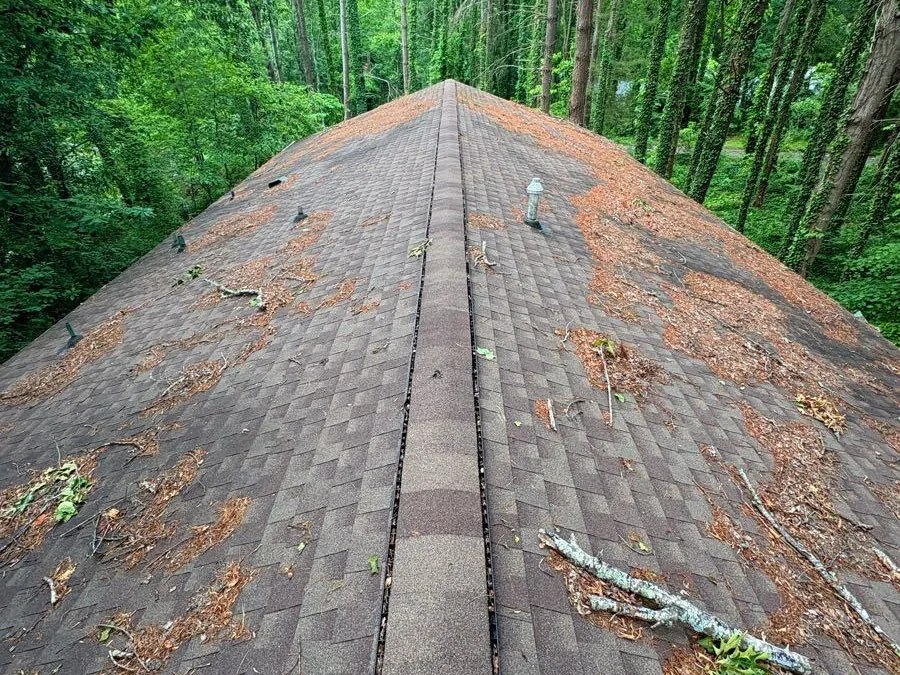
Two things reliably push a job toward the top of the band. First, tree density: mature oaks and hickories on a wooded lot can drop enough material in a single week to fill a small trailer. Second, access. Narrow driveways, retaining walls, and steep grades slow equipment and force more hand work, which is labor time you are paying for even though it does not show up in a photo.
Storm timing compounds this. Federal records show 16 declared disaster events touching this county across 1978-2026, most of them storm and flood family. When a wet system strips the canopy early, leaves land in saturated piles that are far heavier and slower to clear than a dry November drop. If you are booking after a stormy stretch, expect the quote to reflect the extra handling — and consider whether the leaves also need to come out of the gutters, which is a separate line item. Our gutter cleaning cost guide covers what that adds.
Terrain here has a second, less obvious effect. The county's signature topography — south-facing valley floors around Hendersonville and Etowah, north-facing coves up toward the Blue Ridge escarpment — means two neighboring properties can drop leaves weeks apart. A yard tucked into a shaded cove off a mountain road may hold its canopy longer and drop wetter, colder leaves that mat into beds and against stone walls; a sunny valley lot across the ridge dries out faster and blows cleaner. When a crew quotes from the driveway, that microclimate is exactly what they are reading.
What is included, and what is quietly extra
Leaf removal pricing is only honest if you know what is in the box. A standard job means clearing turf, walkways, and bed surfaces, then hauling debris off site. Common line items that get left out of a lowball quote:
- Bed cleanup. Leaves tucked into shrubs and groundcover take hand work, not a blower.
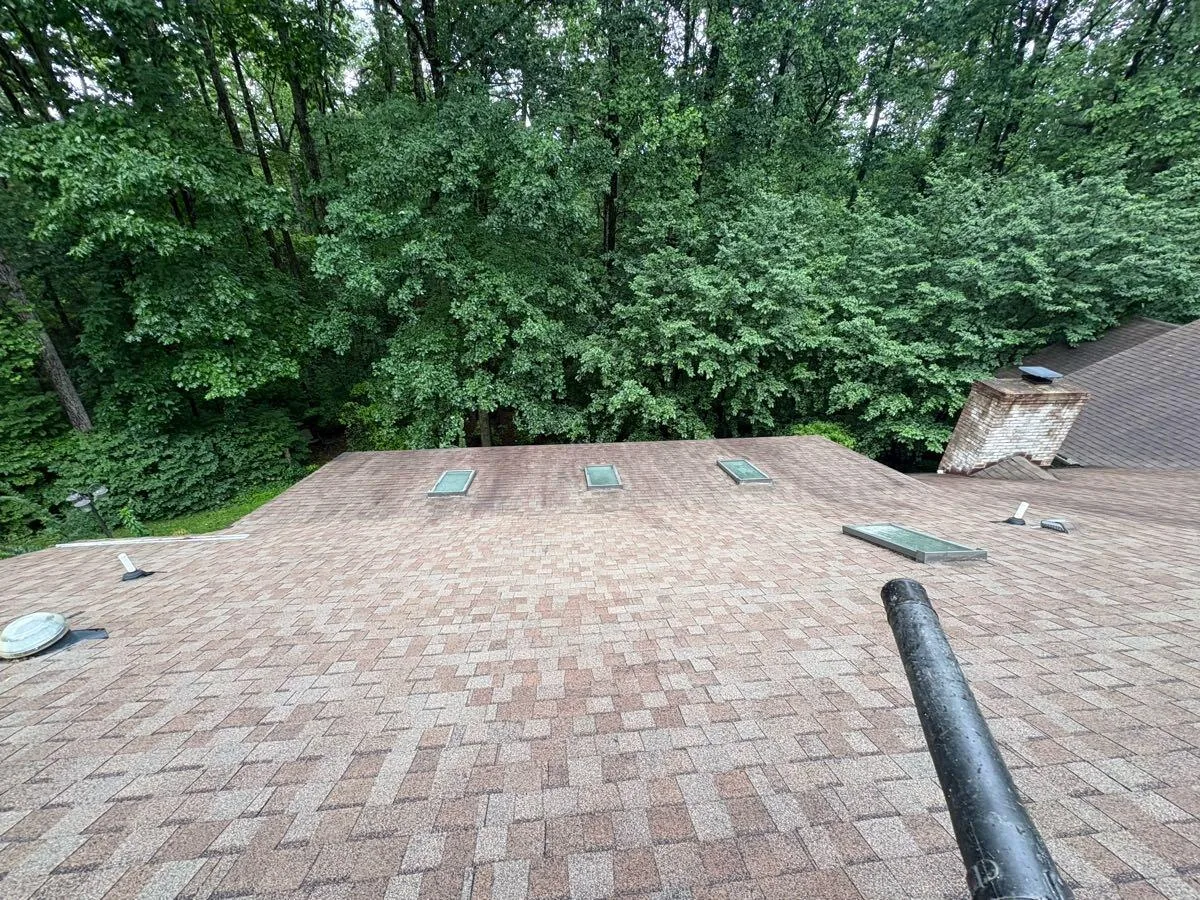
- Gutter clearing. Frequently bundled with fall cleanup but never free; it is its own task with its own ladder time.
- Haul-off vs. on-site disposal. Some properties have a brush area; most in-town lots do not, and disposal is real cost.
- Second pass. A single pass in early November often misses the later drop, so budget for a return visit on heavily wooded lots.
- Hardscape blow-off. Driveways, patios, and stone walls collect leaves that stain if left wet; ask whether they are included or an add-on.
Bundling is where the savings live. Pairing leaf removal with your final mowing and bed work spreads the visit cost, and our lawn care cost guide explains how end-of-season services are priced together. If you only need the leaves gone and nothing else, the standalone leaf removal service is the leaner option.
It also helps to know what the crew is looking at on arrival. A good walk-through notes where leaves have already drifted into low spots, whether turf is still visible, and whether gutters are holding water — the two or three details that separate a $350 job from a $650 one on the same lot. If a bidder never leaves the truck, that is your signal the quote is a guess.
Hiring rules and disposal rules that apply here
North Carolina does not license general landscaping or leaf-removal work the way it licenses structural trades, but that does not mean anything goes. Larger projects that cross the state's general contracting threshold fall under oversight by the NC Department of Insurance and Building Code Council framework, so if a job is being sold as part of a bigger landscape build, ask who is accountable for the contract. For anything involving trees near power lines or structural pruning rather than raking, safety and utility-clearance rules come into play, and the National Weather Service outlook is worth checking before scheduling a big clearing day — wind and rain change both the cost and the crew's ability to work safely.
Disposal is the other half of the equation. Yard waste in Henderson County follows local convenience-site and landfill rules, and burning is restricted during dry stretches. Reputable crews haul leaves to approved sites; a bidder who proposes dumping on a vacant lot or burning near a wooded property in a dry November is cutting corners you will inherit. Where leaves are being handled as part of a larger landscape or drainage change, storm-water and sediment questions can also come into play, and the NC Department of Environmental Quality is the right reference point for those rules rather than a rumor from a neighbor.
Practically, that means two questions worth asking before you sign: where the debris is going, and who is responsible if a pile gets left at the curb past pickup day. The answers tell you more about a crew than the headline price does.
How to get the number down without getting a bad job
Three moves keep a Henderson County leaf job honest:
- Book after peak drop, before the rains. A dry, single-pass cleanup costs less than a wet, double-pass rescue — often $150 to $250 less on the same lot.
- Ask for a per-pass price. Heavy drop years need two visits; a per-pass number keeps the second visit from becoming an open-ended add-on.
- Bundle the gutter line once. If leaves are in the gutters, clearing them the same visit is cheaper than a separate trip, and it protects the drainage around your foundation heading into winter.
Compare any bid against the table above. A number inside the band means the scope is probably fair; a number far below it usually means leaves are being left in the beds or on site. And if you are planning the whole shoulder season at once, our gutter cleaning cost guide and lawn care cost guide show how to sequence leaf removal with the other fall services so you are not paying for three separate trips.
One last local note: because the valley and the higher elevations do not drop on the same schedule, a homeowner who owns property both in town and up the mountain may need two different booking windows. Treating the two as one project almost always costs more than scheduling each when its own canopy actually lets go.