How often gutters actually need clearing around Forest City and Rutherfordton
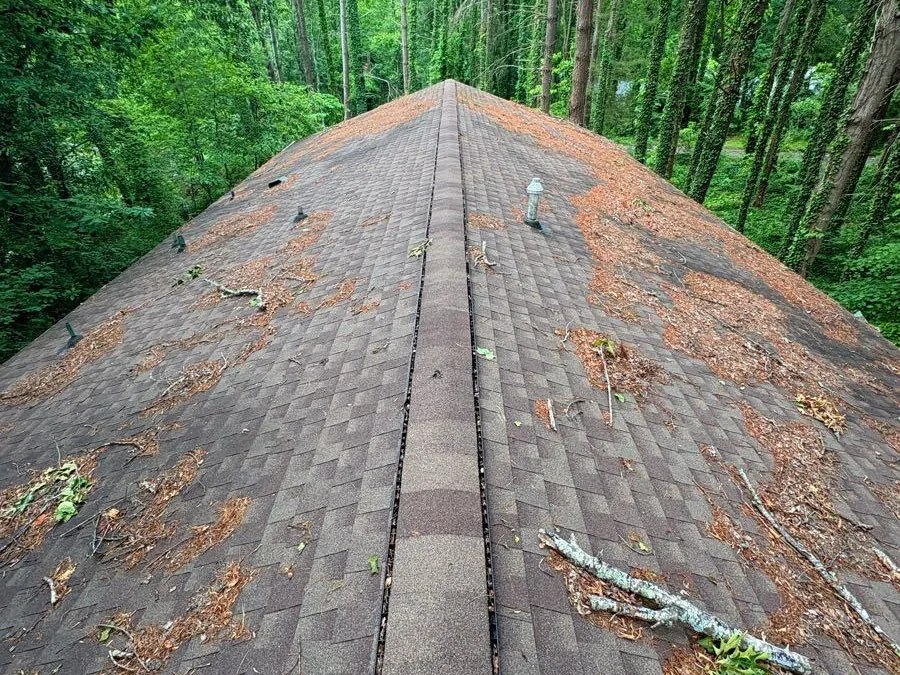
The honest answer for most Rutherford County addresses is three to four times a year, not the once-a-year schedule that flatland service plans advertise. The county seat at Rutherfordton and the mill-town grid of Forest City both sit under a dense canopy of loblolly and shortleaf pine mixed with oak, sweetgum and tulip poplar, and pine straw plus seed cones drop steadily rather than in one tidy autumn week. Add the lake country around Lake Lure and the wooded ridges toward Chimney Rock, where fog sits longer and debris stays wet, and you get gutters that load up in layers.
That interval is the single biggest driver of what you pay over a year. Two cleanings booked on time cost less than one neglected cleaning that has turned into a clogged downspout, a rotted fascia board and a landscaped bed washed out below the splash line. If your gutters have gone more than a season without attention, expect the first visit to price at or near the top of the local band. You can see how the service itself is scoped on our gutter cleaning page.
Elevation matters more than newcomers expect. A house at 1,200 feet in the Broad River valley sees a different debris calendar than a ridge-top place above 2,500 feet outside Lake Lure, where the hardwood drop starts earlier and the pine cones seem to hang on longer. The result is that two neighbors ten minutes apart can honestly need different intervals, and a crew that has worked both ends of the county will tell you so rather than quoting one schedule for everyone.
What Rutherford County homeowners pay by job type
Rates here track roof height and debris load far more than square footage. A low ranch in Spindale with one short run is a different job than a two-story on a cut-in slope above the Broad River, even when the gutter footage is similar.
| Scope of work | Typical local range | What drives it |
|---|---|---|
| Single-story, short runs, light debris | $150 – $200 | roof height, total gutter footage, ladder resets |
| Single-story, long runs or heavy pine load | $200 – $250 | cone and needle volume, downspout count |
| Two-story, standard roofline | $225 – $325 | height, pitch, whether a second story walk is needed |
| Two-story, steep pitch or heavy tree cover | $325 – $400 | safety setup, debris weight, number of downspouts |
| Add-on: downspout clearing or flush | $25 – $75 | blockage depth, accessibility of the outlet |
These are working ranges for the Hendersonville region, not quotes. Anyone who gives a firm number without looking at your tree cover and roof pitch is guessing.
A walk-behind inspection costs almost nothing and settles most questions. When a homeowner in Forest City describes a one-story ranch but the driveway drops away to a walk-out basement on the back side, the back run is a second-story job in practice, and pricing it as a one-story job sets up a bad day for everyone. The same is true for the older mill houses around Spindale, where additions and porches often create three or four separate rooflines at different heights on what the tax record calls a single-story home.
Why the local trees and terrain keep prices in the upper half
Two features of this county do most of the work. First, the pine component. Pine needles knit together into a mat that holds water and compacts, so a matted gutter weighs far more than loose leaves and takes longer to remove by hand. Second, the terrain. Rutherford County runs from the relatively gentle valley floor around Forest City up into steep, wooded hollows near Lake Lure and Chimney Rock, and a lot of homes there sit on slopes where the downslope side of the house is effectively second-story height. That means more ladder placement, more roof access caution, and more time per job.
Roof work and ladder work in this state are governed by the same safety expectations that apply nationally, and the International Code Council publishes the residential provisions inspectors here reference. On the weather side, the National Weather Service is the source to watch when a front is coming through the Blue Ridge: cleaning immediately before a heavy rain event just means doing it twice, since the next storm refills the run. Time your cleaning after the spring pollen and seed drop and after the main leaf fall, and you get more weeks of function per dollar.
Winter is its own complication. Ice that forms in a half-full gutter can pull a run loose from its hangers, and the freeze-thaw cycle on south-facing slopes near Chimney Rock does that damage quietly. Cleaning before the first hard freeze is not fussiness; it is the cheapest way to avoid a spring repair. Gutters that are already sagging when the crew arrives need to be flagged, not just emptied.
What a fair price includes — and what it does not
At the local rates above, a proper visit should include bagging and hauling the debris off your property, not blowing it into the shrubs; a check that each downspout actually drains; and a look at the hangers, seams and fascia while the ladder is up. What it does not include is repair work — re-securing a pulled hanger, patching a joint, replacing a crushed downspout section or correcting a pitch problem. Those are separate line items and worth pricing separately so you can see what you are buying.
One more cost trap in this county: water management. Gutters that overflow at the foundation do damage that shows up later as erosion and moisture against the crawl space. Where that is already happening, the fix is often drainage, not more cleaning, and the money is better spent there. Our lawn care page covers how grading, bed edging and turf work tie into the same water path around the house.
It also helps to know what not to pay for. A crew that offers to "seal" a gutter without showing you the failed seam, or that proposes a full replacement when the run is simply pitched wrong, is selling more than you need. On a cost page like this one, the goal is to keep the scope honest: clean, flush, verify, and report what needs a second look. Repair and replacement quotes should stand on their own.
Keeping the number honest when you hire
Three practical rules for this market:
- Price the interval, not just the visit. Ask what a recurring three-times-a-year plan costs versus a one-off. Recurring pricing is usually steadier and keeps you out of the emergency-clog category.
- Ask how they handle ground debris. A bid that is cheap because the pine straw goes over the bank and into your beds is not actually cheap.
- Get the downspout question answered up front. If flushing the downspouts is not included, say so in the quote so the first hard rain does not surprise you.
For region-wide numbers and how other towns compare, see our full gutter cleaning cost guide. Homeowners weighing a larger exterior maintenance budget often bundle this work with seasonal property care, which is worth scoping together rather than one at a time. The U.S. Environmental Protection Agency publishes guidance on managing runoff and protecting foundations that is worth a look if water has already caused problems around the house.