Timing the clean to Mills River's pine and rain calendar
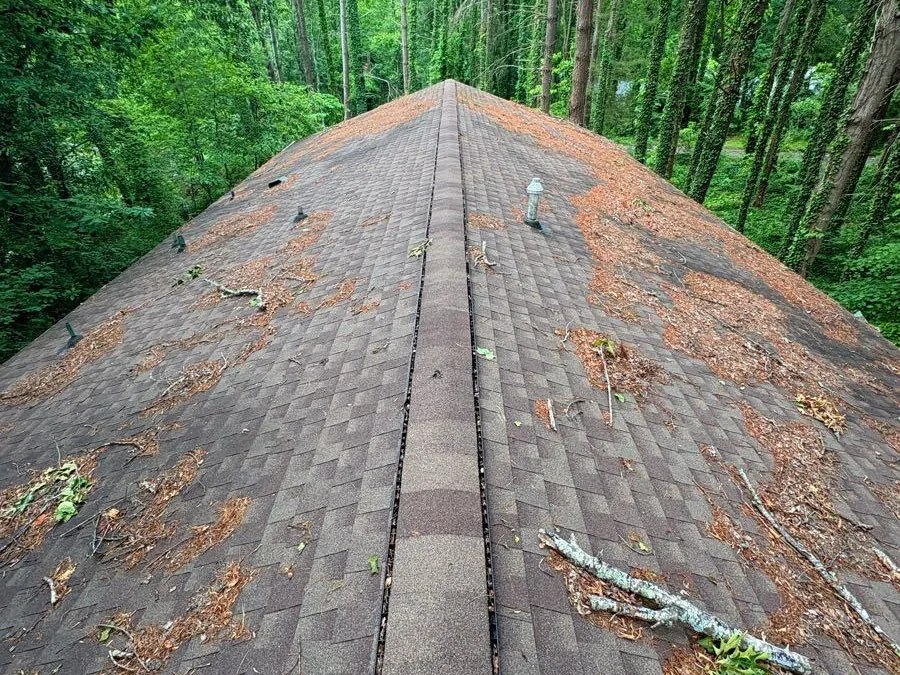
Most Mills River gutters do not fail from one big storm. They fail slowly, from pine needles. The river corridor and the wooded lots off Banner Farm and Butler Bridge roads sit under some of the heaviest pine cover in Henderson County, and needles do not wash out of a gutter the way leaves do. They mat down, hold water against the fascia, and turn a five-minute flush into a rotted board by spring.
That gives the local calendar a sharp edge. The window when cleaning is cheapest and most effective is late fall, after the bulk of the pine drop but before the winter rain pattern sets in. A clean booked in that window still moves freely, so a crew can flush it fast. The same gutters booked in late winter, packed and sagging, take longer and turn up problems that cost more than the cleaning did. Spring is the second-best window, and the one to book if you missed the fall slot.
It helps to think about what the two worst weeks actually look like. White pines around Mills River River Park and the North Mills River recreation area drop a fine, waxy needle that slides into the hanger channels and stays there. Rain later in the season does not push it out; it soaks it. By the time a homeowner notices water sheeting over the front edge, the needle mat has usually been in place for weeks and the fascia behind it has started to stay wet between storms. Clearing on the early side of that cycle is what keeps the job a standard-scope clean rather than a repair.
What drives the price on a Mills River roof
Pitch and access set the number more than square footage does. A single-story ranch on a gentle roof is a straightforward job. A two-story with a steep gable over the driveway, or a long run that needs a ladder walk from more than one spot, pushes toward the top of the band. Adding gutter guards changes the work from clearing to removing and reinstalling, which is a different scope and a different line.
Lot shape matters here too. Many Mills River parcels are wider than they are deep, so a modest-looking house can carry a very long back run along the tree line. A crew may need three or four ladder positions on what the owner thinks of as a small gutter. Barns, detached garages, and horse-property outbuildings add separate runs that are quoted individually, because each one has its own access problem and its own downspouts.
| Scope | Typical range |
|---|---|
| Single-story, standard access | $150–$250 |
| Two-story, standard access | $225–$400 |
| Heavy pine matting or long runs | Top of the applicable band |
| Steep roof or ladder restrictions | Top of the applicable band |
| Downspout flush and flow check | Included in a proper scope |
The Henderson County cost breakdown shows how these line items stack across the county. The short version: expect the cleaning itself to be the small part, and drainage corrections or fascia repair to be the part that surprises people.
Why water history matters before the first ladder goes up
Henderson County's federal disaster record leans hard toward storm and flood events: 16 declared events touch this county across 1978-2026. Every one of those pushed water at gutters and foundations that were sized for a drier assumption. That history is why a good local scope does not stop at scooping debris. It checks where the downspouts discharge, whether the grade carries water away from the house, and whether the gutter is still fastened at the pitch it was installed with. The National Weather Service tracks the rainfall patterns that feed this, and the International Code Council sets the roofing and drainage standards a competent crew works to.
If your gutters overflow at the same corner every storm, that is not a cleaning problem. It is a capacity or pitch problem, and it will still be there after the cleaning invoice is paid.
Mountain terrain adds a second layer. The French Broad and its tributaries run through a valley floor that sits lower than the ridges, and a lot on a slope sheds water toward the house from above as well as off the roof. A downspout that dumps three feet from the foundation on flat ground is a nuisance. On a graded Mills River lot, the same short discharge can send water back into a crawlspace. That is why a flush-and-flow check is worth insisting on rather than treating as an add-on.
Working pines, hardwoods, and the roofline underneath
Mills River's housing mix shapes the work. Lots along the river and on the wooded ridges carry mature white pines and hardwoods that drop into gutters most of the year. Horse-property tracts and larger parcels often mean outbuildings, barns, and long roof runs that need more than one ladder position. Newer builds on cleared land tend to have simpler rooflines and cleaner gutters, but still need the downspouts checked after the first heavy leaf drop.
Season by season, the mix changes. Late summer brings the first acorns and the start of pine drop. October and November are the hardwood leaf weeks, when a single windy day can fill a clean gutter on the side that faces the prevailing wind. Winter keeps needles and bark bits moving even after the leaves are gone, which is why a lot of Mills River homes see debris in the gutters in February even though nothing looks like it is falling.
Before booking, it is worth asking whether the crew walks the whole run or just the easy side. A partial clean is why some gutters overflow again within weeks. The gutter cleaning guide covers what a full scope includes. If the same visit turns up grading or fascia issues that need more than a flush, the landscaping work in Mills River covers drainage corrections and property care in one pass.
Booking the right window in this market
Ask when the crew can reach your roofline safely, and whether they will clear the full run plus flush every downspout. Ask what happens if they find a soft fascia board or a separated seam. A good answer includes a photo and a separate line, not a surprise on the invoice. Peak demand in Mills River lands in the weeks after the pines drop and again after the first big fall storm, so booking before those windows opens is how you get the cleaning done in the range above rather than at emergency pricing.
Two-story homes with steep gables and homes set back off gravel drives tend to book out first, because each one takes a crew longer and the access is less forgiving. If your house fits that description, the early call is worth more than a discount. Fall is also the best time to walk the property and decide whether guards make sense, since a dry, freshly cleared gutter is the only honest test of whether they will actually help on your lot.
Finally, keep a simple record of when the gutters were last cleared and what the crew found. A note about a slow corner or a drippy seam is the difference between a routine clean next time and a repair that no one saw coming. That record also tells you whether a Mills River lot needs two visits a year or three, which is a local answer, not a generic one.