What actually drives the price on an Edneyville roof
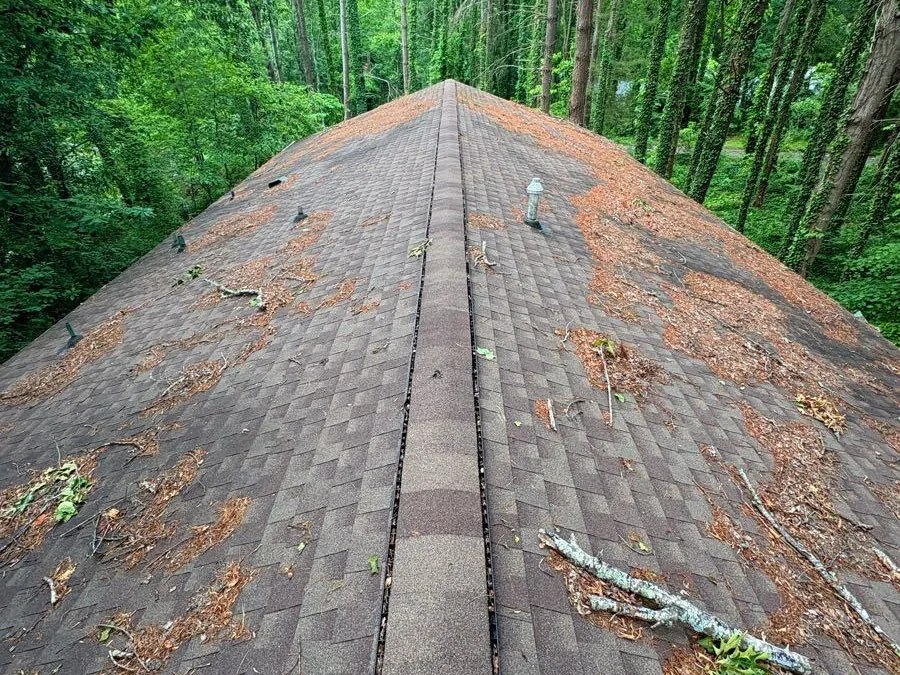
Edneyville is orchard and ridge country on the east side of Henderson County, and the roofs here show it. A ranch off a county road sitting under white pines will come in with a needle mat in the valleys and behind the chimney that has to be hand-cleared before any wash starts, and that labor, not the cleaning itself, is the line item that moves a quote. Two houses of identical square footage a mile apart can price hundreds of dollars differently because one is shaded by hardwoods all afternoon and the other gets full sun and wind. Pitch is the other mover: a walkable 4/12 lets a crew work fast, while a steep gable above a drop-off needs fall protection and a slower, more careful approach. Age and type of shingle matter too, since an older three-tab that is already shedding granules has to be treated gently. See the full roof cleaning service overview for how the visit is structured.
Terrain adds its own line item here. Edneyville sits at the transition between the gentler Fruitland and Dana benches and the steeper pitches that climb toward Bearwallow and the Hickory Nut Gorge rim. That means same-day jobs can run from a flat, easy ranch on a county road to a gable-end house perched on a switchback driveway where the ladder has to be set on a slope. We can't roll a wheelbarrow or a blower cart up some of these drives, so every tool goes up by hand and every bag of moss comes down the same way. That is real time, and time is what a quote is made of. Roofs along the upper ridges also catch more wind-driven rain, which drives water under lifted shingle edges long before the moss looks bad from the ground. A roof that reads clean from the driveway can still have a needle pack sitting in the valley behind the chimney, holding moisture against the shingle year-round.
A scope-and-price table for a typical Edneyville house
These are working ranges for the county's standard housing stock, not a bid. Every property gets walked before a number is given, because the moss and needle load is the variable nobody can read from a satellite image.
| Scope | Typical range | What's included |
|---|---|---|
| Light cleaning, single-story, low slope | $450 – $650 | Surface debris blow-off, soft-wash treatment, gutter-line rinse |
| Moderate moss and needle pack, average pitch | $650 – $900 | Hand removal of moss mats and valley needle pack, treatment, rinse |
| Heavy growth, steep or two-story roof | $900 – $1,200 | Full hand-clearing, treatment, fall-protection setup, downspout flush |
| Add-on: gutter cleaning same visit | quoted separately | See the Henderson County gutter cleaning cost page |
Roofs here are working under a real moisture load. 16 federal disaster declarations have touched this county over 1978-2026, and the storm-and-flood family dominates that record. That history is why we treat moss and debris removal as a water-management job first, not a cosmetic one. The National Weather Service tracks the patterns that keep these ridges wet, and the EPA maintains runoff guidance worth knowing before any cleaning solution goes on a roof near a well or a creek.
Two things are worth separating when you read a quote. The first is the material load: how many cubic feet of needles, leaf litter, and moss mats come off the roof. The second is the access problem: how many trips up and down a ladder, and whether the crew has to hand-carry every tool. A quote that only names a square footage is missing half the job. On an Edneyville property we would rather walk the roof and count the valleys than guess from a measurement. If the roof sits under a canopy of white pine and chestnut oak, the needle pack alone can turn a two-hour visit into a half-day, and that is the honest reason a shaded house often costs more than its sun-exposed neighbor of the same size.
Why moss keeps coming back in this part of Henderson County
Shade plus moisture plus organic debris equals moss, and Edneyville has all three in abundance. North-facing slopes under hardwood canopy stay damp long after a rain, and the needle and leaf litter that collects in the valleys holds that moisture against the shingle. Moss roots lift the shingle edges, water gets underneath, and the decking becomes the problem. That is why a one-time wash without clearing the debris load tends to fail here within a couple of seasons. The fix is sequential: clear the organic material, treat what remains, then correct whatever is feeding it. Overhanging limbs and a gutter system that overflows onto the roof edge are the two most common feeders we see.
The apple orchard heritage of this area is part of the story. Old orchard rows, windbreaks, and mature shade trees that were planted around farmhouses decades ago now arch over the same roofs. Those trees are the reason a north-facing roof in Edneyville can stay damp days after a rain while a roof on the open south side of the same property dries in an afternoon. Lichen is the other local signature. Grey-green crusts on asphalt shingles show up on roofs that stay wet through winter, and while lichen looks less aggressive than a moss mat, it still holds moisture against the surface and has to be treated, not simply scraped. We schedule the treatment around the roof's actual shade pattern rather than a calendar date, because two roofs on the same road can be on opposite sides of the same problem.
Method matters more than pressure
Any crew that proposes to blast a shingle roof with a pressure washer should be turned away. Asphalt shingles are a surface, and pressure strips the granules that protect them, which shortens the roof's life and can void a manufacturer's coverage. The correct approach is a soft wash, low pressure with a cleaning solution, combined with hand removal of moss and debris. Steep roofs need fall protection, and that is not optional. North Carolina has adopted the International Residential Code, and the International Code Council maintains those model provisions; roof access and fall-protection practice flow from them. Any crew working your roof should be able to describe their fall-protection setup in one sentence. If they cannot, that is your answer. The NC Office of State Fire Marshal is the state's authority on code and safety enforcement if you ever need to check a rule.
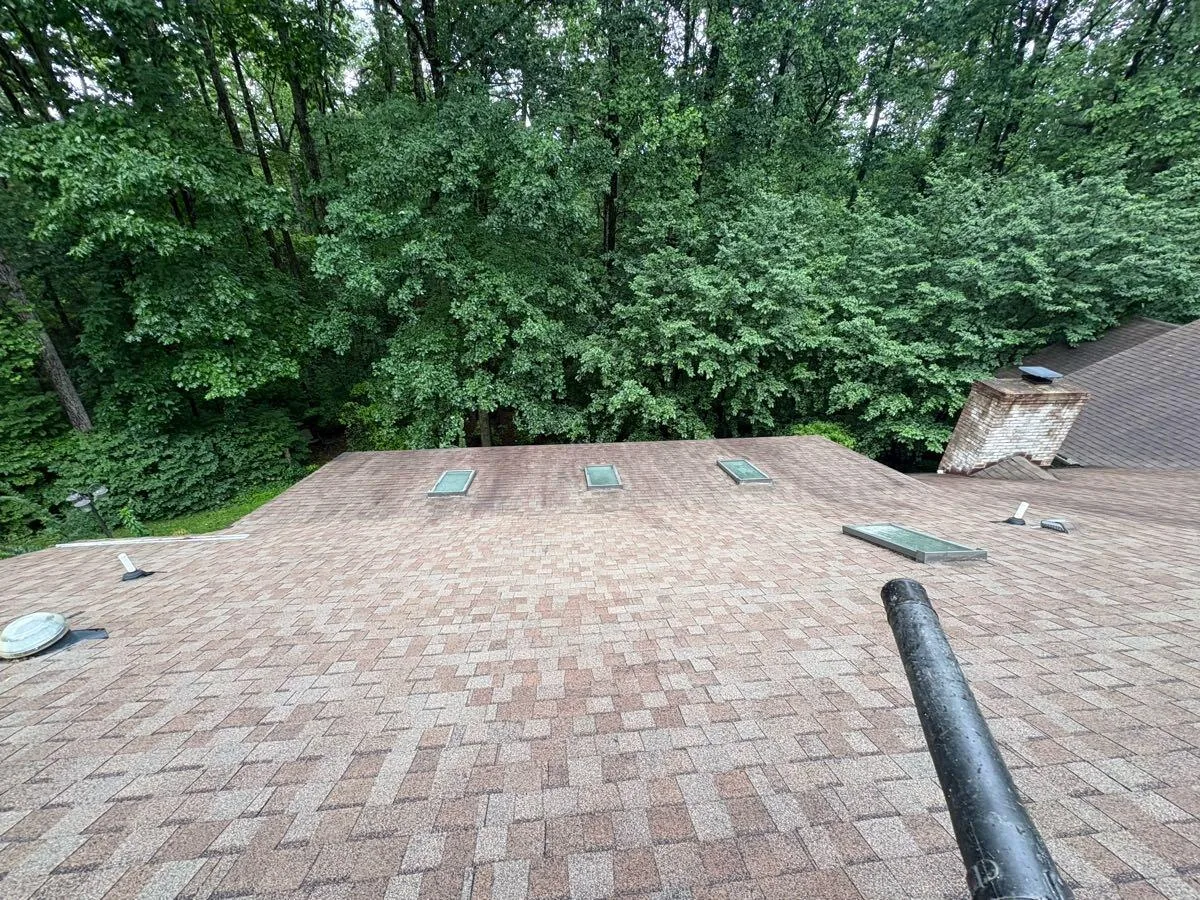
On a metal roof the rules are different but the principle holds. Standing-seam and exposed-fastener metal can be cleaned with a soft wash and a careful rinse, but the panels should never be walked in a way that dents the seams or disturbs the fasteners. Metal roofs in this county are often on barns and outbuildings where the moss has been growing for years, and the goal there is to get the growth off without scratching the finish. Skylights, vent boots, and chimney flashing are the other places we slow down. Those penetrations are where leaks start, and a cleaning that knocks a boot loose while removing moss has traded one problem for a worse one. The visit is scheduled so that hand work around penetrations happens before any solution goes on the surface, not after.
Timing the job around the calendar
Late spring and early fall are the busy windows here, because moss establishes in the cool wet months and needle drop peaks in autumn. A cleaning done in early fall, after the pines have dropped but before winter rain, sets the roof up for the wet season instead of letting debris sit through it. If your gutters are backing up and water is sheeting over the edge, the roof and the gutters should be handled together. Roof care also ties into the rest of the property: shade trees that feed moss on a roof and leaf litter that smothers a lawn are the same trees, and we handle both sides. If the yard needs attention after the debris is down, our landscaping service in Edneyville covers cleanup and grounds care on the same visit.
Winter visits happen too, and there is a right way and a wrong way. Cleaning a frozen roof risks damaging shingles, so we work the days when the temperature is up and the surface is dry, and we would rather postpone a visit than take a chance on a cold morning. The spring window is just as important: once the moss has taken hold in the cool months, an early-season cleaning catches it before it has roots deep enough to lift shingle tabs. Homeowners who have been here through a wet winter know the pattern. The roof looks fine in March, the moss is obvious by June, and by the time the valleys are packed it is a different job entirely. Catching the growth early is the cheapest version of roof cleaning there is, and it is the version we recommend when a property is consistently shaded.