The interval question comes before the price question here
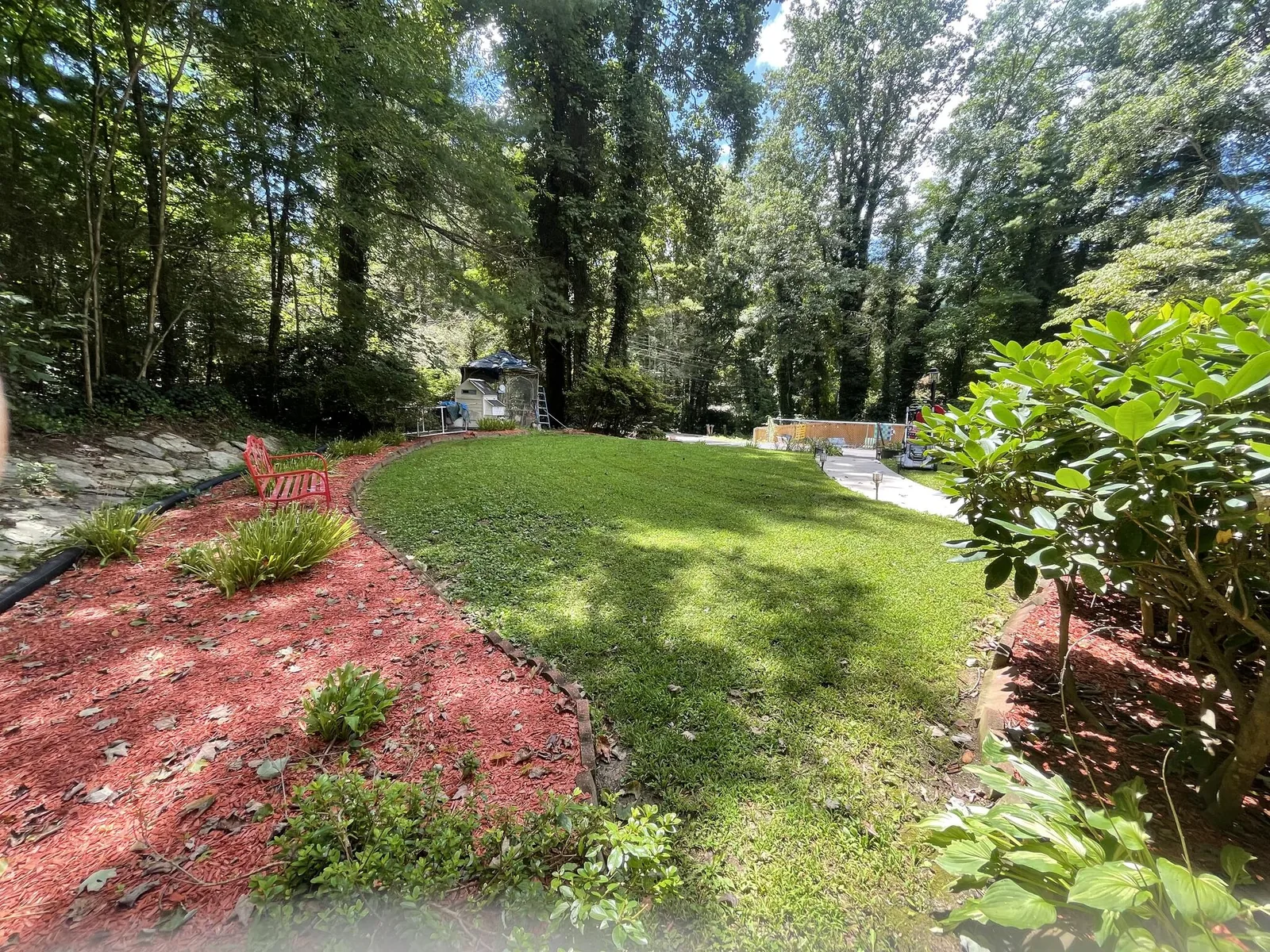
Ask a Transylvania County homeowner what they pay for lawn care and the honest first answer is how often somebody actually shows up. This county sits inside the Pisgah National Forest edge, and the tree canopy over most in-town Brevard lots is heavy enough that turf grows slower than the open lawns a Piedmont crew is used to. Fescue under that shade in Brevard, Pisgah Forest, and Rosman often holds a clean cut for two to three weeks, not the weekly rhythm you'd expect in full sun.
That matters to your wallet. The standard biweekly plan — mow, trim, edge and blow — prices between $45 and $75 per visit, which lands around $120 to $260 a month on an average yard. A three-week interval trims the monthly total because you're buying fewer visits, not cheaper ones. A weekly plan costs more per month and is usually only worth it on sunny, heavily irrigated lawns or on rental property where curb appearance carries the rent.
Elevation splits the county further. Lake Toxaway and Sapphire sit high enough that spring green-up arrives later and the first mowing happens well after Brevard's. A fixed April start date is a waste of money up there.
Brevard's in-town streets tell the story clearly. A corner lot off Probart or Cashiers Valley Road may back up to mature oaks and poplars whose canopies close over the lawn by mid-June, dropping the light level enough that fescue grows thin and slow. Two miles out on a cleared pasture edge in Little River, the same square footage bakes in full sun and needs a weekly cut. The crew that prices both jobs the same way is guessing.
Homeowners here also deal with a shoulder season most crews from outside the county miss. In a wet, cool spring, turf wakes up unevenly — sunny patches green and grow, shaded patches stay dormant a week or two longer. A crew that starts mowing everything on the same date ends up scalping the early grass and missing the late grass. Matching the start date to the specific lot, not the calendar, is the first thing that separates an honest local quote from a flat-rate pitch.
What each scope of work costs in this county
These are working ranges for standard residential property, not quotes. The per-visit figure is what a crew charges each time it comes out; the monthly figure assumes a going concern with regular visits and reflects the interval noted.
| Scope of work | Typical Transylvania range | What drives it |
|---|---|---|
| Mow, trim, edge, blow — biweekly | $45 – $75 per visit | lot size, shade, slope, gate access |
| Same scope — monthly equivalent | $120 – $260 | visit count and interval chosen |
| Weekly plan (sunny, irrigated lawn) | $50 – $75 per visit | growth rate, equipment wear |
| Three-week interval (heavy shade) | $45 – $70 per visit | whether the lawn actually needs it |
| Spring and fall leaf cleanup | quoted per property | canopy density, debris volume, haul-off |
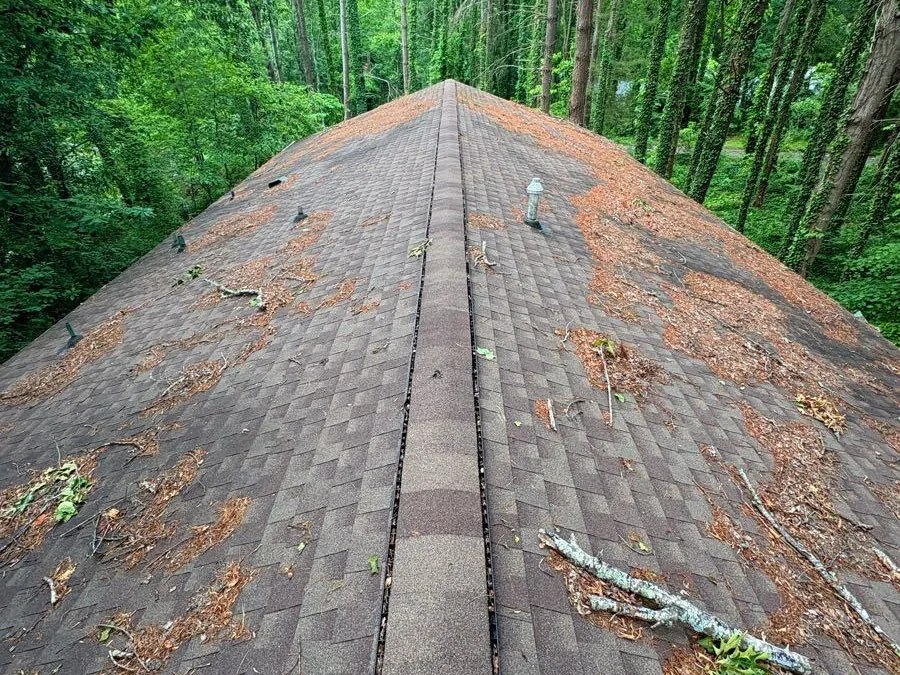
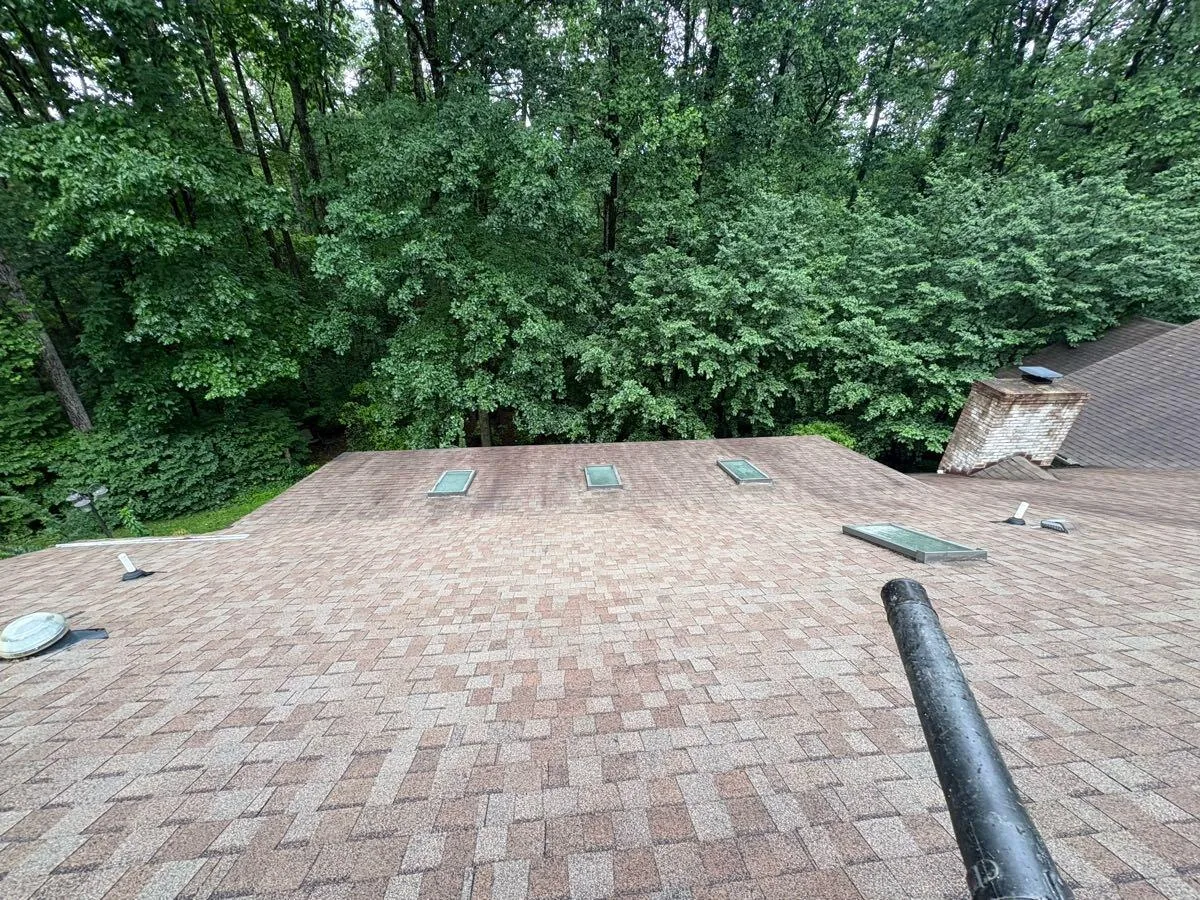
| Gutter clearing add-on | quoted per property | roof height, gutter length, tree overhang |
Leaf cleanup and gutter work are separate line items by nature. Volume on a wooded Brevard lot is not knowable until the crew walks it, and no honest outfit prices a debris haul by phone. Our lawn care cost guide covers the regional baseline if you want to compare.
Two more line items show up often enough here to mention. First, spring cleanup on a property that sat untouched all winter — dormant stems, fallen limbs, matted leaves against the foundation — is its own visit and priced as such. Second, a lot with a steep gravel drive in the Connestee Falls or Sherwood Forest area may need the crew to walk equipment up rather than drive, which adds time. Neither of those shows up on a phone quote, and both show up on the invoice.
If you want the scope itself spelled out — what mow, trim, edge and blow actually includes on a wooded lot — our lawn care services page covers it line by line.
Why wooded lots cost more than open ones at the same size
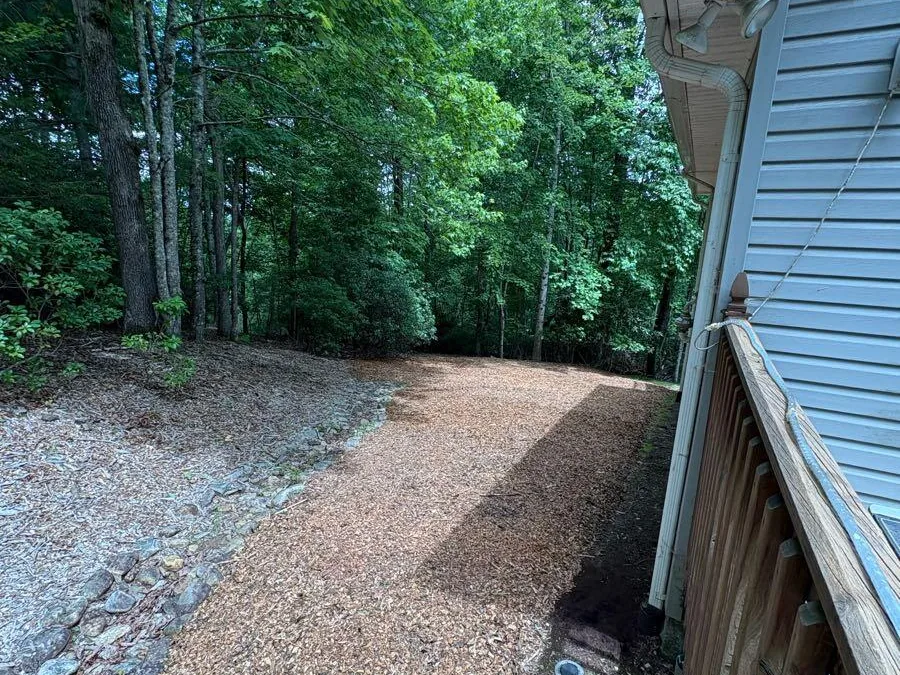
Two half-acre properties three miles apart can carry very different prices. An open lot with a clean fence line lets a mower run wide and finish fast. A wooded lot means string trimming around trunks, blowing debris off beds and walkways, and slower passes around root flare and landscape islands. Time is the cost driver, and shade does not just slow growth — it adds obstacles.
Water moves through this county hard when it does rain. The National Weather Service tracks the flood and flash-flood pattern that the southern Blue Ridge produces (NWS), and it shows up on the ground as saturated soil on graded lots and runoff channels that need the turf to stay intact. A lawn cut too short in a wet stretch thins out, weed pressure moves in, and the customer ends up paying for re-seeding that a correct cutting height would have avoided. Growth habit in western North Carolina is genuinely seasonal, and the right answer changes month to month.
Federal records count 16 disaster declarations touching Transylvania County across 1993-2026, most of them storm, flood and wind family. That history is why drainage-adjacent maintenance — keeping mow lines clear of swales, keeping gutters flowing — matters more here than in flat country. It's maintenance, not lawn decoration.
Practical examples from around the county. On a slope in Lake Toxaway where the lawn drains toward the driveway, mowing height needs to stay tall through the wet months so roots hold. On a flat Brevard lot with heavy clay, a low cut after a storm can leave ruts a mower has to avoid next pass, slowing the job. On a Rosman property with white pines dropping needles, the turf underneath goes acidic and thin, and mowing is really just keeping the weeds down until the needles are raked. Each of those is a different job even when the fly-over square footage looks identical.
Rules, licensing and safety you should ask about before signing
North Carolina does not require a state license to mow grass. It does license general contractors above a dollar threshold, and the lead agency publishes the current limit (NC Office of State Fire Marshal). That threshold matters when a job stops being lawn maintenance and starts being grading, drainage, or hardscape installation. Ask which entity would be doing that work and under what authority.
Pesticide and fertilizer application is a different lane entirely. Anyone applying restricted-use products on your property needs the credentials the state requires, and the EPA sets the framework for how those products may be used near wells, waterways and drainage paths (EPA). Transylvania County has a lot of both. If a crew offers weed-and-feed with no paperwork trail, that's a signal about how they handle everything else.
Also ask about equipment. Commercial mowers throw debris, and on a wooded lot with a steep drive, safety practices matter. A written scope that names what is and is not included — bagging, haul-off, bed edging, gutter clearing — protects both sides.
The county's housing mix makes this concrete. Brevard has a dense in-town grid with narrow side yards and mature street trees; a mower deck sometimes has to fit through a gate narrower than the equipment. Outside town, properties on Old Rosman Highway or out toward Balsam Grove run larger lots with outbuildings, driveways and occasionally a septic field the mower should stay off. If a contract doesn't say whether the septic area gets mowed, you'll find out the hard way. Ask before it's an issue.
One more question worth asking: who carries liability coverage, and what happens if a window, siding panel or vehicle gets hit by a thrown rock. That's a real risk on gravel-adjacent lots in this county, and the answer tells you whether the crew is operating as a business or as a favor.
Keeping your monthly number honest
Three simple moves protect you in this market:
- Set the interval in the contract. Biweekly, three-week, or weekly — put the exact cadence in writing with the per-visit rate. If a crew can't commit to the interval, they can't hold the price either.
- Separate recurring work from seasonal work. Mow, trim, edge and blow are recurring. Leaf cleanup and gutter cleaning are seasonal one-offs. Mixing them into one monthly figure hides what you're actually paying per service.
- Confirm the season start and end. In this county, first mow and last mow shift by elevation. A contract that names dates rather than conditions is a contract that bills you for cutting dormant turf.
If you want to see how the service itself is described and what's included, our lawn care services page lays out the scope. For county-by-county comparisons across western North Carolina, the cost guide is the fastest read.
One last sanity check. Take the monthly figure you're quoted, divide by the number of visits the crew says they'll make, and compare that to the per-visit rate. If the math doesn't line up, ask why. The local crews that hold their pricing year over year are the ones whose numbers survive that calculation, and they're usually the ones who already know your lot is shaded, sloped, or oversown with pine needles before you say a word.